

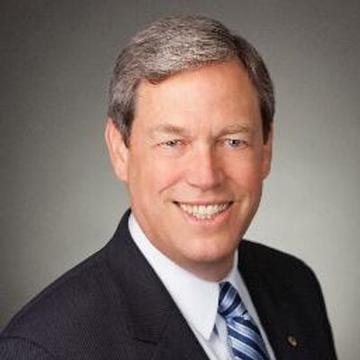
Camden Fine
WASHINGTON–A Senate hearing featuring the CEO of Wells Fargo being grilled over that bank’s widespread scandal related to opening unauthorized accounts (CUToday.info has coverage here and here wasn’t limited to just the Senate Banking Committee.
As CUToday.info is reporting in The Feature, it was fodder for both jokes and serious statements from members of Congress speaking to NAFCU’s Congressional Caucus, which was taking place at the same time.
In addition, other bankers issued statements aimed at ensuring they weren’t broad-brushed as a result, while at least one credit union stressed it doesn’t pay the kinds of incentives being blamed for what led to $185 million fines against Wells Fargo.
In a statement, the Independent Community Bankers of America (ICBA) called on Congress to keep in mind the differences between community banks and megabanks as lawmakers consider any legislative response to Wells Fargo’s massive consumer fraud. In a letter to members of Congress, ICBA called for targeted regulatory relief for community banks to promote consumer choice in financial services.
“Community bankers are gravely concerned that the legislative and regulatory reaction to Wells Fargo will again fail to distinguish between too-big-to-manage banks and community banks,” ICBA President and CEO Camden R. Fine wrote to Congress. “Costly, unnecessary new requirements would only hamper community banks’ ability to serve their customers and further drive consolidation and concentration of the nation’s financial resources.”
In its letter, ICBA wrote that “community bankers are outraged by the rampant fraud perpetrated by Wells Fargo on millions of Americans, for which the megabank recently paid $185 million in fines. While megabanks such as the $1.9-trillion-asset Wells Fargo operate a transactions-based business model that incentivizes abuse of consumers, community banks are built on a relationship model in which reputation is everything.”
ICBA said Congress should avoid the kinds of overreaching laws and regulations enacted after the recent financial crisis, which disproportionately affected local institutions.
In Raleigh, N.C., meanwhile, State Employees Credit Union issued a statement noting that while many financial service providers utilize incentive based payment systems and commission structures to pay their employees that lead to pressures to act unethically, it’s a not-for-profit financial cooperative model, where members share the benefits of SECU ownership.
“Credit Union employees are paid a salary only, there are no incentive or commission-based compensation programs,” the credit union said. “This structure intentionally removes any temptation which might distract the focus of providing members the most appropriate products, allowing staff to fully focus on helping members improve their financial lives.”
“State Employees’ Credit Union is the trusted services provider for more than two-million members,” said SECU President Mike Lord in a statement. “Our ‘Do the Right Thing’ mission continues to guide our employees to serve our members. We purposely operate with no commissions or incentive pay so that employees focus on the best choices for members. The only incentive our employees have is to help members by providing the best product or service that meets their needs and the needs of their family.”