

Sherrod Brown
WASHINGTON—Wells Fargo CEO John Stumpf failed to provide detailed answers regarding when he first learned about the employee misconduct that eventually led to $185 million in fines from regulators.
Stumpf was grilled Tuesday during a Senate Banking Committee hearing about the bank’s creation of more than one-million fraudulent accounts. As several senators attempted to get Stumpf to provide more specifics, Stump consistently responded that he first learned of the employees’ actions “sometime in 2013.” The toughest treatment came from Elizabeth Warren (D-MA), who called Stumpf "gutless" and told the CEO it was time to step down.
Wells Fargo’s behavior was frequent fodder for members of Congress who were speaking to NAFCU’s Congressional Caucus at the same time the hearing was occurring. Speaking prior to the Senate hearing, Sen. Joe Donnelly (D-IN) told NAFCU’s Congressional Caucus, “What we’re going to be talking about is, hopefully, things you never do in your organizations,” he said to laughter and applause.
During the hearing itself, members of the committee emphasized the seriousness of the matter to Stumpf, saying that the issue at hand is “fraud,” not anything less.
Banking Committee Chairman Sen. Richard Shelby (R-AL) opened the hearing by saying much remains unclear about what went on at Wells Fargo in recent years regarding the unethical practices among its staff.
“I have often said banking is based on trust and trust was broken at Wells Fargo,” Shelby said.
Where Were Regulators?
Shelby said he wanted to focus on several key areas, including:
- When did the employee misconduct begin and why didn’t regulators spot it sooner?
- When did Stumpf and senior management spot the trouble and respond?
Shelby said one big question is directed more at regulators than Stumpf: “Where were the federal regulators when Wells Fargo employees were taking advantage of customers for many years? If the OCC and CFPB were aware of this before the LA Times article was published, why did the LA Times uncover what Wells Fargo’s regulators should have uncovered? Why did it take (regulators) so long to act?”
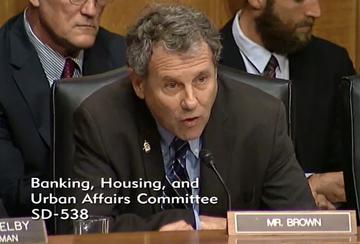
Sen. Sherrod Brown (D-OH) stated that what went on at Wells Fargo is clearly fraud, and should not be characterized as anything else.
“This is not giving products and services to customers that they don’t need—like a mix up of Christmas presents under the tree. This is fraud.”
The toughest questions--and commentary--came from Warren who told Stumpf, "You should resign...You should be criminally investigated."
Warren scolded Stumpf for Wells Fargo not terminating any executives connected with the unethical behavior.
"You squeezed your employees to the breaking point so they would cheat customers and you could drive up the value of your stock and put hundreds of millions of dollars in your own pocket," Warren said.
Brown questioned why Wells Fargo acted only after the LA Times story appeared, addressed the impact on how thousands of low-wage workers were impacted by the firings, and stated that that the culture of the bank needs changing—“from the top down…You need to admit to the problems, fix them, and treat your customers in real life like you do in your vision statement…I hope you will level with this committee,” Brown said.
John Stumpf
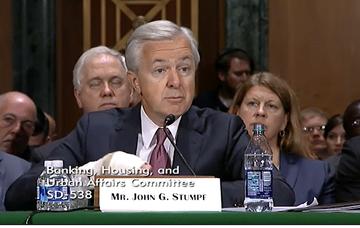
In response to Shelby’s question about whether the fraud began prior to 2011, Stumpf said, “I can’t guarantee it did not happen before that time.”
Shelby asked when Stumpf became aware of the problems, and Stumpf responded that the company’s business units, which have their own audit and investigation teams, had been “working on this issue for years. After the business units were dealing with this for a couple years, then the problems were brought to the holding company—the second line of defense. That is when I became active (in the matter).”
Why Fraud Not Detected Sooner?
Shelby questioned Stumpf’s response, asking the CEO why the fraud was not brought to his attention sooner?
“If I could turn the clock back, I wish I could have done more earlier,” answered Stumpf. “We did not act soon enough.”
But Shelby insisted that Stumpf did not answer his question, and asked again, when he and other members of senior executives learned about the employee misconduct.
“Speaking for myself, sometime in 2013,” Stumpf said.
Shelby asked about the accountability of executive Carrie Tolstedt—responsible for the Wells Fargo department that was responsible for creating more than two-million unauthorized customer accounts— for what occurred under her watch, why she received large bonuses yearly and, and why she expected to receive a large payout—$125-million–one that almost rivals the size of the regulators’ fines on the bank—when she retires at the end of the year.
Stumpf said that Tolstedt had performed well in many other additional company areas. “But in this particular area she did not do enough. Her retirement (package) and bonus will be decided.”
When Shelby asked if Wells Fargo may claw back some of Tolstedt’s compensation, Stumpf said he would get back to the senator. “But you are the chairman and CEO, doesn’t the buck stop here?” asked Shelby.
“Yes. I am the senior officer,” responded Stumpf.
“So are you going to seriously look into this person’s responsibility (in the employee conduct matter) and determine the reward she will get?” Shelby asked.
“This is up to the compensation committee and I am not part of that process. It is an independent process. It is their decision,” Stumpf said.
Brown challenged Stumpf, asking him why he does not want to go “on the record” regarding Tolstedt’s compensation. “You are not willing, as the CEO, to make a public statement about what miss Tolstedt did? Not willing to say publicly that some of her compensation should be clawed back?”
“I will let the process proceed. . . And I refer to my earlier testimony,” Stumpf said.
“That is unfortunate,” responded Brown.
Warren was more direct about Stumpf leaving the claw back decision up to compensation committee.
"If you have no opinions on the most massive fraud that's hit this bank since the beginning of time, how can it be that you get to continue to collect a paycheck?" Warren asked.
When Did Stumpf Know?
Brown, asked Stumpf to be more specific about when he learned of the employee misconduct in 2013, and was it after the LA Times report.
“I don’t remember the exact time. I will get back to you,” he said.
Brown questioned why the bank has said it is stopping at 2009 in looking back for instances where customers may have been harmed. “Might not (the instances of employee misconduct) go back further?”
“We want to make it right by any customer,” said Stumpf.
“Meaning you will go back earlier than 2009?” asked Brown.
“I want to make sure that for any customer who suffered harm of any kind, we will do right by them,” said Stumpf.
“So is that pledge by you to go back further (than 2009) if customers were harmed?” asked Brown.
“I will take that under advisement,” Stumpf said.