

WASHINGTON—Reaction to the CFPB’s proposed rules on short-term, small-dollar loans includes some quoting Bible verses in support and others predicting doom of Biblical proportions.
With the exception of the payday loan industry itself, those inside and outside credit unions generally see the CFPB’s proposal on payday lending as a positive step for consumers, yet most feel more work needs to be done before the rule is final—including addressing the issue that one result will be consumers will now have fewer small-dollar loan choices.
But both credit union trade groups are already expressing concern credit unions are going to be inadvertently swept up in the new rules and that many, especially small CUs, simply won’t be able to offer any type of small-dollar, short-term loan, as CUToday.info reports here.
Some are forecasting that thanks to the CFPB’ payday lending proposal, small-dollar loan volume could fall at least 55%, and the $7 billion a year that lenders collect in fees would drop significantly.
Here’s a look at some of the responses to the proposal:
Who Helps ‘Les Miserables?’
“I think the CFPB has missed a key point here,” said Michael Moebs, economist and CEO at Moebs $ervices in Lake Forest Ill. “Consumers will now have fewer small-dollar loan options. Some will turn to credit unions, which is good. But others will turn to loan sharks. I feel the CFPB has missed the mark in that nothing in the rule, from my initial topline review, addresses educating the consumer on how to manage their finances and choose a good, small-dollar loan.”
Moebs emphasized that the CFPB has missed the strategic, or unintended consequences, completely.
“People who need a payday loan, title loan or other small-dollar loan have exhausted chartered financial institutions, employers, family, friends and good Samaritans,” said Moebs. “So without a payday loan they have only pawn shops or loan sharks left. Often they have nothing of value other than a vehicle. There are conservatively 23-million Americans who Victor Hugo would call ‘Les Miserables.’ So Mr. Richard Cordray, in your capacity as Inspector Javert, where do they go?”
Thomas W. Miller, a visiting scholar with the Mercatus Center at George Mason University, agrees with Moebs.
“Payday loans provide short-term cash infusions to help consumers bridge financial difficulties,” he said. “Some states already ban this low-cost, high-rate product, and other states effectively ban the product by imposing a 36% rate cap. The CFPB rules will likely further restrict the availability of payday loans to consumers. Some consumers have few sources of borrowed funds. How can these consumers be made better off with even fewer choices?”
Fill The Gap
Moebs said that in addition to offering payday alternative loans, CUs can step in to meet consumers’ needs through overdrafts.
“Overdrafts are credit but not a loan under Truth-In-Lending – Regulation Z,” said Moebs. “However, these overdraft loans need to be solely underwritten
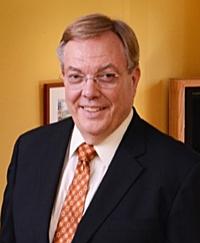
Michael Moebs, Moebs $ervices
empirically to avoid UDAP or Regulation AA restrictions and charge less than $20 per occurrence.”
But Moebs insists that the CFPB needs to go to the “root cause” of the small-dollar loan problem.
“The problem is the consumer’s lack of basic knowledge about how financial services—such as the checking account, credit card, vehicle loan, and a mortgage—work,” said Moebs. “If grammar school students are required to pass a civics test to graduate, then high school students need to be required to pass a financial service test to graduate.”
Further Changes Necessary
The Consumer Federation of America views the proposal as the best chance consumers have at avoiding further harm caused by payday and car title loans.
“Getting this rule right means requiring lenders to fully consider a borrower’s income and expenses and make a fair determination that, at the end of the month, there is enough money left to pay living expenses and loan payments without hardship or re-borrowing with additional interest,” said Tom Feltner, director of financial services at the CFA. “The CFPB is proposing sweeping changes to an industry that, for decades, has trapped millions of consumers seeking short-term credit in a long-term cycle of debt. Borrowers will be better protected, but further changes are necessary to eliminate the harmful effects of triple digit interest rates and coercive collection practices.”
‘Close the Loopholes’
The National Council of La Raza—the largest national Hispanic civil rights and advocacy organization in the United States—applauded the proposal saying the rule will help Americans, including Latinos, avoid the payday debt “trap.”
“This proposed rule is welcome relief for many consumers who live paycheck-to-paycheck. However, NCLR also urges the CFPB to close several loopholes that still allow some of the worst payday lending practices to continue . . . The crucial ‘ability-to-repay’ standard is undermined by flaws in how it is applied, exempting some loans from the ability-to-repay requirement altogether. To prevent harm from unaffordable loans, there cannot be exemptions,” the association stated.
“Until today, this market had gone unregulated,” said Janet Murguía, NCLR president and CEO. “NCLR supports the Consumer Financial Protection Bureau’s proposed rule to curb the payday loan debt trap, which has ensnared many in our community with the promise of short-term financial assistance. Yet we recognize that there is still more work to be done to ensure that the CFPB rule protects the most vulnerable consumers from these predatory payday, car title and long-term installment loans.”
Field Hearing Testimony
During the CFPB field hearing in Kansas City, Mo., Thursday, numerous views were shared, most of which were critical of current payday lending practices.
Arguing against the proposal, a spokesperson for the payday loan industry’s trade association called the proposed rule “too prescriptive,” saying that “requiring underwriting that is on par with the 30-year mortgage” is over the top. The new rules, the spokesperson said during prepared remarks, will leave “millions of Americans with no place to turn.”
That same person said the fact there are few complaints about payday loans is evidence there is little abuse, but a pastor who was among those testifying said the reason there are few complaints is that those victimized by such loans feel “shame” and are embarrassed.
Those testifying at the field hearing included several representatives of faith-based organizations, including the National Association of Evangelicals, who cited the Bible as a source of guidelines for responsible lending. Proverbs 22:22 was cited by several speakers: “Do not rob the poor, because he is poor.”
A number of evangelical and faith-based groups have jointly created a website that calls for fair lending practices at www.lendjustly.com
Other Comments
Among the comments made at the hearing:
- One person said the poor are frequently victimized by what she called “the unholy Trinity: poverty, predatory practices and poor health.”
- Several people testifying said the new rule needs to ensure that payday lenders are not able to find and exploit “loopholes.”
- Payday lending, said one person, really is a “matter of life and death for the most vulnerable citizens in our state.”
- Several people called on Congress to set a national interest rate cap similar to that for the military.
- Another person testifying noted that 60% of all jobs in U.S. are paid hourly wages, and income volatility is common.
- Using the United States Postal Service as a means of extending financial services into communities was again pitched as one strategy for providing greater financial access.