By Frank J. Diekmann

With the term of Rodney Hood now expired, sometime in the near future the NCUA board should be getting a new member, and when it does here’s what I suggest it put atop its list of priorities: Require credit unions to publicly disclose what they are paying for all the banks they’ve been buying.
I mean, since each deal comes with exaltations around how everyone is benefitting, why the secrecy?
And yet as CUToday.info so often must note in our coverage of these acquisitions, “Terms of the deal were not disclosed.” Why not? The money belongs to every member of the cooperative; it’s their capital. It’s like saying, “We’re not going to tell you how much of your money we spent.” Since the board and management chose not to give it back to members, basically saying it would be better deployed elsewhere, the members deserve to know if that's true so they can decide.
Recently, that phrase, “Terms of the deal were not disclosed” appeared four times in just one week when CUToday.info reported on a record quartet of such bank buys from Michigan to Illinois to Alabama. The words shouldn’t appear at all.
A Real Disconnect
It’s quite the hypocritical disconnect for a CU community that defends the federal tax exemption largely on the back of the “structure,” that is that credit unions are democratically run cooperatives where the members are the owners, to then turn around and say certain information belongs to some but not others (never a good sign in a democracy) and that some cooperators are more equal than others (see previous parenthesis, or go dust off your copy of Animal Farm sometime).
There is another big, CU-principal-grounded reason for letting members know how much of their money is being spent and for what, and it’s a real ironic kicker: if the acquiring credit union were a publicly traded bank buying up another bank, it would be required to disclose the purchase price, and analysts/customers/the market would have the opportunity to put the ROI under the microscope.
When these acquisitions occur, the former bank customers become members—they are now owners, it is emphasized when the deals are announced—and yet moving forward they could actually get less information should future deals take place. How in the name of Ed Filene’s fedora is that right?
Let’s Go There
And then there is this other “let’s not go there” issue. But I say, let’s do. While this may not be the primary reason for buying a bank, it’s also not an innocent bystander: CEOs who have language in their contracts tying their compensation to asset size are getting raises out of these deals. Members have a right to know about that, especially since—again—it’s their money being used to goose the comp.
Somewhere out there right now someone is reading this and saying, “Hang on, Frank; requiring credit unions to disclose to their member-owners how much of their own money is being used to buy banks could put a damper on such acquisitions.” Seriously? Re-read that sometime and then try to keep a straight face. Only a congressman could attempt to pull that off, and that might be a stretch.
It must be noted that some credit unions do announce what they’re paying when acquiring banks. If it hasn’t hurt them, it won’t hurt others, unless something else is going on.
Time to Document
Consistently, in all of our reporting around these ongoing bank buys—and people close to these deals say more are on the way—the released statements say things like the acquisition will create a “great banking experience” and will provide “the highest levels of member service” and will offer “expanded products, services, and technologies.”
It’s time to dispense with the rosy sounding but generic banality and to specifically document how members of the acquiring credit union benefit, and how the former customers are better off, with some real dollar figures around the savings on loans and fees and the increased rates on deposits. You know, how much more is going into people’s pockets?
While also rarely discussed, many of these deals are about credit unions seeking to acquire commercial loan portfolios; how does that help those whose capital was used to buy those books of business? Again, CUs should share the deets around how the folks who are mostly the moms and pops behind mom-and-pop shops are benefitting.
An Effective Response
Not only would documenting all that be the right and ethical thing to do, it would make for an effective response to critics, such as the strong op-ed published recently in the Wall Street Journal that claimed credit unions are just “profit-seeking enterprises masquerading as tax-exempt non-profits.” Among the pieces of evidence cited in that op-ed to support its thesis: bank acquisitions.
Wouldn’t it be terrific if credit unions could answer by documenting that “customers of ABC Bank” are now benefitting by…
Walking the Talk, Plus a Question
All of the claims made by bank-buying CUs sound great, and they probably are. But I think what would sound even greater would be credit unions walking their talk. And it’s just what a new NCUA board should be talking about when they walk into their first meeting together.
In one story reported by CUToday.info, a CEO was quoted as saying that the customers-becoming-members of his credit union are “very interested in finding out what a credit union is all about.”
That’s fantastic. So, credit unions, what are you all about?
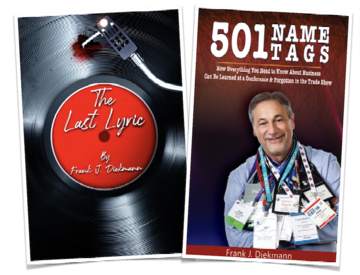
Frank J. Diekmann is Cooperator in Chief of CUToday.info and can be reached at Frank@CUToday.info. Mr. Diekmann is also author of several new book, including the brand new “The Last Lyric,” a humorous satire about a murder investigation at the Rock & Roll Hall of Fame in which every line of dialogue is either a classic pop/rock song title or lyric. Available on Amazon, Apple iBook, Barnes & Noble and Smashwords. Mr. Diekmann is also author of a non-fiction compilation of the very best & worst he has seen and heard in covering more than 500 CU meetings and conferences, “501 Name Tags: How Everything You Need to Know About Business Can Be Learned at a Conference & Forgotten in the Trade Show.” It is available on Amazon, Barnes & Noble, Apple, Lulu, and Smashwords