

Editor’s Note: This op-ed was first published in the St. Louis Post-Dispatch and is republished here with permission.
By Debbie Matz
The rallying cry of “Break up the big banks!” has been heard in presidential campaigns, the halls of Congress, and in some Federal Reserve Bank leadership offices.
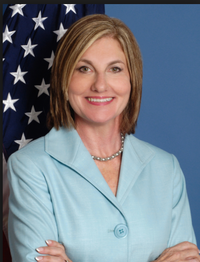
Debbie Matz, NCUA
It has a great deal of persuasive power, yet, as public policy, it’s the wrong approach.
St. Louis Federal Reserve Bank President James Bullard last month said he favors breaking up big banks in order to foster innovation. His fellow Federal Reserve Bank president, Neel Kashkari, head of the Minneapolis bank, also supports this concept.
As a federal regulator, I want to share why I believe breaking up the big banks is the wrong solution.
I am no apologist for the nation’s largest banks — far from it. As the longest-serving voting member of the Financial Stability Oversight Council, I have worked to clean up the mess caused by inappropriate risk-taking in the frenzied run-up to the financial crisis. The council’s job is to identify risks and respond to threats to our nation’s financial system. I have seen how fiercely the big banks resist many reforms designed to prevent economic havoc.
In fact, the National Credit Union Administration, which I chair, was the first financial institutions regulator to sue the firms whose actions contributed to the Great Recession. NCUA has even been called the “John Wayne of Washington financial regulators” and “unusually tough” on Wall Street firms that sold faulty mortgage-backed securities to credit unions. To date, we’ve recovered $2.5 billion, and we have more than a dozen additional lawsuits pending against banks headquartered in the U.S. and overseas.
But breaking up the big banks, especially in our current economic climate, is not the right answer. Doing so risks undoing the valuable progress that the Financial Stability Oversight Council and federal regulators have made and will continue to make.
Bank Size Not Cause of Crisis
The Dodd-Frank Act gave regulators new powers to monitor the health of financial institutions, particularly those deemed systemically important. To reduce threats to our financial system and protect taxpayers, the law raised capital requirements for big banks, restricted certain high-risk practices, and created a mechanism to unwind failing institutions in an orderly way.
Bank size didn’t cause the financial crisis. Poor underwriting, coupled with mortgage securitization and risky speculation in the shadow banking sector, were the biggest factors. Dodd-Frank requires big banks to operate under more rigorous regulatory and supervisory standards. Systemically important financial institutions also now are subject to greater scrutiny. These reforms have strengthened the financial system.
It’s hard to see how arbitrarily capping banks’ size would further reduce risks. Focusing attention on size alone might even introduce new risks, creating instability within the financial system — the very problem that Congress designed Dodd-Frank to prevent. Instead of many new small institutions, we’d be more likely to get a handful of new firms lurking just below the asset cap. As they got closer to the arbitrary cap, these firms would likely develop strategies to circumvent the size limit in substance while adhering to it in form. If that happens, we’ll end up with a system that has more risks and less transparency.
Any credible plan needs to fully address critical and practical questions about how to break up big banks. How would their trillions of dollars in assets, debts, and equity be divided? What effect would disruptions of this magnitude have on the tens of millions of consumers and businesses forced into new financial institutions? After all, some of the big banks became big precisely because consumers and businesses chose to do business with them.
Additionally, in the current environment, enforcing arbitrary size limits would likely decrease the availability of credit. It would slow or even end the ongoing economic expansion.
Creating Living Wills
Today, big banks are preparing living wills. Regulators are working on joint rules to prevent excessive compensation that could lead to material losses. The Fed is considering ways to increase the capital cushions of failing banks. These efforts don’t require breaking up big banks. They only require completing what we’ve already begun.
Finally, as a failsafe, Dodd-Frank already gives regulators the power to force big banks and other systemically important institutions to divest assets if they pose a “grave threat to the financial stability of the United States.” Used appropriately, this regulatory tool is more effective than imposing an arbitrary cap on bank size.
Let’s continue our regulatory progress. Let’s ensure that all Americans have access to safe, secure financial services. Let’s guarantee that taxpayers never again have to bail out our banking system. Reform, not revolution, is what gets us there safely.
Debbie Matz is board chairman of the National Credit Union Administration and has served on the Financial Stability Oversight Council since its inception. Ms. Matz shared her thoughts as she prepares to step down at NCUA on April 30 with CUToday.info here.