

"Leadership does not begin just with vision. It begins with getting people to confront the brutal facts and to act on the implications," Good to Great, Jim Collins.
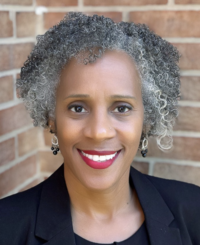
By Shellee A. Mitchell
Recently, although I have been in the credit union industry for more than 10 years, I have been fortunate to travel to several credit union conferences. This experience is a new level of opportunity for me. As I am among new people, I view the groups and various presenters. I wonder, "Where are they?" "Are they not experts or significant staff?"
My eyes survey the room for human variety within the broad range of attendees. I may see one or two differences; however, given the majority, minority presence is a fraction of participants.
My willing naivete to have hoped for more progress is overtaken, then pumps with promise for seeing the emerging few. DEIB is still an infant concept for credit unions. Having accelerated in 2020, I should not expect a barrage of change in 2023. Indeed, with all the human variables to consider, it will require more time for change with workplace standards, evaluations, and protocols, right?
What’s Often Overlooked
To what degree is there consideration of higher education, professional experience, and personal fortitude? These normative scales are often overlooked when reviewing management or executive opportunities for African-American women. In credit unions, this corporate tightrope is also actual.
The 2021, NCUA CUDSA Report indicated that out of 4,954 credit unions, 240 submitted workforce data. This data showed 20,007 white employees to 3,401 Black or African American employees; 4,082 white staff in management positions, with 505 Black or African American staff in management. This is an elevation in diverse rankings.
Credit unions are embarking on conversations and programs to effect workplace change. Still, this data is disheartening for the credit union model and could potentially disengage community sustainability. As a consideration, African-American women are innovative, collaborative, and educated. Culturally, African-American women are the primary influencers and backbone of the community.
Whether in the forefront of the mic or life lessons at home, African-American culture leans toward women.
Three Things to Consider
Consider:
- College degrees are essential as qualifiers for management or upper-level job descriptions. African American women have the highest percentage of college degrees than all female ethnicities. The 2020 National Center for Education Statistics reported that the shares of bachelor's degrees earned by female students were 64% for Black students compared to 56% for white students.
- Uncommon methods toward projects and forming strategies. African American women excel in starting new businesses: "17% of all Black women in the U.S. are in the process of starting or running a new business compared to 10% of white men, and 15% of white women,” according to the Brookings Institute.
- Forming teams and maintaining cohesion is a quality soft skill. "A core symbol of African American identity may be positivity, sharing, uniqueness, realism, and assertiveness. Individualism is often cited as a core symbol of European American identity," according to Intercultural Communications in Context.
An Undervalued Asset
As credit unions evolve, African American women are a major undervalued asset in the outreach of people helping people.
In 1-to-1Woman Mentoring, we pair executive-level Caucasian women with rising young adult African American women to discuss gender bias and racial disparity. We intend to confront stereotypes and misperceptions to create a bridge in the systemic structures that have separated us.
As 1-to-1Woman mentors, women voluntarily share their experiences and the adversities in reaching their professional achievements in male- dominated industries. 1-to-1Woman mentees are given different vantage points and guidance for their career ascension. This pairing occurs with the apparent truth of race, bias, and historical damage.
Since its initiation in March 2021, 1-to-1Woman has partnered with over 200 women. Many overqualified, unrecognized African American females repeatedly must prove their ability for promotion and pay from hourly positions. In a 1-to-1Woman Mentoring cohort, before meeting her mentee, mentor Tena Lozano, executive director with the RMJ Foundation, shared that, "Upon looking at Brittany's resume and seeing her education and experience, I thought to myself, why is she not in a higher position?"
New Perceptions & Tactics
This view is not to displace existing staff but to evoke a different perception of workplace standards. It will cause a stir of uncomfortable groups and relational changes but, at the least, also bring new perceptions and tactics for future profitable direction.
Review, reconsider, and re-evaluate your credit union's performance evaluation, salary structures, and who is included in influential, management-driven groups. Your credit union's sustaining legacy could likely be in-house, waiting for an earned opportunity.
Shellee Mitchell is the founder of 1-to-1Woman Mentoring and principal consultant for Sapphire Dimension, LLC. With a central focus on women and the under-served, Sapphire Dimension examines limitations to strategically pursue uncommon possibility. She can be reached atsam@sapphiredimension.com.