

Editor's Note: The second part of this column on how to turn the F into at least a C can be found here.
By Frank J. Diekmann

Before we get any further into the new year, I really want to make sure I follow through on one of my 2020 resolutions, and that is to publicly apologize. To publicly apologize for something I said. Something I said that I regretted almost from the moment I said it before a group of credit union leaders in Washington, D.C.
What I said came in response to a question from an audience member asking why so few of her credit union’s press releases ever appeared in the media, and I blurted out my response before really thinking it through. “The biggest question I have with most credit union press releases and communications,” I responded, “is how did the person who wrote this ever get out of high school English class?’”
And for that I deeply apologize.
What I meant to ask was, “How did the person who wrote this ever get out of elementary school English class?”
And now I’m going to apologize again, as I just can’t go on any longer. I’m sorry if this sounds all curmudgeonly, get-off-my-grass crabby, but it’s not my fault, it’s yours. Or maybe I should restate that in the spirit of the communications credit unions are sending out: “But; Its knot my, fault. Its youres.”
Let Me Be Clear (As Few CUs Are)
If I’m not being clear—and the very definition of clarity in prose is “composition that communicates effectively with its intended audience”—let me clarify: Much of the communication distributed by credit unions is poorly written and chock full of errors in punctuation, grammar and diction. But beyond the appalling attack on those fundamentals you will find a larger and even more disturbing problem--violations of basic syntax. In short, I frequently find myself wondering what in the world is this release even about?
A distinguished professor might describe much of what is coming out of credit unions as “gobbledygook.” I’m not particularly distinguished, so let me be plain in my prose--it’s crap, it’s inexcusable, and it’s embarrassing.
Do you know what else? It’s hurting your credit union. Technology has made it easier than ever to distribute “news” releases and other announcements (not to mention to spellcheck them). Anyone with access to the Internet is now in the “communications” business, and that old "drinking from a fire hose" cliché would seem an apt description for the news outlets on the receiving end of those press releases, except it’s more like multiple fire hoses plus a waterfall.
You know the old adage about not forgetting your audience? Many of those writing and distributing messages on behalf of CUs have forgotten the recipients of their painful prose have little time to wince their way through it.
The Other ‘Critical’

All of that makes the need to be clear and concise in communications absolutely critical. Unfortunately, much of what is coming out of credit unions is in a different state of critical condition.
If assault on the English language were a crime, many of you would need to reach into your reserves (significantly in some cases) for bail money. If the CUNA Mutual Bond covered assaults against the kinds of lessons in punctuation and grammar that should have been learned by sixth grade, the folks in Madison would be declaring bankruptcy. If regulators rated credit unions on the quality of their written statements and press releases, at least a good half would be a CAMEL 6.
More Than a Firehose
Why bring all this up? Those fire hoses of press releases and communications I mentioned above are gushing at the same time most media outlets have slashed staff, and those media that are serious and legitimate have little time to stop and attempt to make sense of your press release. You may be surprised to learn they don’t employ a team of linguistic experts, cryptographers and mystics who have days to spend attempting to deduce the code behind whatever in the world you’re saying, while overlooking all the typos and errors.
In the newspaper days of old, there was a saying that news editors read press releases while standing over a garbage can. Today, they just hit the delete key.
And in those cases of “media” where they treat releases like a flyer on a bulletin board and upload verbatim whatever you send, your mistakes, foggy messages and unprofessionalism are there for all the world to see. (Fortunately for you, practically no one is paying attention to those.)
It’s Getting Wurst
I’m sad to say I’m venting on this issue for another reason: the sloppiness is getting increasingly worse.
Now, let me stop you right here. I can already hear what you’re saying/thinking. “Frank, the King’s English died with the king. The rules aren’t that strict any longer. Today’s lingua franca is textlish. You literally don’t have to dot every i and cross every t” (both of which would become l’s, but let’s let that go for a moment). In short, no one’s a stickler. Really? Eyecann Just. right. In any wiegh with know “rule’s”? Hay, that. ,Iz. Ez.
Keep it Simple
The question posed above about media coverage is hardly new. For as long as I can remember credit unions have been asking about the magic formula for getting more coverage. It’s not magic—it’s simple. No, seriously. That’s it. Keep it simple. It’s the What, Who, Why, Where and How statements. Be brief and chop all that extraneous flotsam.
But simplicity apparently isn’t simple and, listen, I get it. That person you’ve put in charge of your communications is sitting on some pretty sizeable student loan debt for that creative writing degree that maybe in hindsight wasn’t a such a great career choice, but hey, they were 18 and going to change the world, right? And I’m sure that very same person will have the last laugh when that Great American Novel they’ve already started on your CU’s dime is atop Oprah’s Book Club. But until then, let’s save some chapters and JUST GET TO THE POINT.
Yes, you no doubt will one day make us laugh, make us cry, but please save the heart-tugging or boastful or simply irrelevant three-paragraphs-of-fluff lead for your best seller (although I will concede you have often made me cry, so you’re halfway there).
Speaking of the frustrated Charles Dickens of CU Land, I’ve actually received releases that began, “It was the best of times, it was the worst of times.” When I or any other media member receive that release, it’s just the worst of times.

Bury the Lead, Bury the Response
The first thing student journalists learn is not to bury the lead. The good news: many CU press releases never need to worry about that, because the lead is never born. Those who, what and where questions aren’t answered, if answered at all, until the third or fourth paragraph—and which busy news editor has time to read that far? Exactly.
Here are two recent examples:
- One CU distributed a press release on a new sporting event for which it has become the title sponsor. But it didn’t even mention THAT FACT until the third paragraph and quoted people from the other organizations before it quoted its own.
- Another CU recently unveiled a name change, but didn’t announce the new name until five paragraphs and 340 words into its press release.
Think of press releases as you would your own TV commercial: Hook the viewer/reader quickly before they reach for the clicker.
Let’s Bow Our Heads
While I’m trying to stay big picture here, before I go any further I’d like to pause and ask everyone to bow their heads as I say a few words on behalf of the comma. In Credit Union Land, the comma is pitifully and simultaneously overserved and underserved. One conclusion you will clearly come to in reading credit union press releases is, either everyone, in credit, unions, speaks in, halting, sentences in which, they are, pausing, all, the, time, or nooneincreditunionseverpausesandit’salljustonelongrun-onsentenceinwhichnoonecouldpossiblyevercatchtheirbreathsotheremustbealotofwindedpeopleincreditunions.
If credit unions treated their members like they treat commas their lobbies would be Braveheart meets Scarface battle scenes as directed by Quenton Tarantino, only messier.
Whew, feels better to get that one out. Excuse me, get, that, one, out.
OMG, I’m Fabulous!
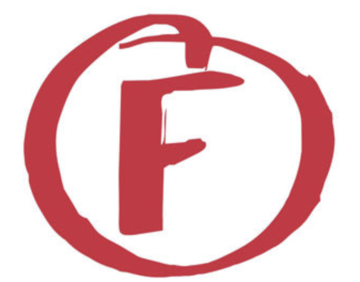
In an attempt to also make myself feel a bit better I have in recent months been strongly tempted to print out some credit unions’ press releases on actual paper and then go Old School on them with a red pen to mark up all the errors and mistakes. I would then bring it to a grand conclusion by emblazoning a big red “F” at the top before scanning the document into a PDF and returning it to the sender. But why is it I strongly suspect the sender hails from a generation in which everyone is a winner and self-esteem is a fragile rainbow bubble that can never be burst, and it will be the first F they’ve ever seen? And that F, they’ll just know in their confident little hearts, means “Fabulous!”
And in Conclusion…
In order to heed my own advice and keep this short, I’ve put together a long list of the basics and the kinds of communications crimes CUs commit that I’ll save for my next column.
Until then, let me conclude with how I started and apologize again; in this case, for apologizing at all. The F many credit unions deserve in communications isn’t for Fabulous, it’s for Failure.
Here’s are a few more F’s for you: Get it Fixed in the Future.
Frank J. Diekmann is Cooperator in Chief at CUToday.info and can be reached at Frank@CUToday.info or @FrankCUToday.