By Frank J. Diekmann

Credit unions are rightly proud of the “army of cooperators”—as they are sometimes called by the zealous—and the “advocates”—as they are more often referred to by the trade associations—who will be descending this week on Washington as part of the CUNA’s GAC.
CUNA likes to use the figure “5,000” when it comes to the headcount for the meeting, but all those name badges admittedly include all the vendors on hand, too, and the lobbying they do is actually in lobbies (and restaurants and bars), but that’s another story.
Still, several-thousand credit union reps will be putting on their boots and dutifully hiking the Hill to meet with legislators—and just as likely, with their staff—and making themselves heard. One of the ironies of the CU message, of course, has always been that while other groups come to Washington with PowerPoints full of bullet-point lists of demands, at their core credit unions are essentially asking for nothing—just that the tax exemption be left alone.
But here’s what you really should keep in mind. As proud as credit unions are of their turnout, for members of Congress it’s “GAC” every week they are in session, with multiple industries and lobbies and groups and special interests hosting their own Hill hikes, as seen in the Oscar-nominated movie, Every Lobbyist, Everywhere, All the Time. Many of those other groups boast numbers much larger than the credit union troops.
Frankly, given all the hiking going on, I’m surprised there aren’t dueling REI stores facing each other from Constitution and Independence avenues.

Who Are You Again?
A few years back I was seated on a flight next to one congressman’s chief of staff who showed me the upcoming meeting schedule for the representative. The passenger list on that flight was shorter than what the congressman had coming up. No wonder some members of Congress addressing GAC have to look down to their notes to remind themselves who is in the audience today.
It's something every CU should be keeping in mind when it comes to the message: Stay focused, tell them what you’re going to tell them, tell them, and tell them what you told them. Because somebody else is coming in the door right behind you. And they also have a checkbook.
On the Plus Side, I Don’t Kick Dogs
As someone who has the frequent honor of addressing credit union audiences, I know there is no greater favor the person introducing you can do than to set the bar low when it comes to expectations.
And sometimes you have to do it yourself, apparently.
Speaking to a recent CUNA Mutual webinar on “Generation Flux,” Robert Safian noted as he began his remarks, “I'm not a statistician. I'm not a data geek. I'm not in the financial industry like you. I'm not a financial advisor, an investment advisor, a venture capitalist, a banker. I've never worked at a credit union or a bank or anywhere in the financial services industry. I'm also not an economist or an academic or a professor. I'm not an anthropologist or an archaeologist or a sociologist. I don't even have an MBA. In fact, I have no advance degrees of any kind. So, what am I doing here? Well, I am a journalist.”
And although Safian was modest withhis qualifications, he actually offered some pretty keen insights on managing in this environment, which you can read more about here.
Does No One Proofread These Things?
As you’re aware, CUToday.info offers regular and comprehensive coverage of what those credit unions seeking to merge are telling members as part of their NCUA-mandated disclosure forms.
Many of those statements to members almost appear to have been command C’d, as they are so similar, sometimes almost boilerplate. They often (sadly) cite the same reasons for merging, most especially the lack of any succession plan for both the retiring (or deceased) manager and members of the board.

And then there are the disclosures that present a different kind of risk—in this case the risk of a neck injury by inducing a double-take.
In one case, one CU said members should sign off on the merger because it’s essentially already under way, noting “the manager will be leaving the end of January 2023 and both credit unions have signed an executive and management services agreement so that (acquiring CU) will be able to run the (acquired CU) until the merger.”
What is a Loan, Again?
In another case, a credit union said the merger was a good idea because members would be offered a “larger menu of loan products,” and those loan products included “checking accounts with ATM surcharge reimbursements…rewards checking accounts that were high yielding and debit card cash-back options.” Perhaps they’re merging due to a misunderstanding over what constitutes a loan product?
Finally, one CU told members there would be no share distribution because it “would not be able to obtain sufficient growth on a standalone basis to project a valuation that warrants any adjustment in shares.”
Which I’m confident every member readily understood.
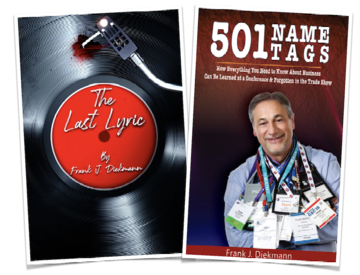
Frank J. Diekmann is Cooperator in Chief of CUToday.info and can be reached at Frank@CUToday.info. Mr. Diekmann is also author of several new book, including the brand new “The Last Lyric,” a humorous satire about a murder investigation at the Rock & Roll Hall of Fame in which every line of dialogue is either a classic pop/rock song title or lyric. Available on Amazon, Apple iBook, Barnes & Noble and Smashwords. Mr. Diekmann is also author of a non-fiction compilation of the very best & worst he has seen and heard in covering more than 500 CU meetings and conferences, “501 Name Tags: How Everything You Need to Know About Business Can Be Learned at a Conference & Forgotten in the Trade Show.” It is available on Amazon, Barnes & Noble, Apple, Lulu, and Smashwords