

By Frank J. Diekmann

SHADY ACRES, USA–Unlike other credit unions, Co-opKiller CU has been growing.
Believe it or not, and I’m sorry to have to report it, but some version of that lead sentence appears in far-too-many credit union press releases. It’s as if the cooperative finance movement has decided to cooperatively commit hari kari. Perhaps it’s all part of a sad, new “people hurting people” mantra.
For some inexplicable reason, I'm on the receiving end of an increasing number of communications from credit unions where it's not enough to tout their own accomplishments, they seem to find a reason to bash other CUs in the process.
Consider this statement from a credit union in the Northeast, whose name I’m omitting even though they should be called out. “While many other credit unions are losing members, (Flippin’ Off Filene FCU) is growing.” Why is it not enough for this credit union to simply announce its own accomplishments—someone get slighted in the buffet line at the last chapter meeting?
Taking digs at other credit unions is a dig at all CUs, including itself.
Or, consider this statement from one CU in the Southwest that was voted among the best employers in its market. In a released statement it added that it was not just a “Best Employer to Work For,” it was “better than all other credit unions” in its area.
What is going on here?
In his various appearances around the country CUNA CEO Jim Nussle often refers to what he calls the “heart attack” threat to credit unions, which is how he describes attacks on CUs that “come from the inside.”
Nussle’s reference is to the heart of credit unions, the kind of attack that comes from within.
“As we invite people into our movement, and as they come from the banking industry, we need to remind them we are different, that we are here to help people,” Nussle said during the California and Nevada leagues’ recent REACH conference. “We want to ensure we don’t have that heart attack from within. The beauty of the movement is we are fiercely cooperative. But we are also fiercely independent, and sometimes that collides. Too many times we have credit unions competing against each other. We have to stop that. I’m serious. There is a lot of blue ocean to go after. We don’t have to go after each other’s members.”
And credit unions don’t have to go after each other, either, especially in their public statements and press releases. That “blue ocean” represents the 90% of the retail financial services market credit unions do NOT have. When you have the smallest navy you don’t sink each other’s boats.
The Good News, Bad News
Here’s the good news: Nearly two-thirds of U.S. consumers are thinking about opening a new savings account. Here’s the potentially bad: About half of them (47%) say they would be comfortable with an online-only provider like Ally, Discover or Synchrony, according to a survey conducted by the Consumer Bankers Association and Novantas.
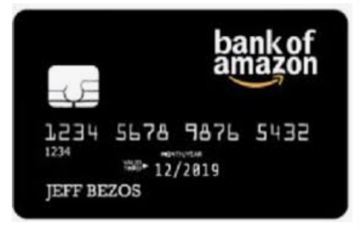
As consumers do more and more banking online their views about handling their money change — to the point where one out of five would consider keeping their savings with Amazon or Google if those companies offered a savings account, according to the CBA/Novantas study. Looked at from the other end of the telescope, the study notes that nearly 80% of the 3,000 consumers surveyed would not consider placing their savings with a big tech firm—and yet you have to wonder how many would not consider Apple, for example, as a big tech firm.
Moreover, among those consumers surveyed who are already comfortable with online-only providers, four out of five (79%) would consider saving with a big tech company if they could.
We’re just not seeing it, you say. And you’re right, you’re not. These are the silently departing members who move onto another provider with a click or two while leaving you to binge on the Walking Dead Dormant Accounts.
Forget AML, It’s Time For…
Forget AML; it may be time for AMT: Anti-Money Touching. If you missed it, LendEDUrecently conducted a study of various bill and coin denominations as well as plastic cards to create a “Germ Score.” In the Germ Score, the higher the number, the dirtier the surface.

“After testing the front and back of 41 different debit and credit cards, 27 different bills, and 12 different coins, and calculating the average germ scores for each payment based on the results, debit and credit cards turned out to be the dirtiest payment method,” LendEDU reported. “This comes as a bit of a surprise, as one might expect cash to be the filthiest since cash stays in circulation a lot longer and can travel across the country by changing hands. However, debit and credit card usage numbers have quickly caught up to cash’s figures; in fact, debit cards are actually the most commonly used payment today.”
‘More Germs Than a Toilet Seat’
LendEDU pointed to research from Mastercard and the University of Oxford, which found the average bank note is home to 26,000 types of bacteria including E. Coli. “And the average coin has more germs than on a toilet seat!”
Among the other Germ Score findings, LendEDU reported:
- After averaging together the individual germ scores for each bill denomination, we found that $5 bills, with an average germ score of 216, were the most germ-ridden.
- Posting an average germ score of 40, the cleanest bill denomination was the $100.
- Of all the various types of coins, quarters, with an average germ score of 239, actually were found to be the dirtiest on average. Meanwhile, dimes posted an average germ score of 75, which made them the cleanest coin.
The full study can be found here.
Now, go enjoy counting some cash.
You’re Doing Well? Sorry
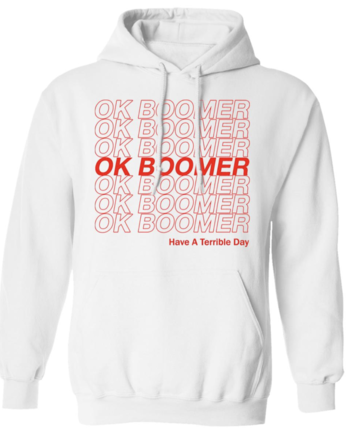
For those of you reading this while wearing your “OK, Boomer” hoodie, here’s what you likely want to say.
Alan Beaulieu, senior analyst/ president/ principal with the Institute for Trend Research, told a credit union meeting recently, “For any Millennials in the room, this is our gift to you. “We are leaving you a huge debt. Baby Boomers need to die. We need a war that is only old people. If a Millennial asks a Baby Boomer how they are doing, they don’t want to hear ‘well.’”
And Beaulieu is a Boomer.
But Millennials didn’t totally escape his jabs. He later added, “When interviewing Millennials, you have to use the word sustainable at least three times even if the context doesn’t require it.”
Frank J. Diekmann is Cooperator in Chief at CUToday.info and can be reached at Frank@CUToday.infoor followed @FrankCUToday.