

By Frank J. Diekmann
Last week CUNA put a specific price tag on the cost of regulation to credit unions: $6.6 billion every year. But I think the estimate is low. Way low.

How do you measure what the real cost of all those rules and regulations has been and remains for credit unions, beyond just the small forest that sacrificed its life to become the paper on which all those rules are printed?
The true price tag of regulation is reported by CUToday.info nearly every day in the form of credit unions that have given up. Thrown in the towel. Waved the white flag. Merged.
Sure, there are mergers among mid-size and even large CUs, so-called mergers of equals, that are all part of a grander strategy to grow and prosper and better compete. But there are many more mergers behind which there was a small CU’s limited management team with big hearts and an even bigger dedication to their member-owners, but they only had so many hours in a day and they found themselves snared in the irony of choosing between making loans or filling out the paperwork on loans and, thanks to the latter, have no time for the former. Which does help ensure you’re not out of compliance, but… So they surrendered, and merged with a larger CU that had a whole department that does nothing but check off boxes.
I have shared here before the story told to me by the CEO of a small credit union in Tennessee who said that years ago she and a few of her managers and even a board member or two used to meet on Wednesday nights once a month to discuss members who needed some special assistance and help, members for whom the credit union was their last and only resort for a loan. Maybe 500 bucks could help tide them over and get them back on their feet. So in the middle of the week the lights stayed on late and they approved loans for $500 or $1,000, and a few people in a small community in the Volunteer State every month had their lives made a little better, thanks to their credit union.
Those managers don’t meet on Wednesdays any more. The lights are off. The CEO told me the paperwork around good loans was challenging enough; the paperwork around so-called “non-compliant” loans was overwhelming. And so in that small town some people no longer get help making the rent. They lose their cars. They lose their jobs. And that’s yet another sad irony, since all those rules and regs are written by bureaucrats who never have to worry about losing their own. At least the residents in that small town and so many others have payday lenders to turn to, right?
CUNA, as well as the 52 CUs that participated in the lengthy and involved process of determining the financial cost of regulation, said the plan is to be able to respond to members of Congress and legislatures with a specific number when asked about the cost of regulations. And CUNA will be able to point to its study and the $6.6-billion figure.
What no one is ever able to point to, however, is the real price. Because those CUs that have paid it aren’t there anymore for anyone to point at.
And In Other Stuff You Need To Know...
* Credit unions at the California/Nevada leagues’ REACH Conference got a detailed look at a subject many are unfamiliar with from a face that that seemed somehow familiar to many.
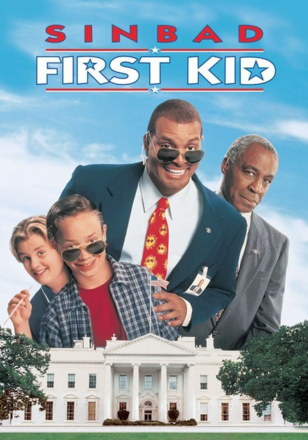
The primer on the digital currency Bitcoin and its underlying technology, blockchain, came from Brock Pierce, chairman of the Bitcoin Foundation, a trade association, and founder and managing partner of Blockchain Capital, a venture capital firm that invests in blockchain technologies.
Pierce looked comfortable on stage for a reason—he’s been on much bigger ones.
Pierce was the star of the 1996 film “First Kid,” where he played the 13-year-old son of the President of the United States who is befriended by a Secret Service Agent played by Sinbad. Pierce also appeared in 1992’s The Mighty Ducks and in the sequel, 1994’s D2: The Mighty Ducks. That's him in the movie poster at right, immediately in front of Sinbad.
In the late 1990s Pierce had moved away from acting and was listed as an executive vice-president of the Digital Entertainment Network, a pre YouTube that created four- to six-minute streaming-video series that raised $88-million from investors. That company eventually failed. In the early 2000’s he founded Internet Gaming Entertainment.
He eventually developed an interest in digital currencies, as CUToday.info reported here.
* Is a dip in the economy coming? Most economists see the economy growing steadily through at least 2017, but one person who has a micro-economic, street-level view of U.S. consumers, suggested some trouble may be brewing.
Ron Suber, the president of P2P lender Prosper, noted his company has extensive data around U.S. consumers seeking to borrow money. During the REACH Conference he offered as an aside a comment that I don’t think many paid attention to, but could be telling.
“I think what’s going to happen is we’re going to have a change in the economy and some big crisis that always happens,” said Suber. “We are the canary in the coal mine, we are already seeing it in the shale states.”
* One person is giving two thumbs down to credit unions. Prior to speaking to REACH, Ken Rutkowski said he spent a little time poking around online looking at credit union messages. He wasn’t impressed. “Have you typed ‘credit union’ into Youtube? The videos are not good,” Rutkowski said. “That’s an opportunity. There are other ‘how to’s” out there, and you should be using it. Be where your audience is.”
Frank J. Diekmann is Cooperator-in-Chief at CUToday.info and can be reached at Frank@CUToday.info or at @FrankCUToday