

By Frank J. Diekmann

We live in an era of spin, so much so we can now choose the version of events spun just the way we like via certain websites or cable networks and never have to leave that ecosystem or the discomfort of experiencing any other points of view.
And while the spinning of events has been around since cuneiform writing, today we are living through a Renaissance of Spin. Consider this message below, which is why the big banks pay the big bucks to the big PR firms to create expensive messages that say absolutely nothing. It was spun by the PR firm retained to introduce the merged BB&T and SunTrust bank now known as Truist (if ever there’s been an oxymoron in banking, but also a great example of spin, it’s any bank with “Tru” in its name):
“Building on 275 years of combined history and culture, Truist's additional size and scale will redefine the client experience through innovative technology and create meaningful change in its communities.”
And what did that say, exactly? A lot of nothing. Mission accomplished.
Headline of the Year
There’s spin, and then there’s the grand old tradition of Blinding Glimpses of the Obvious. My early nominee for the honor goes to this penetrating insight from the CFPB: “Consumer Financial Protection Bureau Recommends Financial Institutions Report Suspected Financial Exploitation of Older Adults.”
And for that Congress had to create a new federal agency with more than 1,000 employees.

Zen Brain-Bender of the Year?
There’s spin, and then there’s spun out. Consider this actual sentence from a press release: “He never carries cold shoulders to risk on the many things he visualizes.”
For those of us on the receiving end of that release, that is the sound of no hands clapping.
The Seatback Video Screens Now Offer Counseling
Actual conversation heard at an airport as the gate agent spoke to a married couple traveling together:
Gate Agent: Do you want to sit together?
Man: If we could.
Woman: It doesn’t matter.
The Mistake Every CU Makes
In cleaning out the notebook, found a few observations I heard made during one CU meeting when it comes to always-being-debated branch strategies.
Cody Willis, a senior integrations specialist with CFM, told one audience more than seven-in-10 consumers still choose their financial institution as the result of the branch they see. He reminded the branch experience and look remain critical, yet both often suffer from critical mistakes, ranging from creating layouts where members don’t feel like “co-pilots” to selecting a board member’s general contractor.
Willis cited research that found when consumers were asked how they rate differentiation between products and providers, a category such as soap was scored 100 on a 1-100 scale. Financial institutions scored a zero. “In banking, a checking account from Bank XYZ and a checking account from Credit Union XYZ look alike,” said Willis.
The Trends

Willis, whose firm works with all kinds of FIs, said every institution is chasing the trends du jour when it comes to branches and operations, including universal associates, tablet banking, micro-branches, onboarding to mobile, migration of transactions to self-service, looking to increase walletshare, demonstrate remote expertise, etc.
“You advertise that your member service is better than banks’. All we talk about is our people. Yet a lot of banks and credit unions don’t allow us to choose the people we want to bank with,” observed Willis.
As an example of how difficult it can be to differentiate physical locations, Willis asked his audience to name the brands that come to mind when they are driving. The audience listed Chick-fil-A, McDonalds, and Starbucks. “There are two million different retailers, yet people always mention the same ones,” said Willis, noting another challenge is how frequently drivers are distracted by devices. “Standing out and catching the new member is really a challenge for your financial institutions,” said Willis.
Willis offered these three design elements of what he termed a “smooth operation”: teller towers, service spots, and flex spaces.
But it was another observation made by Willis that should have the attention of every credit union decision-maker.
“Our largest opportunity isn’t in new markets and new members, it’s with the members we already have,” Willis stated.
That seems worth repeating, given the huge money being spent by credit unions right now on a national awareness effort—the greatest opportunities are with members credit unions already have.
You can find the much longer and detailed story here.
The Silicon Ceiling?
It’s been pointed out (including by many frustrated execs in the field themselves) that technology careers are seldom the best way to the corner office.
Pardon the gender-reference here, but the “IT guy” is often viewed as just that—a man or woman who may be an expert in the field but still not considered management material when it comes to the CEO job. The view at many organizations is there’s the management team, and then there’s IT, somehow residing outside the CU.
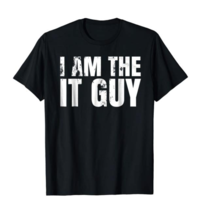
That was an issue tackled by two CIOs and one CEO (all of whom came up through the ranks) during a recent joint meeting of the CUNA Technology Council and CUNA Operations and Member Experience Council here. Members of the panel included Samantha Amburgey, CIO with MSUFCU in Michigan; Sharon Moseley, SVO/CIO with Kinecta FCU in California; and Rudy Pereira, president and CEO with Premier America Credit Union in California.
Here’s a couple of the observations they made that are worth considering:
Moseley: Strategy certainly matters, and understanding that as an IT leader is essential for success. The decisions we make are key to helping the company succeed, and understanding the metrics used is critical to knowing whether technology decisions have been effective. A technology decision should be measured by the business outcome it produces. When you build a platform, not only should you be asking the member how was it, you should also have the metrics there to know if you are building the growth expected from that channel. I think it’s important for the IT folks to understand when an initiative is taken on what you expect the business outcome to be. It’s not just did you get it done on time, but did you get the result?
I have found that often there are members of the team who don’t understand what has been delivered. We have monthly tech talks, and people there become advocates and the things we are doing are actually put to use. It’s not necessarily for managers, but for people interested in technology.
Amburgey: It’s important for IT to realize they are part of the credit union. They may think and breathe IT, but they are part of a larger organization. So, we look for people who align on the values of the organization. That’s what the credit union wants to hire on the service side, but you should hire for that on the IT side, too.
Pereira: Are you forcing yourself into a meeting or being invited? If you are invited, it’s because they see you as a valuable member of the team.
Today’s Puzzler
Observed by author Kevin Brown while addressing a recent credit union meeting: “Science tells us the day you were dropped off at the pool, 100 million others were dropped off too. Explain it to the person next to you if they look confused.”
Frank J. Diekmann is Cooperator in Chief at CUToday.info and can be reached at fdiekmann@CUToday.info or @FrankCUToday.