

By Michael Fryzel
It has been less than seven years since the occurrence of the event in credit union history often referred to as the “corporate crisis.” And yet, those who should have the most knowledge of what happened continue to misinterpret and wrongly state the actual facts. It is disturbing to continually read news accounts that are inaccurate and poorly researched.
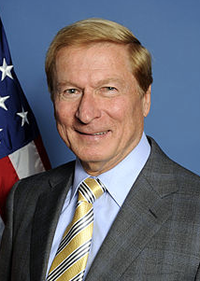
Michael Fryzel
Having served as Chairman of the National Credit Union Administration for the 12-month period beginning in August, 2008, I have first-hand knowledge of what was without question the most volatile year credit unions have ever seen, as well as the most productive year NCUA enjoyed as a financial regulator and insurer.
I have pondered what would be the best way to respond to those reports relating to that year and the subjects of the corporate crisis, budget hearings, Consumer Financial Protection Bureau (CFPB) and other events that occurred as a result of those 12 never-to-be-forgotten months. I decided what might be best is to address each issue I feel needs clarification and state, to the best of my recollection, what I remember as to who, what, when and where. So here goes:
1. The corporate crisis was the result of a failed investment strategy that went unchecked by the corporate officers and directors; was ignored by individuals in the credit union industry and failed to be seen and corrected by NCUA.
The lack of personnel and resources at NCUA was not a cause of or related to the corporate’s failures. The years of budget reductions prior to 2008 impacted the agency’s ability to properly examine and regulate natural-person credit unions resulting in many of those credit unions not seeing an NCUA examiner and having their operations examined for 18, 24, 30 months or longer.
2. NCUA had examiners sitting at the corporates’ offices everyday which led me to ask at that time what they did there besides sit? Unfortunately, not much since they clearly did not see what became evident very quickly.
The last opportunity for the industry to be briefed on the NCUA budget was in 2008. The “dog and pony show,” as some call it, basically told those in attendance what was being proposed, the increases it contained and why the additional staff and money was needed. The participants had a chance to comment, the board had a chance to listen and like every year before that, the board decided what the budget would be.
3. NCUA may be an independent agency but the money they spend comes from credit union members. Anytime you spend someone else’s money, be it the taxpayers or private funds, there must be accountability. The least an agency should do is listen to what the providers of those funds have to say.
The words “regulatory capture” have no meaning or substance as related to the budget process. By law, the NCUA board develops and approves the agency’s budget. For anyone to say that budget hearings or stakeholder comments would result in regulatory capture is difficult to comprehend. The credit union industry does not have a vote on the NCUA budget and the recent Congressional action does not give them one. It does, however, give them a voice that their regulator should already be listening to. If it’s all about transparency and there is nothing to hide, there is no rational or reasonable argument against holding a hearing.
4. In 2009, NCUA created within the agency, the Office of Consumer Protection (OCP). This occurred before there was a CFPB and was done to protect credit unions from the burdens of a super agency and to show that NCUA could effectively monitor the financial institutions it regulates. By having such an office, NCUA could act as a buffer between credit unions and the CFPB, as it has, and work to convince the CFPB that regulations are not one size fits all. Without the OCP, the CFPB would be at every credit union’s door regardless of size.
Those facts are the realities of the who, what, when and where. For those who weren’t there and those who don’t remember, when you live it as close as I did, you don’t forget.
Michael E. Fryzel is an attorney and advisor to the financial services industry with offices in Chicago, Illinois. He is a past Chairman and Board Member of the National Credit Union Administration. He can be reached at meflaw@aol.com.