

By Frank J. Diekmann

The passing of someone you may not have heard of--this person is best known for work done a few decades ago and the death took place in another country--means you may have missed it, but it deserves a note or two for what it represents in credit union history.
As CUToday.info was first to report here, former CUNA President/CEO Ralph Swoboda died recently. While many in credit unions today may not recall him, Mr. Swoboda’s term at CUNA marked not just the end of an era when the organization was led by credit union “insiders” who were based out of the trade group’s then headquarters in Madison, Wis., but a pivot point for U.S. credit unions themselves.
Mr. Swoboda served as general counsel of CUNA beginning in 1976 before being named president/CEO in 1987, a position he held until 1995. This was a different time for both credit unions and their biggest trade group. While there were more of them—20,000-plus CUs in the U.S. in the 1980s–their individual and total assets were significantly smaller, and credit unions, their leagues and CUNA itself were all much more “clubby” in nature, for lack of a better word. At the time, many CU folk, the oldest of whom had lived through the pioneering days of chartering the financial co-ops, objected to being called an “industry,” preferring––sometimes vociferously--the word “movement.” Like I said, it was a club and there were some folks with some pretty strong opinions on who was allowed in the treehouse.
That wasn’t the only language difference/uniqueness.
While the term itself has now largely faded, CUNA was frequently referred to as the “Magic Kingdom,” a not particularly complimentary reference to how decisions were made inside its Mineral Point Road clubhouse/headquarters.
The latter was the byproduct of what was up until the 1990s a largely insular, navel-gazing U.S. credit union industry/movement that could (actually, more often than not, did) make the job of leading CUNA a delicate balancing act, like a congressman in a district split 50.1/49.9. No matter how happy you made one constituency, another would be just as unhappy. It shouldn’t be forgotten after all, that Herb Wegner’s name may be attached to the award considered the highest honor in credit unions, and he was fired as CUNA’s CEO.

Ralph Swoboda
The Seven-Year Itch
Ralph Swoboda was the first CUNA CEO I really ever got to know. He didn’t dodge the media and always made himself available. That doesn’t mean as an attorney/trade show president he couldn’t dance around an answer, but I always felt he was straightforward with me.
Given Herb Wegner’s fate and that of those who preceded him since the trade group was created in 1934, Mr. Swoboda once wryly observed that CUNA presidents tended to last, on average, about seven years. And, indeed, that’s just how long he held the top job.
CUNA, of course, changed around the time of his departure, due to events much larger than the trade group and its president. The lawsuit filed against what is now Truliant FCU in the early 1990s over its field of membership, the subsequent Supreme Court decision and the massive effort that was needed to get the Credit Union Membership Access Act passed by Congress in 1998, also resulted in a different trade group that emerged on the other side.
When Mr. Swoboda had been president, CUNA was a Midwest-based trade association with a small Washington office. By the late 1990s, CUNA was a Washington trade group with backoffice operations back in Wisconsin and a former congressman, Dan Mica, as its new CEO (and now another former congressman, Jim Nussle, as its current leader).
A New Journey
Mr. Swoboda would leave CUNA and join CUNA Mutual as senior vice president of international operations, where he started a whole new life and journey. He went on to do work in China as CUNA Mutual worked to expand its product offerings to that country’s credit cooperatives in the early 2000s, before moving on to work with credit unions in Australia and the United Kingdom. In the latter Mr. Swoboda served on the Management Committee of the Association of British Credit Unions, Ltd., and later landed in Dublin, Ireland.
In 2013, he bought out the owner of CUFA, Ltd., a company doing work in the U.K. on risk and analytics, with that partner taking the company’s banking clients and Swoboda retaining the credit union clients.
In 2018 Swoboda talked to me from Dublin and discussed how he had started with seven credit unions onboard, and by that time the company had grown to approximately 50 CUs.
While in the U.K. he also helped to cofound the Centre for Community Finance Europe (CCFE), which he said had “morphed into what is basically the Filene Research Center of Europe” (he was also one of the co-founders of Filene back in the day).
You can read more about that part of his life and more here.
A Thought for All of Us
One other thing I will always recall about Ralph Swoboda: he had a great sense of humor (you have to to lead CUNA) and ready laugh. So, in his honor, I share this Irish toast:
“To all the days here and after, may they be filled with fond memories, happiness and laughter.”
Of course, as Ralph would probably laugh and be the first to tell you, not that everyone in credit unions would agree with that.
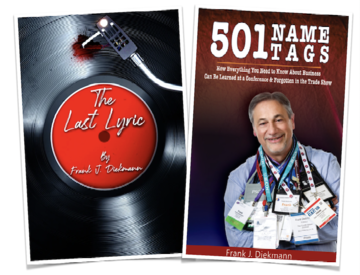
Frank J. Diekmann is Cooperator in Chief of CUToday.info and can be reached at Frank@CUToday.info. Mr. Diekmann is also author of several new book, including the brand new “The Last Lyric,” a humorous satire about a murder investigation at the Rock & Roll Hall of Fame in which every line of dialogue is either a classic pop/rock song title or lyric. Available on Amazon, Apple iBook, Barnes & Noble and Smashwords. Mr. Diekmann is also author of a non-fiction compilation of the very best & worst he has seen and heard in covering more than 500 CU meetings and conferences, “501 Name Tags: How Everything You Need to Know About Business Can Be Learned at a Conference & Forgotten in the Trade Show.” It is available on Amazon, Barnes & Noble, Apple, Lulu, and Smashwords.