By Frank J. Diekmann

If you want the family-friendly version of what Sue Mitchell is seeking to accomplish in credit unions, the GSD is all about Getting Stuff Done. If the kids aren’t in the room, it’s about Getting Shit Done. Either way, Mitchell has heard all she needs to hear of talk and good intentions. She has made it her mission to spur action. You know, GSD.
Mitchell, the president of the credit union consulting firm Mitchell Stankovic, is well known within credit unions for many things, including having founded the Global Women’s Leadership Network, which now has “sister societies” in place around the globe; for creating the “Underground” meetings hosted by her company that seek to get CU folk talking about subjects usually reserved for whispers and, most recently, for helping to create a fund that is helping Polish credit unions as they assist a flood of Ukrainian refugees.
The latter is just the most recent example of GSD.
‘Let’s Make it Happen’
GSD has become the impetus underpinning the Underground meetings this year, the most recent of which was held in Washington in conjunction with CUNA’s GAC and where I had the honor of serving as a moderator of one panel discussion.
“I know that there's skepticism in the world that says, ‘OK, this is great. We get together and you talk about the issues that we have.’ But we're really focusing on the idea of getting shit done. Let's make it happen. I was thinking about Poland and (the creation of the Polish/American Fund) in a short period of time. It’s representative of the idea that they need help now on the front lines with a couple of million people coming into the country. I used the Underground as my mechanism to do that so that I could pull in some thought-leaders.”
Two of those thought-leaders were former WOCCU President and CEO Brian Branch and current American Heritage Credit Union CEO Bruce Foulke, who travelled to Poland where they met with credit unions just 30 miles from the Ukraine border to assess the situation.
Direct Response Needed
Mitchell, who serves on the board of the Worldwide Foundation, the philanthropic arm of the World Council of Credit Unions, said she felt it was important to have a direct response to what was happening with the Ukrainian people. It was an idea that really began taking form while in Washington for CUNA’s GAC when Mitchell watched a peace March taking place in front of the White House as the war in Ukraine was in its initial days.
And Mitchell felt another connection, too. Several years ago she did work in Ukraine that included establishing a GWLN Sister Society.
“I thought to myself, ‘What's happening in Poland?’ There is a strong credit union system in Poland and I wondered how they were they gearing up to support the refugees. That's when I reached out to Brian Branch, because I knew his history of working in Poland and working directly on the ground,” said Mitchell. “We brainstormed over how do we help the refugees? How do we help the Polish credit unions help the refugees now? So, Brian said that he felt it had to be by going there and being on the ground. That’s what activated the next step.”
GSD. And Now.
In other words, GSD. And in this case, it was GSD that couldn’t wait.
“There was the sense of urgency. We have a credit union system that touches people locally, nationally, and globally and I felt a sense of urgency because so much destruction was happening so quickly and there were so many people leaving the country,” Mitchell explained. “And what first caught my eye was the fact that the women and children were the refugees moving into the country and then the men were going back to Ukraine. It just couldn't wait.”
Sue Mitchell
Responding to the crisis in Ukraine was and is one of those black and white issues on which it is easy to take a side (or should be!). But many other issues within credit unions aren’t as clear, the kinds of issues and discussions that typically remain “underground.” Which of those come to Mitchell’s mind?
Good Intentions, But…
“It’s an interesting question,” said Mitchell. “I think we have good intentions in that we'll talk about reaching youth, we'll talk about service levels, we’ll talk about the need for financial well-being, we'll talk about the things that we see that need to happen. But we’re slower to act and to shift. I was on the phone today talking about digital transition and the whole idea of the market share that we’re losing and the big banks are gaining. What's the real reason behind that? There are a lot of different opinions, but the reality is that competitively, from a technology standpoint, it's hard for us to make this shift.
“We've been talking about that since, I don't know, 2015, 2016, and then we had this enormous pandemic that threw everybody into the digital space. That fast-forwarded a lot of initiatives. But as I look at this market share transition, it's almost like we lost market share during that period. So, the question becomes, are we moving fast enough in a lot of different areas?”
When it comes to moving fast, the Underground initiative is really about doing just that, but above ground.
Rethinking Youth
For example, “I think that one of the key initiatives was reaching out to youth and recognizing that it's not just the Millennials,” said Mitchell. “I think that in some cases we've lost certain segments of the market. I think we have to go deeper. I think we have to look at our 11-year-olds, our 13-year-olds and tie them to social issues, to commitment, so they can see why they're making the choices they're making. CUNA Mutual has gotten involved and really taken a look at the language we’re using to reach the youth. I think there's a generational shift. We’ve said, ‘Let’s not just talk about Millennials or Gen Xers, let’s go deeper’.”
Other issues that many in the movement would like to keep underground that Mitchell and others have sought to shine a light on include diversity on boards of directors (hint, there’s isn’t much) and succession plans (hint, many CUs don’t have them).
Digging In
“We’re really digging in on DEI. When you talk about the succession plans with NCUA, it's not just about a succession plan for (management), it’s also about a succession plan for fresh ideas and diversity of thought. So, we implemented board of director exchanges where they're talking and they're establishing succession planning based upon diversity. And diversity is complex. It's not an easy scenario.
“Everybody is also talking about employee resource groups (ERGs). We linked it to employer groups. HR connections within credit unions have been pretty much lost because they have become competitive financial institutions,” Mitchell continued. “But there's a new connection when you go to the corporate entities. They, too, want to be good citizens and they have employee resource groups. So, can we connect our employee resource groups to the SEGs and come into the organization in a different way with a DEI umbrella? We have successfully been working on those.”
There is another issue where the Underground meetings have sought to find resolutions and put them into practice.
“Probably the last one is the quote ‘small credit unions’ end-quote. We call them boutique credit unions,” said Mitchell. “We have a boutique initiative where we want to collectively get stuff done. I mean it’s great to talk about it, it’s great to get everyone together, but we really need to see some action here to be able to pull resources and people together and figure out a way to make sure people are at the table.”
Not Safe for the Dinner Table
When credit union folk are around that table there are other things beyond just those issues that join religion, sex and politics in getting the “I won’t talk about it if you don’t” treatment.
Making that list is the newly popular buzzword in credit unions: nimbleness.
Many credit union leaders, said Mitchell, don’t like to talk about “transitioning to a more nimble organization to be able to respond based upon environmental and market conditions. I think we have an operational way of doing business that’s very hard to change. In some cases, it's an old model. That’s why I think we really do need to revamp the representation of our boards and make sure that it's reflective of not only where we are today, but where we want to go.
“We call it connecting the legacy, but it's really important that we're developing people that have the same commitment to the industry. So, if you look at the founding of some of the largest CUSOs today, they had a commitment to operating and working well together. We're seeing the fintechs, we’re seeing the funding of organizations that are getting started. But are we seeing the same level of operation and collaboration and people working together?”
Tough to Hold Accountable
The Underground meetings are often also titled “Collisions,” which brings us to what may be the most difficult issue with which to collide.
“With boards, it’s tough to hold people accountable if they are volunteers. There’s such passion and such love for the credit union movement in some of our volunteers. I mean they passionately care about it and it is part of the social fabric of their lives. It's not something they can easily move past. And then you’re bringing people into an organization that functions with synergy and everybody knows each other and there's that feeling that everybody knows my name, that ‘Cheers’ kind of concept. When someone new comes into that, it’s like there's this sense that they belong. So, it’s really institutionalized belonging. That’s the toughest thing, I think, for everybody to address because it's a business issue and yet it’s also truly an emotional issue.”
On the Bucket List
If you’ve never attended an Underground meeting, you should put in on your CU bucket list. The meetings began as client conferences hosted by Mitchell Stankovic, before being branded the Underground in 2016. Why the change?
“We have a tendency to water it down and stay politically correct and to color within the lines. I felt in 2016 that I wanted to elevate those conversations and I wanted to have them be more authentic and really tackle what's happening in the industry and push each other a little bit,” Mitchell explained. “When it comes to my guiding light, if you will, it’s making a difference. My pet peeve is when people tell me, ‘Well I tried,’ or ‘I left a message,’ or this or that. Just get it done. And if you can’t get it done, let’s focus on what else we can do.”
You may disagree with some of the things Mitchell says or her focus on GSD, but you can’t question her authenticity and dedication to credit unions. The Underground events, always held in unique venues such as Washington’s Newseum and Hay Adams Hotel, as well as video studios and conference event theaters, are free to attendees with Mitchell Stankovic generously picking up the tab.
The company isn’t a not-for-profit. So, is it worth it?
“The reality is it is an expense and I'd say there is a significant commitment of time involved in bringing people along to where we're going,” Mitchell explained. “Is it worthwhile to me? I cannot not do it! Whether it is at home or at work, I have to step up and step in, always working to pay for my blessings. These conversations are critical to the future of what I believe is important, being able to have direct connections, whether it’s bringing to the forefront issues with women, whether it’s bringing to the forefront issues for the LBGTQ+ community, whether its bringing to the forefront conversations about boards and what succession should look like. Those are conversations that are tough for people to start. I believe that we need to have those conversations.”
Mitchell added that she often hears from people after an Underground meeting who remark that the event gives a voice to people who are not always heard. Others have remarked how the events help them to find critical “allies.”
The Toughest of the ‘S’
When it comes to the GSD, which “S” would Mitchell most like to see get done?
“I would like to see the industry position for generational support of consumers. We have to understand that the complexion of the country has changed and financial democracy and having access to finance are at the heart of the things we do at a generational level. Credit unions were founded to make a difference in people’s lives and I think we need to understand that purpose and get back to that purpose. We’re not going to win on a transactional level.”
No, the credit unions can’t. To prosper, they are really going to have to GSD.
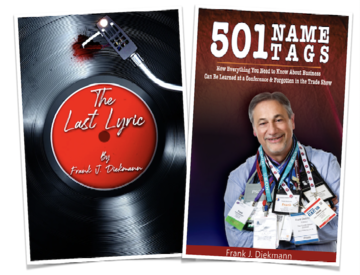
Frank J. Diekmann is Cooperator in Chief of CUToday.info and can be reached at Frank@CUToday.info. Mr. Diekmann is also author of several new book, including the brand new “The Last Lyric,” a humorous satire about a murder investigation at the Rock & Roll Hall of Fame in which every line of dialogue is either a classic pop/rock song title or lyric. Available on Amazon, Apple iBook, Barnes & Noble and Smashwords. Mr. Diekmann is also author of a non-fiction compilation of the very best & worst he has seen and heard in covering more than 500 CU meetings and conferences, “501 Name Tags: How Everything You Need to Know About Business Can Be Learned at a Conference & Forgotten in the Trade Show.” It is available on Amazon, Barnes & Noble, Apple, Lulu, and Smashwords.