

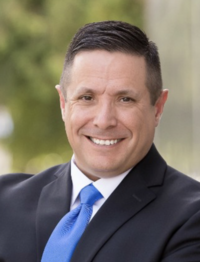
By Tony Hernandez
The recently-introduced legislation to cap interest rates charged on most loans looks like a promising approach to combating predatory lending practices. A 36% ceiling sounds fair, right? What could be wrong with that?
As it turns out, plenty.
The Defense Credit Union Council, the trade association representing more than 25-million consumers belonging to 181 credit unions across the nation, has a great deal of relevant experience with the Military Lending Act (MLA), the federal law upon which the Veterans and Consumers Fair Credit Act is modeled. And that experience tells us there is more than meets the eye to the MLA approach. You might call it the “law of unintended consequences.”
First, a bit of background. Since 2006, when the original MLA was enacted, all financial institutions making loans to active duty service members and their families have been required to abide by a 36% rate cap. The Defense Credit Union Council championed these efforts and worked with the Department of Defense to force predatory lenders off the military installations. Robust financial readiness training, credit counseling, and financial products and services helped seal the breach, which in turn allowed our servicemembers to focus on our national defense and not on harassing phone calls from predatory lenders.
New Predatory Approach
Yet these predators found new ways to target our military, and in 2015 MLA was refined to address a wider array of predatory lending. Unfortunately, the new regulations placed additional burdens on credit unions that were already compliant and diligently working to combat predatory lending. These burdens not only raised operating costs, they eliminated small-dollar lending products to military members which disrupts the special bond in “serving those who serve our country.”
Small-dollar loans are necessary for junior members who are away from their hometowns and need funds to travel back home for a variety of reasons, or for additional funds to register for schools, to purchase uniforms, or fix their automobiles. Many of these needs are not supported by the aid agencies on the installations. Worse, demand for these small dollar loans has not decreased, and since DoD does not track where this demand is being met, the reality is that predatory lenders are still thriving in the shadows.
In fact, I am sure there is ample evidence in financial transaction data that shows payments to debt collectors on behalf of predatory lenders that already harass and distract military members from accomplishing their mission.
The New Danger
The new bill, HR 5050, imposes the same restriction on small dollar lending. The proposed legislation would amend the Truth in Lending Act (TILA) to extend the MLA’s 36% APR cap to all consumers, covering payday, car-title and other types of loans to borrowers with difficult credit histories. It does explicitly exempt federal credit unions (most likely in recognition of the Federal Credit Union Act usury ceiling that does not apply to the state system in many cases). However, the danger is now increased amongst the population as a whole.
I would strongly encourage credit unions to consider the ramifications that this market-wide rate cap could have, particularly on small dollar lending. The 2015 updates to MLA allowed for military members to be precluded from using these beneficial products. A frequent complaint comes from military personnel and their spouses, in situations where they had purchased a vehicle without a GAP product, had their car totaled in an accident, and now owe more than the car is worth. Where do these military families get the money to pay off the loan and buy a replacement vehicle? Under this bill, the rest of the population could be next to suffer an unintended consequence from having a well-meaning law prevent them from making an informed, and practical, financial decision.
What Congress Should Do
Congress should explore targeted ways to combat predatory lenders. National standards for the payday and title loan industries, while long-controversial, must be considered in the face of the growing abuses of consumers. But none of that justifies the kind of blanket, one-size-fits all approach proposed by HR 5050. The potential negative impacts on legitimate lending programs, programs that exist to give consumers with troubled credit histories a fair chance, are considerable.
Credit unions are well-positioned to continue to take the lead in combating predatory lending practices. The PALs programs are an innovative and useful avenue that credit unions can, and should, explore into the future.
I implore Congress to look before you leap, using lessons learned from the unintended consequences in the 2015 MLA before rushing into an illusory “one-size fits all” solution that doesn’t address a very real problem.
Tony Hernandez is president/CEO of the Defense Credit Union Council. For info: www.dcuc.org.