

By Frank J. Diekmann

The phrase “tipping point” has reached something of a tipping point itself in recent weeks, following the death of an African American, George Floyd, at the hands of a white police officer in Minneapolis.
Suddenly, everyone is saying the country has arrived at a tipping point when it comes to racism, even though Mr. Floyd’s tragic death was just the latest in an almost-too-long-to-count list of African Americans at the hands of police. But now there is a renewed conversation and even action around equality, diversity and inclusion.
The credit union community appears to be at its own tipping point on the issue, with pledges from credit unions and their trade associations to drive real change and to truly become more inclusive. Credit unions have a long way to go and as I wrote here, sorry to be skeptical, but it feels like we’ve heard this before. I’d be delighted to be wrong. I won’t admit it, but would be delighted.
As an African American, NCUA Chairman Rodney Hood has been among those who have spoken out on the issue, sharing his own personal perspective and the biases he has faced in his life. But Hood’s fellow board member, Todd Harper, has also been speaking out, and he is pledging to tip the credit union regulator toward taking action.
‘Shocked and Sickened’
In a statement released earlier, Harper said, “Civil rights and human rights are core American values, and I fully embrace them. I also believe deeply in equality. That’s why the brutal killing of George Floyd shocked and sickened me. For the African American community, the circumstances of Mr. Floyd’s death are unfortunately far too familiar. As a leader at the NCUA, I cannot respond by just saying, ‘we need to do better’ or ‘we must do more.’ Those lines rightfully ring hollow to communities of color. They are empty promises. To achieve real, sustainable change, I, like each of us, must take action within my sphere of influence.”
Since even before being sworn in, Harper has outlined four initial approaches he hopes to advance as a board member:
- Building diverse and inclusive workforces and supplier chains
- Enhancing support for minority depository institutions
- Enforcing fair lending laws
- Funding initiatives aimed at closing the wealth gap
Concrete Actions
When I spoke with Harper late last week he observed, “We know that black and white households have a great disparity in household wealth. We want to make sure African American households are getting access to affordable loans. We want to make sure African Americans get into a home if they want to.”
Like so many divisive issues, if talking about racism and equality were the answer the challenge would have been solved long ago. But it isn’t just the Home Depot that’s all about the doing, according to Harper.
“There are some concrete actions we can take, including outreach and education on the wealth gap,” Harper said.
Part of that outreach has included “listening sessions” with Umoja, which means “unity” in Swahili and which is the name for an employee resource group for NCUA’s Black employees. According to the agency, the organization’s goal is to be an ongoing, reliable resource to the NCUA for talent, innovation, and insight in support of the agency’s goals for building and sustaining a diverse and inclusive environment in all aspects of agency business.
Harper said he has also spoken to the CU trade groups about issues related to racism, diversity and equality.
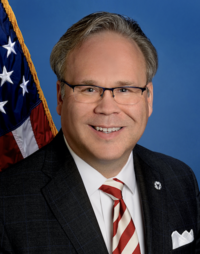
Todd Harper
Regulations? Not Yet
When asked about whether he plans to pursue some of his goals through regulations—which would certainly get pushback from the trade groups and credit unions themselves—Harper said that is not an immediate objective.
“I’m not planning any regulations—it’s not off the table—but regulations are not a focus. This begins with DEI,” said Harper.
One thing he said he’d like to do is work with his fellow board members on budgeting more for minority depository institutions, or MDIs. He pointed out one-in-10 credit unions is an MDI.
“With respect to fair lending laws, we did 30 fair lending exams last year, and I think we might be able to do more,” he said.
Another idea he likes is the formation of an advisory committee on minority depository institutions. Harper said he’s particularly intrigued by how NCUA handles the liquidation of MDIs vs. how another agency does so.
“At the FDIC, when they liquidate an institution they look to preserve the character of the institution and give other MDIs more time to develop a resolution plan,” he said.
Knocking Down Barriers
Inside NCUA, he also wants to take a closer look at areas where barriers to progress might exist.
“We have a low Hispanic participation rate,” Harper said of NCUA. “And African-Americans rise to a certain level within NCUA and then they hit a barrier.”
Harper is encouraging credit unions to look beyond just their own operations when it comes to diversity and inclusion.
“With supply chains, that’s one area where NCUA has done a really good job. We lead on minority and women-owned businesses,” he said.
As he and other NCUA board members have done in the past, Harper encouraged CUs to also take the agency’s diversity self-assessment test.
“When I go out and talk about the diversity self-assessment, credit unions that have taken it say when they go back to take it again they find they have established a baseline for their efforts,” said Harper, adding those credit unions then understand better where they stand.
“I was speaking with one credit union in Texas and I asked them if they had taken the diversity self-assessment and they said they had not,” Harper related. “I gave them a copy and an executive said just by looking at the questions he was reframing their approach.”
Harper also wants credit unions to do more to encourage diversity of representation on their boards, and that’s not just about race, he said.
“Do they have board members in their prime borrowing years? There should be a wide variety of ages.”
Praise for Recent Announcements
Harper had praise for CUNA CEO Jim Nussle and the trade group’s board for its efforts at improving diversity. More than a year ago CUNA’s then chairman, Maurice Smith, called for the addition of language related to diversity and inclusion to become an eighth Cooperative Principle. Following the death of George Floyd, CUNA’s board passed a resolution taking a stand against racism and committing to a “pathway to change.” The group has given itself until Aug. 10 to commit to taking action.
In addition, as CUToday.info reported here, more than a dozen organizations within credit unions have signed on in support of the CU DEI Collective.
Harper, too had praise for Hood for his ongoing efforts related to financial inclusion, which Hood has repeatedly called the “civil rights issue of our time.”
Now we just need to see if all of that will be more than a tipping point, and instead a turning point.
Frank J. Diekmann is Cooperator in Chief at CUToday.info and can be reached at Frank@CUToday.info or @FrankCUToday.