By Frank J. Diekmann

It isn’t often that a ride in an ambulance can be one of the greatest and most rewarding experiences of a lifetime, even if you regret the reasons for taking it, and yet that's what happened to me.
I’ve been more than fortunate during a career reporting on credit unions to have had too many uncommon and varied experiences around the globe to list here, but few have ever been as gratifying, special, soul-touching, inspirational and disheartening as was the week I just spent in Poland and Ukraine documenting the work being done by the Via Stella Foundation in helping Ukrainian refugees, and by the World Council of CsUs and Worldwide Foundation in helping Ukrainian CUs and their members.
It was a week that was culminated by accompanying two CU-sponsored ambulances as they were driven into Ukraine, where they were then piloted further to the east into the war zone by two volunteers. You can read more about that journey here.
Read More Here
And before I get to some other notes from the trip, you can find our other special reports here:
One Person’s Extraordinary Mission
How CUs are Helping Ukrainian Orphans
Why One CU is Supporting Refugee House
In a City Under Attack, How One Small CU is Moving Forward
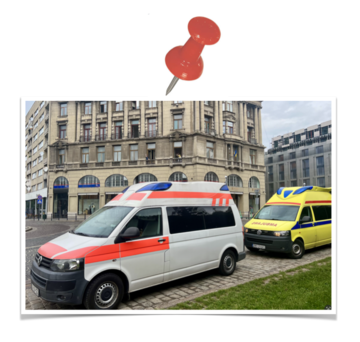
Two ambulances in Lviv, Ukraine.
Five Women Refugees Share Their Stories of How CU Funds for Rent Have Helped Them
‘Whisper Marketing’ and CU Support for Women’s Clinics
‘Putin’s Troll Farms’, CU ‘DNA,’ & More
In all of that reporting, however, I still wasn’t able to get to everything, so here is a travelogue of a few items from the Reporter’s Notebook, as well as some observations that deserve repeating.
You Just Can’t Go There
Sometimes, the Internet says no. Or at least that’s the case in Europe. As I experienced when covering the World Council’s conference in Glasgow in 2022, online privacy and data rules in Europe can make it difficult if not impossible to get to certain information.
But there isn’t any real rhyme nor reason to how the gods of HTML send their decisions down the mountain. For example, I could visit NCUA’s site, but if I wanted to go deeper and pull certain CU data, that was a big NO in Poland. There was no message; just no moving on. The same held true with several CU websites, although not others.
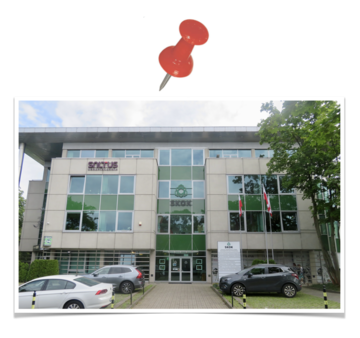
The headquarters of Poland's national trade association.
Poland’s CUs By the Numbers
There are 18 credit unions in Poland, all of which use common branding. One startling fact is that 85% of CU assets in the country are in just one institution: Kasa Stefcyzk. In Poland, at least, it out Navy Federal’s Navy Federal in the U.S. As such, it is actually held to a higher minimum capital standard (7%) than other CUs in the country (5%).
Awareness Orphans
While touring a camp for Ukrainian orphans that is supported by the Via Stella Foundation (you can read more here) I met up with a group of Americans who were volunteering on behalf of their church groups and an organization called Hope for Orphans. One of the Americans had been born in Russia and spoke Ukrainian but had grown up in Seattle. The other volunteer was from Minneapolis.
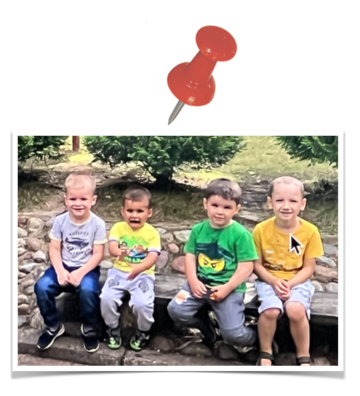
The two men had something in common besides a willingness to give of their time to the 100-plus kids who had been relocated to a new country, and that is that when it comes to credit unions, they knew nothing! Which was rather surprising given that those two cities have some pretty high-profile CUs that are frequent advertisers and community supporters in their markets.
Instead, they had questions for us on just what credit unions were all about.
Something to Rail About
No American who travels in Europe by rail ever comes away unimpressed and saying “thank God for air travel.” More than any other topic, Europe’s rail travel has probably led to more Americans having discussions that begin, “How come we can’t…?” than any other subject.
The trains run impeccably on time (and you better get on and off quickly at stations because there’s no waiting for special old you.) The ride is as smooth as steel butter. The cars are clean.
On a five-hour ride from Gdansk, Poland to the country’s southeast a sincere apology was shared over the train’s public address system that, regrettably, we were running six minutes behind schedule due to construction. Six minutes! Or, as it’s better known on Amtrak, way, way ahead of time.
What Could Go Wrong?
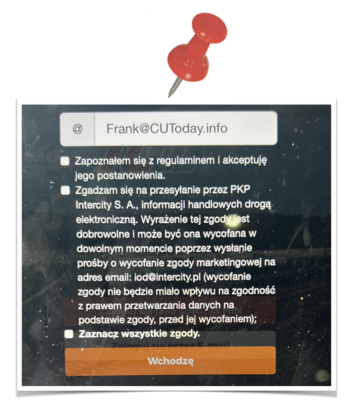
The wifi agreement. I think.
We all mindlessly click on the “I Agree” button when logging on to various wifi networks, despite the risks. And I did so again when given this message at left while in Poland and accessing the Internet from a train. Or at least I think I did.
It’s Not History for Those Who Were There
For Americans it can be easy to forget just how recently Poland was a communist country under the heavy red thumb of the U.S.S.R. But it is very fresh in the minds of just about everyone in Poland, especially those who were around when the Iron Curtain didn’t feel as if it would ever open.
I heard from one Polish CU leader who shared the story of his grandfather, an architect who secretly printed non-government-approved stamps as a form of protest. When he was discovered, the secret police broke both his arms and threw him in prison. He wasn’t released until communism fell and all political prisoners were granted their freedom.
I asked another person who lived under communist rule until he was a teenager whether at that time he ever could bring himself to believe that someday communism might fall and democracy prevail. I anticipated he would say no, that no one dared dream. Instead, he answered, “Yes. Yes. I would look around and think, ‘This cannot last.’”
And as one person at Kasa Centrum in Bytum joked, “I had to learn the Russian language in school. It was mandatory. But remembering it wasn’t mandatory, thank God.”
Now This is History
Credit unions in the U.S. are proud their history is now more than a century old, dating to the 1909 chartering of St. Mary’s Bank in New Hampshire. They have a word for those kinds of dates in Ukraine: “Recent.”
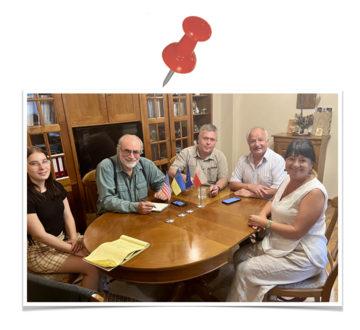
A meeting inside Anisia CU's offices.
While visiting with Anisia Credit Union in Lviv—which you enter from a courtyard in the city’s Old Town section--I was told it is located in a building that dates back to the 1300s. Not that everything is that old. It was also pointed out some remodeling work had been done, and the wood beam ceiling had been installed in the 1700s.
The contrast (and tragedy) of Lviv is striking. It has a charming Old Town area where the cobblestone streets were gleaming after a light rain, where people who are under the threat of a looming attack at any time are still filling sidewalk cafes, and where the town’s lovely public square is filled with memorials to fallen soldiers.
Small Assets, Large Heart
Anisia CU is vibrant and eager to serve its members, but it is also quite small by U.S. standards, with assets of 50 million hryvnia, or $1.363 million at the exchange rate on the day CUTOday.info interviewed its president, Volodymz Sydozovsky.
Anisia Credit Union has 8,000 members, which comes to about $170 per member.
Despite the small assets, the heart if large. CUToday.info visited with the CU just a week after a Russian missile had hit Lviv and killed 10 people and injured three-dozen more. The CU staff were still going about their business as if a member had scraped a pole in the drive-through instead of working from the basement and wondering if they might be next.
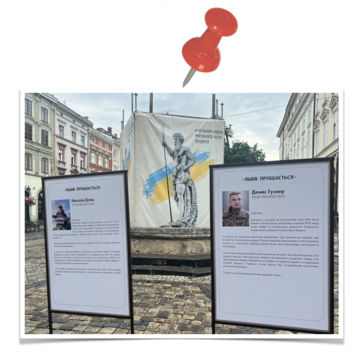
Memorials in Lviv.
With help from the World Council of Credit Unions and the Worldwide Foundation, Anisia CU also continues to work steadily to help members affected by the war, including providing farmers with coupons to purchase fuel.
Branching Out. A Lot.
One of the most interesting aspects of visiting with credit unions outside the U.S. is learning how they do things differently. And no, that doesn’t mean wrong because Americans know better, it just means different.
To that end, a striking fact about Poland’s credit unions has to do with how at least some operate a huge number of branches, especially for CUs that in the U.S. would be considered small to middlin’ in asset size. For instance, I had the chance to visit with Skok Chmielewskiego in Lublin, Poland, which has assets of about 900 million Polish zlotys, which was $226 million in U.S. dollars on the day an interview was conducted by CUToday.info. And how many branches does it have? About 100.
Earlier, I was able to spend some time with Kasa Centrum in Bytum, Poland, the city from which we departed to drive ambulances into Ukraine. It has approximately $25 million in assets—and 23 branches (it actually had previously had more).
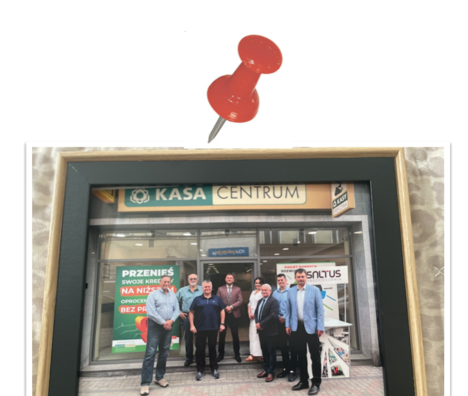
Take A Picture. It Will Last Longer
Meanwhile, don’t ever suggest small asset assets means limited imagination or kindness. When we arrived at Kasa Centrum, former WOCCU CEO Brian Branch, National Association of Credit and Savings Unions (NACSCU) President Rafal Matusiak and staff from the CU paused to take a photo on the street outside before going inside to hear a presentation on the work the CU and its members have been doing to help Ukrainian refugees. When the meeting wrapped 30 minutes later, we were presented with framed pictures of the photo we had just taken (at right).
It’s In the DNA
By the way, I asked Skok Chmielewskiego’s president, Bogumil Krzyszczak, about what strains the CU’s far-ranging efforts to help Ukrainian refugees might put on the operations. His response should be the forward to the CU Philosophy Handbook:
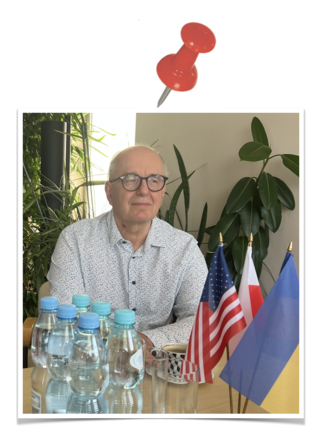
Bogumil Krzyszczak
“Our help is part of our normal activities,” he said. “It is not special for us. It has had no impact on our financial situation. We participate with many charities in giving add to people. It is very special, but it is not unusual for us. Credit unions must provide hope. Helping is part of our DNA.”
Thank You, Dziękuję, Dyakuyu
One thing that can never be said about Poland’s and Ukraine’s credit unions is that they are not thankful for the donations and assistance from credit unions elsewhere. Throughout my week in the two countries there wasn’t anyone who didn’t express their sincere thanks, from Ukraine’s counsel to Poland to employees in CU offices, to those who were at the receiving ends of funds from foundations such as Via Stella.
As one person observed, “We thank you for your support. Thanks to you this ocean has shrunk considerably.”
Meanwhile, two men who volunteered to drive the two donated ambulances into eastern Ukraine, Andrew and Andrii, also profusely thanked the Americans and the volunteers and donors for their support.
“We thank you for all the help for the Nikopol District, for the people, and for all of Ukraine,” said Andrew. “We thank you very much.”
Andrew, incidentally, worked for a large commercial bakery before it was hit by Russian attacks and destroyed, video of which he shared with those at a meeting in Lviv where the vehicles were turned over.
Now That’s Convenient
In one of the more unusual arrangements for a credit union, at least by U.S. standards, Skok Chmielewskiego has a wholly owned subsidiary (it would be a CUSO in the U.S.) that in turn operates a chain of convenience stores called Skok Zielony, many of which are adjacent to its branches. It is donating a portion of the income from the stores to its charitable work. The stores do encourage people to become members of the credit union.

Skok Zielony, one of the stores owned by credit union.
A Common Worry
Beyond thanks, there was another common comment I heard from people: worry that the war with Russia is becoming somehow normalized, as if it were just another item in the daily news feed.
Among the things I heard:
“Overall, our big enemy is that people have gotten used to the situation and the headlines are not shocking,” said Lukasz Mowak, president of Kasa Centrum
“When it becomes an everyday message it’s important to remember this is the same barbaric and dramatic war. Every day people are dying in Ukraine. I think that through our activities we can remind people of the war and the need to support it every day,” said Rafal Matusiak, president of NACSCU.
We Have a Question for You
While I had plenty of questions for the people of Poland and Ukraine during our week in the countries, two people unknown to each other also had a question for me: “What has happened to America?” they wanted to know. I didn’t really have an answer.
Confidence & Skillsets
And finally, there was another issue on which there was universal agreement—Ukraine will eventually defeat Russia and push the invaders—the “bandits,” as Matusiak likes to call them--out of their country. Everyone I spoke to made clear victory was a matter of when, not if. As Ukraine’s Counsel to Poland, Oleksandr Plodystyi, told me with determination, “We can go as long as we have suffered, and then one day longer.”
Kasa Centrum’s Mowak, meanwhile, expressed insights into what under normal circumstances would never be part of the knowledge set of a credit union CEO, explaining that as soldiers in Ukraine are searching for the larger anti-tank mines they are discovering that smaller anti-personnel mines that are harder to detect have been place on top, and they are being killed a result.
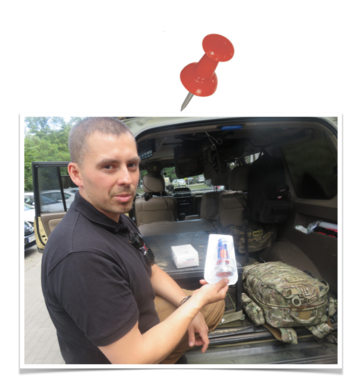
Jakub Osipow
An Extraordinary Act of Volunteerism—And Reality
Necessity may be the mother of invention, but mom can also be macabre. As reported here, there’s volunteerism, and then there’s the courageous act Jakub Osipow was preparing to take on on the day I spoke with him. Osipow was getting ready to drive a refurbished Toyota Land Cruiser turned “ambulance” more than 1,000 kilometers from Poland to the front lines of the war. There, he plans to not just help ferry injured soldiers to hospitals in Ukraine, but as a highly trained EMT to also train Ukrainians in some of the basics of first aid for trauma victims, saying he has personally watched as lives were lost as the result of giving poor help to those who needed it and too much help to those for whom it was too late.
One thing Osipow told me was that those soldiers who lose feet and legs due to mines or bomb blasts are given time to heal and then fitted with prosthetics. Once they have learned to walk with their new feet and legs they are sent back into battle because, well…
The Third Language
The Polish and Ukrainian languages are similar enough that people who speak only their native tongues can generally understand one another. But as I was reminded during a tour of Refugee House, which receives support from credit unions and which is home to more than100 Ukrainian refugees—hence the name that is right on brand—those who escaped from eastern Ukraine are just as likely to speak Russian, which complicates integration, especially for kids in school.
The Dumb American Question of the Year Award 1.0 Goes To…
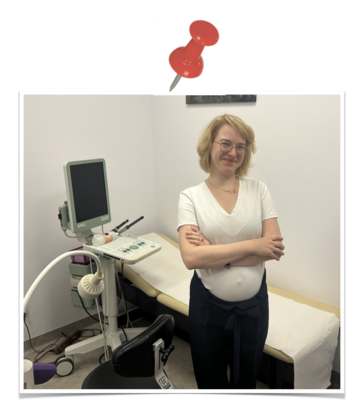
Dr. Stanke-Zblewska
And speaking of learning things, during an interview with a doctor at a women’s clinic that is providing services to Ukrainian refugees thanks to funding from the Via Stella Foundation, I asked the doctor how many pregnancies she was seeing. Not very many, she answered. When I then asked the dumb follow-up question of the year as to why, the doctor reminded that most men are not allowed to leave Ukraine. And once she patiently explained how that worked, I understood.
The Dumb American Question of the Year Award 2.0 Goes To…
I asked one woman who was a refugee during a video interview whether she hoped to return to her home someday. “I have no home to return to,” she answered, explaining it had been destroyed in the war.
Different Terminology’
Many of the Ukrainians interviewed talked about finding work in Poland were well-educated and had held white collar jobs in their home country. Yes, they said, they had found work, although in many instances they were punching the clock at a “physical job.” That, I came to learn, is what we call manual labor.
One of the reasons, btw, there hasn’t been blowback or complaints in Poland that Ukrainians are taking their jobs is that Poland needs the workers. Many of its own citizens have left the country for higher-paying jobs in western Europe, leaving many vacancies.
The Philosopher
In speaking to Skok Chmielewskiego’s president, Bogumil Krzyszczak, about how long Poles would continue to support the anti-war effort he made clear it would be as long as necessary.
And then he added, “There is nothing good in a war at all, but maybe this can teach us something. In the history of humankind there have been a lot of wars and it seems we do not learn.”
Why Such Strong Support?
The nations of Poland and Ukraine have an intertwined history. Portions of western Ukraine used to be part of Poland, but over the centuries wars have pushed borders back and forth and too many lives to count have been lost in the blood-soaked soil of both countries.
That’s one historical reason for the determination shared by Poland’s citizens and its credit unions in support of the war. But there is also a more practical, present-day reality, as well.
As Pavel Pelc, an attorney who works under contract with NACSCU and who essentially handles government relations, told me, “This government has decided it is in our national interest to support Ukraine or we will be next. It is better to have an independent state between us and Russia than to have Russia at our border. We already have a Russian controlled state, Belarus, at our border.”
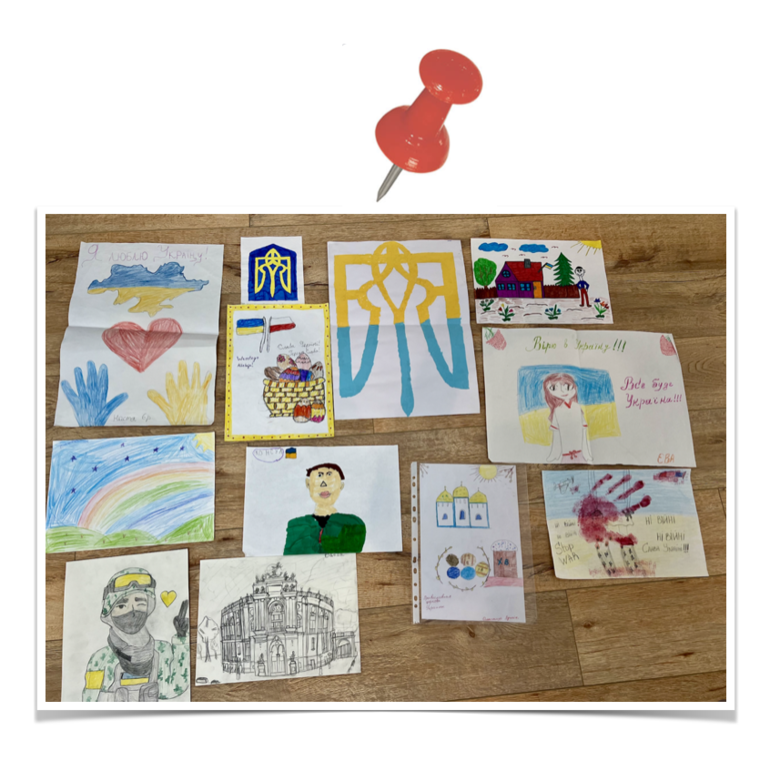
A Picture Is Worth…
Ukraine’s Counsel to Poland, Oleksandr Plodystyi, presented me with drawings and paintings by Ukrainian children, as you can see above. If you make any size donation to the Via Stella Foundation, I will send you one until they are gone (and I’m keeping one for myself). You can reach me at Frank@CUToday.info.
Dam. It’s Crowded.

Flying back from Warsaw to Atlanta, I had a long layover in Amsterdam. So, I took advantage of the fact the station for the very efficient rail system is located directly beneath the airport, and 20 minutes later I was at city center in what is sometimes called “the Venice of the North.”
What I got was actually a lesson in why the city on the Amstel River has the name it does. It’s from the sentence, “Dam, this city is overrun by throngs of tourists. I need an Amstel.” Then again, life is all about the selfies with the canals in the background for your Instagram feed, so worth it.
Seriously. If you’re planning to visit, make reservations far in advance for anything you plan to see. Otherwise, you will not be seeing them from anywhere other than outside and will be uttering a few “dams” of your own.
As an aside, one baffling thing to witness in Amsterdam is the number of people shooting selfies or family group shots in front of the Anne Frank house. She's not a character in a storybook; she was a real human being. "Hey, everybody, let's all smile as we pose in front of the place where the innocent 16-year-old girl lived before she was murdered. Cheeeeese!"
For Those Who Made It Possible
We’ve all heard the cliché that something would not have happened had someone else not done something else first.

And yet cliches are cliches for a reason, and CUToday.info’s Special Reports from Poland and Ukraine would absolutely not happened were it not for sponsorship support from the following: AKUVO, Mitchell Stankovic & Associates, Your Marketing Company, Sievewright & Associates, Origence, Polish & Slavic FCU, Unitus Community Credit Union, the GLCU Foundation, Upward Credit Union, and Eagle Community Credit Union.
I very much wish I could add something more than my inadequate thank you’s to those listed above, as well as to Brian Branch, who organized the trip and itinerary, and to all the people in Poland and Ukraine, with the National Association for Cooperative Savings and Credit Unions and the credit unions themselves, and to everyone with the Via Stella Foundation, who were all such gracious hosts and who took time out from far more important things when a war is going on to drive me around, to translate, to give up a piece of their lives and to allow me to share their stories.
Thank you.
If you want more information on Via Stella, go here.
Frank J. Diekmann is Cooperator in Chief of CUToday.info and can be reached at Frank@CUToday.info. Mr. Diekmann is also author of several new book, including the brand new “The Last Lyric,” a humorous satire about a murder investigation at the Rock & Roll Hall of Fame in which every line of dialogue is either a classic pop/rock song title or lyric. Available on Amazon, Apple iBook, Barnes & Noble and Smashwords. Mr. Diekmann is also author of a non-fiction compilation of the very best & worst he has seen and heard in covering more than 500 CU meetings and conferences, “501 Name Tags: How Everything You Need to Know About Business Can Be Learned at a Conference & Forgotten in the Trade Show.” It is available on Amazon, Barnes & Noble, Apple, Lulu, and Smashwords