

By Shellee A. Mitchell
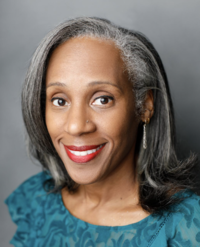
In a place between simply existing and intentional results, I had balanced my thoughts and actions. I was not who I knew I should be. Then, at what was a casual space in time, I met Renée Sattiewhite, president & CEO of African American Credit Union Coalition (AACUC).
If anyone knows Renée, she sees and is diligent for it to be made so. Well, Renée Sattiewhite saw in me a woman of influence and entrepreneurial competence. She mentored, critiqued my skills, and allowed me to be present in my identity. As such, I pitched the 1-to-1Woman Mentoring Program in idea form to Renée.
Immediately, AACUC initiated the reach for mentors and mentees and the 1-to-1Woman Pilot Mentoring Program emerged in April 2021 for a six-week session.
The 1-to-1Woman Mentoring Program provides an opportunity for young-adult African American women to share interpersonal conversations with executive-level Caucasian women. 1-to-1Woman is a professional-based exchange meant to fracture misleading racial constructs and restore alliances in racial differences and gender commonality to ascend 1Woman.
1-to-1Woman illuminated from an idea. I say illuminated because it was developed from a dormant place within me. Even having over 10 years of executive assistant experience in the “C-suite,” along with college degrees, I struggled. I questioned my competence and value to corporations. At a time when our nation was balanced on a tipping point and people were filled with dismay, I evolved my true self from childish beliefs to adult possibilities.
The year 2020 became my bittersweet love story. I anxiously anticipated my youngest son’s high school senior year. I planned for prom, graduation, and his college departure. Instead, 2020 came with tears for strangers, a homemade graduation ceremony, and guttural cries for civility. While the pandemic had me confined and counting, I lived through the stories of strangers who never returned home from doctor visits. The gruesome videos of George Floyd and Ahmaud Arbery raged against my suppression and filled me with worry over sons I had calendared to flee from the nest.
Where is the Humanity?
As the drama of 2020 began to dissipate for a “new normal,” 2021’s insurrection broke my tender heart into fragmented shards. I coiled at the reenactment of history with shock and disbelief over what might be the next chapter for our “Divided” States of America. My emotions overrode any sense of hope I had, and I became weary of our nation’s complex social existence. The pandemic, supremacist murders, and an insurrection put righteousness above America’s law. I wondered, where was humanity? As I became coherent, I knew I needed to do something. I asked myself, what can I do? Who am I?
I am Black. I am a Black woman. I am a woman. I am a human woman. I earned my master’s degree at a Historically Black College & University (HBCU), and during my term of study, exhaustive research proved that African American women are historically defamed and subordinated when it comes to gender and race. And most often, in corporate settings, African Americans are overlooked for promotions despite education and qualifications. One reason is that people mentor and bond with those who are most like themselves.
Mentoring is a Priority
Mentoring is a priority for professional prosperity. Intelligent, resilient, innovative African American women rising in their careers are statistically disregarded as candidates for executive guidance, network caches, and endure stern nods that state do or don’t. With college degrees, their journey is a beacon for an upswing in descriptive titles, significance, and income.
However, many African American women remain naïve and unfamiliar with pertinent “asks,” well-timed position shifts, and résumé credibility.
My career supported the research that mentors mentor people like themselves. Over the years, my job had become “my contempt” and was no longer a career. All too often, opportunities to engage were suppressed. My voice eventually became muffled as I restrained my authenticity from emerging. At meetings, where I attended to deliver copied and collated documents, I watched and served the significance of others. Each day I was the physical shadow of a once-purposed woman with aspirations. My education and professional background were miniscule in the executive view.
The 20% Wage Gap
African American educated females have the highest percentage of college degrees—above Caucasian women by 10%—yet there is, at a minimum, a 20% pay-wage gap with African American educated earnings on the low end. African Americans are offered lower salaries and feel the least valued and supported in their work professions according to career statistics. I was that woman.
With a masters’ degree in Organizational Communications, I was offered an executive assistant position for $45,000 annually. Even with negotiations for a higher salary, it was negotiated with limited financial advancement. The organization was a foot in the door for my long-term goals but after months of attempting to prove myself, I became sullen in my perceived disgrace and “working poor.” The discredit I harbored showed in my work. I resigned, with nothing to show for my efforts.
From my yesterday to the present reality, confined in me were pensive, intense thoughts. I pondered whether Caucasians dominate executive-level positions, both male and female. Did they engage and promote within a status-quo view? I questioned removing the barriers and building a bridge. I delved into research—this time not for the phenomenon of African American women’s ability to persistently arise, but for the basic connection of “woman” in being.
Childhood Memories, College Refrains
I remembered childhood and college refrains, and my embedded experiences of mutual prejudice. The memories were staggering when I recalled the hurt from certain situations in my past and the weakness of my change. And so, I decided to build from my self-truth. I am an idealist. I forgave myself and others, and created a program to pair young-adult African-American women with experienced Caucasian women.
Intuitively, 1-to-1Woman became the framework for a mentoring program to bridge the cultural divide via gender commonality.
The 1-to-1Woman Mentoring Program is our stand against deceptive constructs that fault our humanity, hinder our prosperity, and stain the fabric of life’s colorful tapestry. In 1-to-1Woman we forge relationships through empathetic dialogue between women (not to any discredit of men) and vulnerably engage to confront divisive systems and welcome the fulfillment ofgenuine collaborative possibilities.
To scope my lens, visit www.sapphiredimension.com or email sam@sapphiredimension.com to connect with ideas to restore humanity and change our workforce.
Shellee Mitchell is founder of 1-to-1 Woman Mentoring Program and Sapphire Dimension. For more information, visit www.sapphiredimension.com or email sam@sapphiredimension.com .