

By David Goldman

In 2013 I packed all of my belongings into my Nissan Sentra. My golden retriever, Moab, and I were moving from Baltimore to a climbing town. The destination was unknown but would soon be discovered after the International Climber’s Festival lured me to Lander, Wyo.
Lander is a small town with a population of 7,500. It is remote and has a diverse population of ranchers, granolas and outdoor enthusiasts. These groups join together to form the wonderful community of Lander. It also happens to be the epicenter of rock climbing.
When I showed up, I had one goal. To climb 5.13. I never expected 5.13 to happen but it represented success. I wanted it badly. There were years when I didn’t climb due to injuries or life getting in the way. Even so, I made sure that 5.13 was on my annual goals list every single year. I was obsessed with the idea. It was always out of reach, but I wanted it so badly.
Just What is a 5.13?
It might be helpful to describe 5.13 for non-climbers. 5.13 is a level of difficulty in the Yosemite Decimal System. The French call it 7c+. Whatever you call it, it is a benchmark of difficult climbing. It is reserved to the most experienced and skilled climbers who have spent years training and practicing their craft. It is estimated that less than 1% of climbers achieve this benchmark.
What makes 5.13 rock climbing so hard is the combination of physical and mental challenges. Climbers must have exceptional finger and upper body strength, as well as balance, flexibility, and endurance. Climbers also need to be able to read the rock face and make quick decisions about their next move. Finally, they must be able to manage their fear and maintain focus, even in the face of extreme physical exertion and exposure.
After nine years, I have now crossed 5.13 off my annual to-do list. I pushed my physical and mental limits to accomplish my goal, and along the way I learned a few lessons that I bring to the office every day and now share with you.

Set Uncomfortable Goals
I often hear that goals should be SMART (Specific, Measurable, Achievable, Relevant, Time-Bound) with an emphasis on Achievable. Achieving a goal represents the tick of a box or the crossing out of an item on a list. You feel the warmth and satisfaction of achievement as a burst of dopamine courses through your body.
Achievable is safe. You see the path to success. You will make it there soon.
I argue that safe goals are the real danger. Setting an ambitious goal pushes you out of your comfort zone and challenges you to grow. Goals that are too easily achievable can be limiting and may not lead to personal or professional development. If you fail, which you will repeatedly, you will be permanently changed and improved from the experience. If you succeed, your next goal will only push you towards more growth.
Always Show Up & Don’t Make Excuses
The thing that I love about excuses is that there are so many of them. They are so easy to make. I am tired. I am hungry. I didn’t sleep well. It is too hot or too cold. They're infinite.
Excuses keep you away from trying hard and, more importantly, from failing. Excuses are safety. No one wants to fail over and over again, but a champion knows it is part of the process. Avoid making excuses and always show up, even when the going gets tough. Pushing through adversity and failure will lead to growth and improvement.
Some of the best days of performance happen when your expectations are the lowest. A bad day at the crag, in the gym or in the office is better than not showing up. Show up and try hard in the face of adversity and you are sure to grow. You might even surprise yourself.
Surround Yourself With People Who Outperform You
I used to climb 5.10. My friends climbed 5.10. We always climbed the same easy routes. We always went to the same crags that we were familiar with. It was comfortable. I never progressed.
It was not until I changed associations that I started to grow. I learned from them. New techniques on the rock. New attitudes towards climbing. I learned to try harder. I observed what achievement looked like. I tasted triumph and I wanted more.
I see this all the time in the office. People are afraid of being outshone by others. I hear about professionals passing on great hires because they are intimidated by the applicant. It is the safe option to be the best, but it is an anchor to the individual and organization. This attitude will prevent the individual and organization from high achievement.
You should be proud to be surrounded by people more talented than you. You should be excited for the opportunity to learn from them and grow. These people will elevate your game. They will elevate the organization. They will take everyone around them to the next level. Seek them out and you will grow.
You Can Only Succeed if You Try
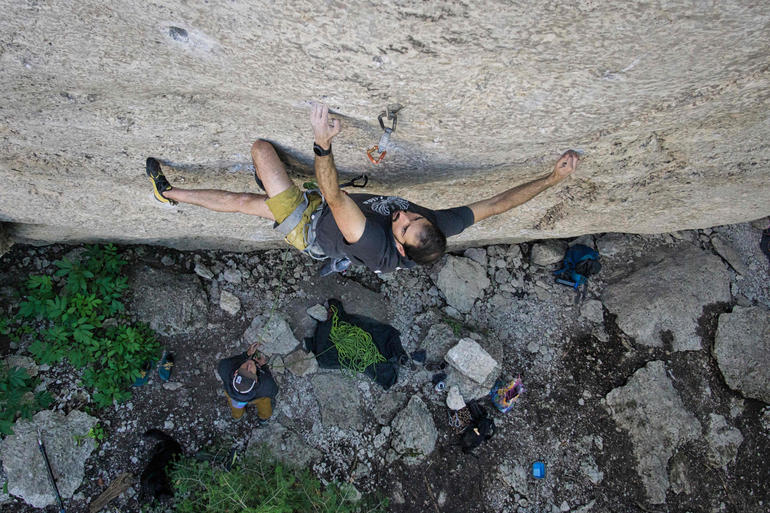
I had been climbing at a high level for two years, but I just couldn’t get across the finish line. I had sent—which is climbing lingo for having climbed without falling or stopping on a route-- 100+ difficult routes. Some of them were just a smidge below the ever-fleeting goal of 5.13. Yet, 5.13 seemed as far away as ever.
Luckily for me, my employer hired a professional coach. Part of the exercises were setting goals for the next month and three steps needed to achieve the goal. My coach wanted to know my key performance indicators and key responsibilities areas and my steps to complete them. However, like all of my goal lists, I would write 5.13. It dawned on me that I could add a baby step to the list. Try three 5.13s in the next month. This little change made all the difference.
I attempted three 5.13s the next day at the crag. I fell a lot. I survived. I had fun. I became a better climber. The next session I tried another 5.13 and it felt close. I knew I could do it. I redpointed the climb the following week. 5.13 was done. I tried more 5.13s in a span of seven days than I had in nine years.
All it took was stepping into the arena. It was so simple. You can only succeed if you try.
How to Set a Goal
So, next time you set a goal, make it unachievable. Make it so abstract and so distant that you feel uncomfortable when you say it out loud. Try hard in all conditions because there are no excuses. Surround yourself with people more talented than yourself and most importantly step into the arena.
After many failures you might just accomplish the unachievable and cross it off your list. There’s a strong chance that you won’t but I can assure you that you will still find a better version of yourself. If you are lucky enough to succeed you might wonder where your goal came from in the first place and wonder what took you so long to achieve it.
David Goldman is CFO with the $185-million Atlantic City Federal Credit Union in Lander, Wyo.