

By Frank J. Diekmann

For much of the 1990s and even the early 2000s, it was a violation of the Federal Credit Union Act to hold a credit union gathering of any size—even two middle-managers meeting over coffee—without mentioning Southwest Airlines.
The “Southwest Culture” was the pre-viral viral —What! They have fun at work?!!!—and credit unions everywhere were encouraged, extolled and prodded to quit being so financial institutionalish and boring and rebuild their workplaces on the model made famous by the original no-frills, all thrills airline.
Now, here we are in 2017 and while Southwest is still flying (thanks to a lot more than just the fun culture stuff conference speakers liked to fill their presentations with), the airline is now oh-so-legacy when CUs get together.
Now when CU folk gather it’s all about Uber. And Amazon. And Uber. And Apple. And Uber. And Airbnb. And did anyone mention Uber? (I initially started counting all the Uber references at last week’s CO-OP THINK Conference before making the breakthrough discovery that calculators actually have limits.)
Transform! Or Else!
What all those slides-turned-PowerPoint presentations made before credit unions in the 1990s, 2000s and the teens seem to have in common was/is a goal of sounding the opening notes to Taps and scaring the bejeesus out of CU leaders everywhere. Then and now you can’t snap on a name tag before being told the end days are near for any credit union that isn’t in the process of “transforming” itself into something new and different.
At the always thought-provoking THINK Conference in New York, the new-and-different thinking was all about the “digital transformation” that’s changing the world and credit unions along with it. As CUToday.info reported extensively, credit unions were given insights and real-world examples of the digital trends and companies that are doing the transforming. And while there was nary a word about Southwest, Blockbuster seems to have secured its place in the Case Study Hall of Fame for businesses that thought they could outswim the flood.
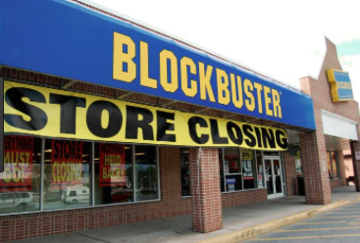
It was easy last week to once more come away with the conclusion the credit union movement just isn’t built for moving forward any longer.
What's Being Missed In All This
But here’s what I believe is being overlooked by all these thinkers, and “innovators” and even credit unions themselves: some business models and some ideas really do transcend change; they are bridges over these chasms of disruption. And credit unions are one of those. That isn’t too suggest that if all you offer to members is access by fax machine and 10-2 business hours (except when Wanda gets her hair done on the first Wednesday of the month and then you’re closed) it’s all going to be fine. It most certainly will not be. To survive, credit unions must keep clicking on “update” with the rest of the planet (with all of us sort of worrying what we just “agreed” to).
But the idea that credit unions need to remake themselves into something other than the financial cooperatives that they are and instead need to think of themselves as digital tech start-ups is an email phishing scam–and you shouldn’t click on the link.
Listening Between the Lines
If you listened carefully at THINK, you would have heard one remarkably similar theme from several of the presenters:

David Rogers Speaking to THINK.
- David L. Rogers, author of The Digital Transformation Playbook and a teacher at Columbia Business School, said that if credit unions recognize nothing else about the concept of “digital transformation” it is that it isn’t about technology…For me the definition is that digital transformation is really a question: How does any business started before the Internet evolve and adapt to grow and reach the next stage of profitable growth in the digital economy?”
- Tom Goodwin, the EVP of Innovation with Zenith Media USA, told CUs, “We always add technology to things, because we think more technology is better. Often, it’s not how people behave. Technology needs to be a background enabler.”
- And Bill Taylor, a co-founder of Fast Company Magazine, offered an impassioned message to credit unions that, “In a world being reshaped in so many ways by technology, what people are desperately hungry for is a genuine humanity… and authentic, more memorable connections, To me, the real opportunity for credit unions, with their authenticity and sense of mission and purpose, is you really have a chance to outthink the competition every day.”
And there was another small, symbolic (and a bit ironic) sign of how certain things can be bridges through time during the THINK meeting. CO-OP has introduced a new medium it will be publishing on a quarterly basis. It features a cover story on the “Digital Transformation.” And it’s a print magazine.
It's All About the Content
I’m writing this on the Amtrak train from New York to Boston and the guy in front of me is reading his New York Post—as commuters have for decades on the train—but he’s doing it on a tablet. The Post, like newspapers everywhere and credit unions, too, are what one person at THINK referred to as “heritage brands.”
If you’re in publishing, consumers will find you regardless of the medium if you have good content. We like to think it’s the primary reason CUToday.info has seen such incredible growth and readership. Credit unions—you have great content—you may need to digitize it—but you have the kind of content consumers want to consume. The real disruptive threat lies in credit unions disrupting themselves and no longer being content with their content.
But don’t just take my word for it that the idea of a simple business premise and keeping costs low has timeless appeal with consumers. “You’re now free to move about the country” and find out for yourself.
Frank J. Diekmann is Cooperator in Chief with CUToday.info. He can be reached at Frank@CUToday.info or @FrankCUToday.