

By Rick Metsger
A regulator’s job is about striking a balance to get a good result.
We make a promise to fulfill the agency’s responsibilities and follow the law’s requirements. We must also consider and respect credit unions’ needs and concerns. Sometimes, the law’s requirements may not suit the desires of those to whom it is applied. That’s when we must make the call. It’s our job.
NCUA works hard to simultaneously protect credit union members and the Share Insurance Fund and provide greater levels of transparency and engagement with stakeholders.
Earlier this year, I announced our commitment to Continual Quality Improvement, an agency-wide effort to review, refine and, where necessary, re-tool operations so NCUA works smarter and better. We began by creating working groups to look at our exam process and the Call Report to find ways we can modernize both. We engaged credit union stakeholders in those efforts, and their comments and ideas are helping to shape the results.
Later this month, NCUA will host a public briefing on the agency’s proposed 2017–2018 budget to provide detailed insights into our future activities and how we plan to focus resources to support them. NCUA’s budget proposal is now available on the agency’s budget resource center, so everyone will have time to review it and prepare constructive comments.
NCUA is already ahead of other federal financial institutions regulators in providing this kind of budget information. In addition to the budget proposal, the budget resource center offers comprehensive, detailed documents on our budget, the budget process, the Overhead Transfer Rate and Operating Fee, board travel expenditures and other subjects. In 2014, then-Chairman Debbie Matz expanded the budget information NCUA makes publicly available, and we’re now making even more information accessible.
The upcoming budget briefing is part of a series of public discussions I began to give credit unions and anyone interested insights into our thinking about various topics before we make decisions or start a rulemaking. The budget briefing will be available over a livestream broadcast from the agency’s website, so those who can’t make the trip to Alexandria can watch.
I proposed livestreaming meetings when I joined the NCUA board three years ago. Chairman Matz embraced that idea, and now you can join us for every board meeting no matter where you are. Such transparency is good policy.
Another long-standing area of interest to credit union stakeholders has been our efforts to secure recoveries from Wall Street firms that sold faulty mortgage-backed securities to five corporate credit unions and caused billions of dollars in losses to the credit union system. NCUA was the first federal financial institutions regulator to sue these firms, and we did so knowing we were going up against some of the world’s most powerful companies, each of whom had very deep pockets. The outcome was far from certain.
We engaged expert outside counsel who took the cases under contingency fee arrangements, insulating credit unions from any costs if the cases weren’t successful. It’s important to remember that the highly distressed credit unions did not have the ability to hire counsel on an hourly basis, which would have required a commitment of tens of millions of dollars, without any guarantee of success, at a time when the credit unions scarcely could have afforded such additional assessments. Without the contingency fee agreements, which shifted most of the risk of these legal actions to outside counsel, there would have been no legal investigation of potential claims, no litigation, and no legal recoveries.
Fortunately, our team has been highly successful. To date, we have obtained settlements and recoveries of about $4.3 billion. The net recoveries have gone to repaying claims on the estates of the five failed corporates, including those of the Stabilization Fund, and reducing potential assessments for credit unions.
People have asked about our fee arrangements with outside counsel. It’s commonly understood that such arrangements customarily range between a third of any recoveries to as much as a half, depending on factors such as whether the case is settled before trial or only after lengthy appeals.
I am pleased to inform you the contingency agreement NCUA negotiated with our attorneys has proven to be extremely beneficial to credit unions as well as fair to our legal team.
While earlier cases in which billions of dollars were at stake were pending, NCUA did not disclose attorney fee arrangements to protect our litigation position and ensure we maximized returns to credit unions. We have, however, always recognized that the balance between protecting the financial interest of credit unions and the public interest in disclosure would shift over time. Now that most of the securities cases have been resolved, I can tell you legal fees to date come to approximately 23.2 percent of our recoveries, or $1,003,029,479. A full listing of the lawsuits, recoveries, expenses, and fees can be found in the corporate system resolution section on our website.
I want to repeat the commitment I and everyone in this agency makes: to fulfill our responsibilities to protect credit unions, consumers and the Share Insurance Fund and do so in a way that respects and responds to the people who go to work every day to provide affordable financial services to nearly 105 million federally insured credit union members.
As I said at the start, it’s a matter of achieving the right kind of balance and transparency that allows us to reach the result we all want: a safer, stronger credit union system.
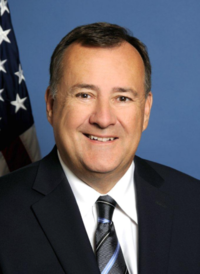
Rick Metsger is the ninth NCUA board chairman. He has served on the NCUA board since August 2013 and as chairman since May 2016. For info: www.ncua.gov