

By Ron Schmidt
“I’m a believer in ‘paying it forward’ – if you do good things to others, then good things will happen to you.” This is how Melissa McKenney approaches her relationships with the members of Akron, Ohio-based GenFed Financial CU.
As the branch manager of GenFed’s Shelbyville, Ind. office, McKenney views her work this way “because it makes me feel better as a person.” Prior to joining GenFed, she worked for a payday lender.
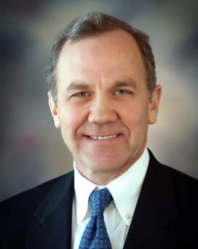
Ron Schmidt
“Payday lenders really set the customer up to fail with ‘easy money’ that is required to be paid back in two weeks. And when they are short to payoff the lender, they come back for more and the spiral begins,” she explained.
Since joining GenFed, McKenney has addressed some of her former customers’ financial condition and helped get them on the road to recovery.
When Tacy Scott joined GenFed’s Mt. Vernon, Ill. branch as a loan officer, she also came with experience at a finance company whose customers were also GenFed members. Knowing that a typical customer might be hooked into five other finance companies, she went about helping them break the cycle.
Noting that 75% of the customers had good jobs but bad credit practices, Scott began educating them on the importance of good credit while restructuring their loans. Also aware of the “ease” with which customers received money from finance companies, she made the members aware of GenFed’s low rates and fast processing.
According to a study by The Pew Charitable Trusts, "Most payday loan borrowers are white, female, and are 25 to 44 years old. However, after controlling for other characteristics, there are five groups that have higher odds of having used a payday loan: those without a four-year college degree; home renters; African-Americans; those earning below $40,000 annually; and those who are separated or divorced."
Findings Related To Payday Loans
* Most borrowers are seeking to cover ordinary living expenses over the course of months, not unexpected emergencies over the course of weeks. The average borrower is indebted roughly five months a year.
* The New York Times reported that banks are looking to offer a variety of low-fee products for customers with troubled finances in an effort to generate goodwill from regulators and a chance to woo more customers.
* The Wall Street Journal article reported “10 million or 8.2% of U.S. households are unbanked…and 24 million, or 20% of households are underbanked. Banks are getting more creative about how they target unbanked and underbanked customers.”
With that in mind, as banks are reacting to the needs of the underserved, how are CUs reaching out? GenFed CEO Joyce Jones, applauds the efforts set by McKenney and Scott for all the GenFed communities. According to McKenney and Scott, credit unions need a program that will “fix the problem rather than making it worse. Offering budgeting and Help 101 will not only be attractive to our members, but may be receptive to potential members.”
How many payday loan borrowers are in your community or already members? Are there ways your credit union can help? And can this good deed benefit your credit union?
To ponder – and answer – questions like these, I am hitting the road to stimulate this type of thinking among CUs with a series in CUToday.info called “Building Community: Let’s Share Our Values.” We’ll focus on how credit unions serve their communities. Are employees empowered to make a difference? Are the organization’s principles and values in line with its actions? Finally, and maybe most importantly, are employees and members treated with civility and dignity?
Ron Schmidt is with CBS Certified Public Accountants, LLC, Solon, Ohio. He can be reached at rschmidt@cbscpasllc.com.