

By Frank J. Diekmann

Old wounds can take a long time to heal in Credit Union Land. Especially when some still argue they were self-inflicted.
CUToday.info ran a week-long series last week featuring in-depth interviews with leaders who were at NCUA in the lead up to and then the resolution of the corporate credit union crisis that was part of the larger meltdown of housing in the U.S. in the years leading up the 2008 collapse of the market.
For those of you who might not have been around more than a decade ago, I could try to summarize the threat to corporates and CUs themselves from the crisis, but instead I’ll allow NCUA’s Larry Fazio to do the explaining: “It was an extinction-level event,” he said.
Here’s what is still around four presidents later: lots of strong opinions, especially over whether the agency only had to create a “resolution” plan because it failed in the first place by permitting high concentrations in mortgage-backed securities that turned out to be about as solid as the foundations in what would be dubbed the “sand states.”
As has become the stuff of legend now, those who were around for the crisis are always quick to remind that NCUA had full-time examiners on-site at several of the corporates up until the days those operations were placed into conservatorship, including Wescorp in California. (Quick side-note on Wescorp: I was once being given a tour of the San Dimas, Calif. facility when we came to what I was told was a board room that had cost in the high six figures or perhaps even low sevens. I don’t know if it was true, but I was asked by a PR person giving the tour if I would not mention the cost. That should have been a warning sign right there.)
While some at NCUA have said—and they are right—that until the housing crisis mortgage-backed securities weren’t considered a concentration risk because they were the A) the gold standard. B) Rock solid. C) As sturdy as housing itself, which never depreciates. That was true right up until the new ABCs become A). Gold can melt. B) Until it isn’t. C) It does.
‘Stop Blowing Your Own Horn’
To his credit, former NCUA Chairman Michael Fryzel acknowledged the agency made mistakes, but so did many others in what he called an “infinite list of blame.”
The series led to a number of “animated” comments via emails I received as the stories appeared each day and on my LinkedIn page when I posted links to several of the stories in our series.
Some of the comnents”
- “You can stop blowing your horn on how you fixed the problem YOU MADE,” wrote one person, referring to NCUA.
- “Buy pooled real estate portfolios! What could go wrong?” wrote another.
- “NCUA displayed benign neglect and gross incompetence bordering on malfeasance in the lead-up to this self made disaster,” added a third.
And yet another person observed that for all of the lessons NCUA said it learned about concentration risk, less than a decade later the National Credit Union Share Insurance Fund still took a whopping $750-million hit from a half-dozen credit unions whose portfolios were almost entirely in taxi medallion loans. Because A, well, you know.
Did the regulator not learn? What about credit unions themselves? Might there be another “extinction-level event” sometime in the future? NCUA’s Fazio told me he and others within the agency have looked to pass along to younger staff all of the knowledge, good and bad, that was gained the hard way.
Let’s hope credit union leaders, many of whom are now retiring, are doing the same.
“People like myself and others who were around and shepherded the agency through the Great Recession and the corporate crisis, we’re anywhere from already eligible to retire to less than five years away from retiring, and we’ll be rolling off in the not-to-distant future,” he said. “Having that ability to do that succession planning and knowledge management is a big benefit and a big lesson learned.”
As always, your feedback is welcome.

Mountain of a Coincidence
After leaving the League of Southeastern Credit Unions’ recent annual meeting, where I heard Allison Levine offer a keynote in which she shared lessons from summiting Mt. Everest, I returned to my car, and who’s on the radio? Comedian Nate Bargatze, talking about how companies and associations are always bringing in people who have climbed the world’s highest peak to provide inspiration. The inspiration is likely lost, observed Bargatze, on audience-members who all tried to park as close to the building as possible.
Going to be Missed
If anyone is going to miss Dr. Mark Calabria, who was shown the door at the Federal Housing Finance Agency faster than an e-closing by the Biden Administration following a Supreme Court ruling, it’s going to be other federal regulators.
Specifically, the federal regulators who are called to regularly testify before Congress.
When Calabria was included among the witnesses testifying, Democratic members of Congress directed nearly all their questions to the Trump appointee, leaving the others—including NCUA reps—to just nod and sit quietly. It was like the Lakers had just won an NBA championship and a panel was put in front of the media that included LeBron James and three guys who had been working concessions. Nobody had any questions about how the condiments were going.
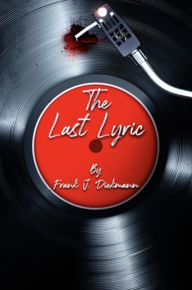
Frank J. Diekmann is Cooperator in Chief of CUToday.info and can be reached at Frank@CUToday.info. Mr. Diekmann is also author of a brand-new book, “The Last Lyric,” a humorous satire about a murder investigation at the Rock & Roll Hall of Fame in which every line of dialogue is either a classic pop/rock song title or lyric. Available on Amazon, Apple iBook, Barnes & Noble and Smashwords.