

By Frank J. Diekmann

Here’s a question for you: When do you believe this future headline might appear?
Last week I used this space to celebrate a CUToday.info milestone, the publishing of our 25,000th story in our Fresh Today news section since this publication launched in 2014 (and more than 42,000 news items overall).
But this time around this column is much less celebratory, as I have a question for you over whether in the next 25,000 stories we report there won’t be a deeply troubling piece of news: the loss of the credit union tax exemption.
Unimaginable, you say! Can’t happen, you predict!! Won’t let it happen! you declare with conviction!!! And yet I seem to also recall when global pandemics were the stuff of fictional movies and the only infectious disease “experts” we needed were Laurence Fishburne and Kate Winslet.
I have used this space on more than one occasion to highlight how micro-events add up to macro-changes, like a viral infection that begins with one person, then two, then a city, a continent and a planet.
So, consider these recent “micros”:
A Credit Union & Its Private Jet
As CUToday.info was first to report here, Pentagon FCU (PenFed) now has its own air force after spending more than $10 million––still larger than the assets of a fair number of credit unions–on a Textron Aviation (Cessna) model 560 XL business jet.
In a statement to CUToday.info, PenFed described the private jet as a “benefit” to members and employees because it offers “increased safety and productivity,” as the CU operates regional financial centers in San Antonio, Omaha, and Eugene, Ore., in addition to its main office in Tysons, Va.,

In that same statement, the $27.6 billion PenFed didn’t even refer to its newest purchase as a jet; it called it a “business shuttle.”
But here’s a prediction. No matter what you call it, the nation’s banking industry and its trade groups are no doubt already taxiing to the runway with what they will make the new lead exhibit in why CUs no longer deserve their tax exemption.
In its statement, PenFed said the cost of the jet represents less than 0.2% of its annual operating costs. That may indeed be true. In fact, PenFed can likely produce a fact-filled spreadsheet and accompanying PowerPoint showing the cost of employee travel—and their own time—adds up to a line item similar to that of owning the 560 XL.
And yet none of those facts matter, because however rock solid the business case PenFed might make is, as they like to say in Washington, the “optics aren’t good.” The American Bankers Association, the Independent Bankers of America, the state bankers associations and hell, probably even Tyra Banks are going to be taking to the skies themselves over Capitol Hill pulling a banner accusing credit unions of talking about serving people of small means while flying like big shots.
Members of Congress have in the past blasted bank execs for their perks every time there are disputes over bank fees or any kind of economic downturn takes place—and those are for-profit banks, the largest of which is bigger than all credit unions combined. So, imagine just how hot it might get out on the tarmac for a certain not-for-profit, tax exempt industry over the same issue.
The white hat? It’s getting some aviation fuel soot on it, like it or not.
CU Bank Buys Pick Up Pace
“Micro” number two is the record number of CUs now buying banks, as CUToday.info is regularly reporting. Most recently, in Illinois the $1.6-billion Scott Credit Union agreed to purchase $93-million Tempo Bank. The deal marked the fifth CU purchase of a bank in three weeks, coming on the heels of an announcement by FAIRWINDS Credit Union that it is acquiring Citizens Bank of Florida.

In response, the Independent Community Bankers of America immediately launched a new effort claiming there have been more than 100 CU purchases of banks to date and in which it said it’s time for an end to “these tax-subsidized acquisitions.”
Credit unions are going to need to demonstrate two things: they aren’t creating “financial deserts” with these purchases and are maintaining branches in their communities, while also making a dollar-for-dollar case for how members are seeing better rates and lower fees as a result.
If not, even long-time credit union friends on the Hill are going to have a hard time squaring the bank buys with their support.
A Trillion Here, a Trillion There
The third “micro”: At mid-year, credit unions in the U.S. quietly surpassed a major milestone of their own: $2 trillion in total assets. The growth has been coming quickly. It required 106 years for the little co-ops started by factory workers in this country to reach the $1 trillion in assets threshold in 2015; and then just six years to add another $1 trillion.
As I pointed out above, those total assets are still smaller than the largest U.S. banks. What I shouldn’t have to point out is that isn’t really going to matter in a country in which “facts” are increasingly a personal choice.
The banking industry is going to be making at least two-trillion claims to Congress that mom and pop have been pushed aside by their kids emerging from the basement like Gen Xers with new crypto-riches, conveniently forgetting to mention how robust the banking biz has been for them.
Future Hearings?
What do all those “micros” mean? For years the country’s banking lobby has been hollering for congressional hearings over the CU tax exemption, often doing so really just to throw some red meat the way of their dues-paying bank members while getting little traction on the issue from Congress. Don’t be surprised if that changes in the near future, especially with Democrats controlling the House Committee on Financial Services.
In more recent years, that same bank lobby has changed tactics and sought to drive a wedge between large and small credit unions over the tax exemption. The PenFed jet purchase, the bank acquisitions, and the growing performance divide between large and small CUs will all not only play into the bankers’ hands, let’s be honest here—more than a few small credit unions may help swing the hammer.
The Other Wedge
If you’ve seen the industry performance metrics, then you already know we are thick in the midst of an increasingly bifurcated U.S. credit union community.

Prior to COVID, it was rapidly becoming an era when many small CUs were shut out of conferences from which they would perhaps have benefited more than anyone because they couldn’t afford the travel costs, and now they see a much larger CU is 33,000 feet above them ensconced in what the manufacturer describes as an “unparalleled combination of performance, and comfort.”
Meanwhile, at the same time, back on the ground those same small CUs are watching community banks in their towns being purchased by their “fellow” cooperatives while those same big CUs make none-too-subtle overtures that the best way for them to “cooperate” would be to merge.
Hiding Beneath the Surface
Beneath all the public kumbayahs there is a growing tension building in credit unions. In the shadows of the clever, high-profile, multi-million-dollar “Open Your Eyes” initiative, there are many leaders in CU Land who are opening theirs to a completely different reality.
Unlike the tension released by an earthquake, credit unions still have some control. Will the philosophical ideal at the heart of credit unions and a century of history and good works continue to fly? Or will it encounter rough weather, change its course and land somewhere altogether different?
If I had to predict a flight plan, I’d say there are good odds that somewhere in the next 25,000 stories CUToday.info reports there will be coverage of a move in the United States similar to the “customer-owned bank” model already in place in Australia (with the CU trade groups changing their own membership rules to accommodate these new charters in order to keep the dues flowing—with bank trade groups reaching out to them, as well).
Never Forget This
As I have noted before, what can’t be forgotten is the CU tax exemption has never been a financial matter for the balance sheet; what it really is is an off-balance sheet matter of differentiation—it forces credit unions to always be reminding themselves why they are different. Many credit unions could likely afford to pay any new tax liability, even though it would hit members in their wallets—what they cannot afford is the differentiation liability.
After all, when you no longer think of yourself as different, you are no different.
For now, though, in this torrent of micro-changes, America’s credit unions still have a choice when it comes to the macro-movement. Who will take the lead, call for an intervention and broach the uncomfortable? The trade groups? It doesn’t appear so.
So that leaves individual CU leaders coming together, or maybe you just start with you. Remember the most powerful word in “credit union” isn’t “credit,” it’s “union.” No individual member can do it by him or herself. But when all those micro-members form that union, there get macro results.
So, what do you think? Which headline will CUToday.info be reporting in the future?
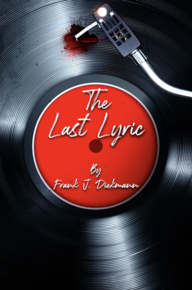
Frank J. Diekmann is Cooperator in Chief of CUToday.info and can be reached at Frank@CUToday.info. Mr. Diekmann is also author of a brand new book, “The Last Lyric,” a humorous satire about a murder investigation at the Rock & Roll Hall of Fame in which every line of dialogue is either a classic pop/rock song title or lyric. Available on Amazon, Apple iBook, Barnes & Noble and Smashwords.