By Frank J. Diekmann

Earlier this year I was sitting in on a good-sized meeting made up almost entirely of credit union volunteers, when one man stood and shared how his daughter had looked a new picture of the board on which he served and reacted, “Holy crap, dad! Are you a board of old white men?”
Most of the room laughed—although I have to think more than a few were laughing out a nervous self-awareness, as, let’s just say it was a pretty caucasion crowd. I know, you’re as surprised as me. In fairness, however, I have to note that it appeared 30%-40% of those on hand were women.
I thought of that quote and the nervous laughter that followed as I listened to NCUA’s board meeting last week, where Chairman Todd Harper, Vice Chairman Kyle Hauptman and Board Member Rodney Hood got an update on diversity, equity and inclusion (DEI) inside the agency. (Hauptman, incidentally, raised an interesting viewpoint during the meeting about how NCUA is affecting DEI outside the agency. See the link above.)
It wasn’t surprising to hear DEI come up during the board briefing. Both Hood (including while he was chairman) and Harper have championed the issue. And it’s a frequent fodder for meeting agendas across Credit Union Land.
What Else DEI Can Stand For
But DEI also often brings with it another one of those questions that elicits nervous laughter: Does the abbreviation inside your operation also stand for Delays and Endless Idleness? In other words, all talk, no walk in many cases.
That’s because bringing about change is never easy and, worse, it’s uncomfortable. Broaching the topic can make some people defensive. And there is no place in credit unions where that is more true than the board of directors, where the CU may have changed names, offices, fields of membership and management , but Gus and Earl and Gary and the rest of the board have remained the same.
So, how does a credit union bring change to a board to make it more diverse?
For some insights, I’ll share here some comments made to the Volunteer Leadership Institute earlier this year by Ronaldo Hardy, owner and chief diversity and inclusion officer with Tacoma, Wash.-based CU Strategic Planning
Hardy shared how he had just worked with a board on the very issue of becoming more diverse, as it knew it needed to make some adjustments.
“They had one woman and didn’t have diverse representation racially,” related Hardy. “So, they are using expansion of supervisory committee to bring in some of those people who have those characteristics to prepare for the board. And another credit union is assembling an advisory board, as they first need to define the characteristics that are being sought.”

Ronaldo Hardy
Another Option? Yes, But…
There is another option, too, he said, which is to just expand the board to get better representation, but that is—let’s face it—not always popular with many boards.
“I recommend an unconscious bias assessment to assess the organization so you know where your starting point is,” said Hardy.
One other piece of advice Hardy shared with the group of CU volunteers had to do with the community development.
“This has to be the end-goal of DEI. How are we going to reach the community and connect? “Who are we reaching? Very often we don’t have to reinvent things. These things already exist in the community and we just have to come alongside.”
Hardy, who has a career record of leading turnarounds and strong growth at two CUs, recalled asking during his first strategic planning meeting at one of those CUs, “If we were no longer in this community, why would they miss us?’ We decided to focus on how to end poverty in our community and then we focused on that.”
Holy Crap! For the Right Reason
If ending poverty either is or might become a goal for your credit union, btw, Hardy has some other advice on what he has learned. And that is such an undertaking requires addressing transportation, shelter and empowerment, in that order. But most organizations do those steps in reverse, he warned.
But get it right and, who knows, someone’s daughter just mind exclaim, “Holy crap dad!,” for a whole different reason.
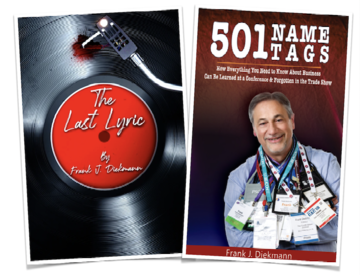
Frank J. Diekmann is Cooperator in Chief of CUToday.info and can be reached at Frank@CUToday.info. Mr. Diekmann is also author of several new book, including the brand new “The Last Lyric,” a humorous satire about a murder investigation at the Rock & Roll Hall of Fame in which every line of dialogue is either a classic pop/rock song title or lyric. Available on Amazon, Apple iBook, Barnes & Noble and Smashwords. Mr. Diekmann is also author of a non-fiction compilation of the very best & worst he has seen and heard in covering more than 500 CU meetings and conferences, “501 Name Tags: How Everything You Need to Know About Business Can Be Learned at a Conference & Forgotten in the Trade Show.” It is available on Amazon, Barnes & Noble, Apple, Lulu, and Smashwords.