

By Frank J. Diekmann
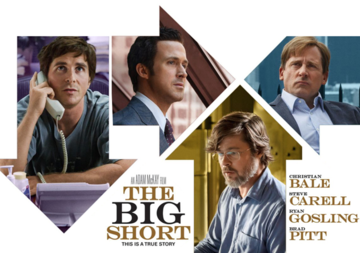
It’s hard to believe that a movie about credit unions–and especially corporate credit unions–has been nominated for multiple Oscars, including Best Picture, and to date has seen nearly $53 million in box office receipts. Hard to believe, too, that movie star Christian Bale has been playing the role of a CU economist.

And yet it’s true. Or as they like to say in Hollywood, it’s “inspired by a true story.”
I’m not kidding. As I watched the film my mind kept turning back a decade to one corporate exec’s true story about dire predictions for the collapse of the mortgage market—predictions heeded by few, if anyone, in credit unions at the time.
If you haven’t seen The Big Short and you’ve been in credit unions for a little while, get thee to your nearest multiplex and buy a ticket (and if you’re also planning on purchasing popcorn and a soda, don’t forget you may need to access your credit line. Then again, in a just world credit union execs would be admitted free as part of their corporate assessments).
If there are any among you who has ever fidgeted your way through a credit union conference breakout session as some speaker droned on about mortgage-backed securities while aiming his laser pointer at a chart-clogged PowerPoint presentation and you found yourself thinking, “Wow, this would be a fascinating movie,” then you’re among the few to ever entertain that delusion. Too bad you didn’t have similar foresight in shorting the market.
And yet The Big Short’s director and co-writer, Adam McKay, has actually found a uniquely entertaining approach to not just make a movie about the mortgage crisis, but to also explain how MBS work for the average movie-goer. The movie is based on “The Big Short: Inside the Doomsday Machine,” the 2010 book by Michael Lewis.
The Doomsday Machine is a reference to the mass insanity of a housing market of the early 2000s in which it seems everyone was complicit: the government (happy to boast of the “strong” economic numbers and to keep accepting PAC money from the housing industry); lenders (delighted to look the other way and offer no-income verification loans they would be selling off while lapping up the fees); The Fed (“let’s keep money cheap because we all know housing never depreciates”); Wall Street (for knowingly packaging up crap and passing it off as caviar and gorging on the profits); the ratings agencies (slapping AAA on ZZZ junk that Wall Street was peddling in their own look-the-other-way profit binge), and the American public itself (“Sure, housing will keep doubling in value, even if no one’s take-home pay is, right?).
I lived in Florida throughout the housing balloon and watched as people flipped houses for a profit—sometimes on the same day! It would never end. Until it did.
All The Ex's
When the housing balloon burst like the Hindenburg it hit credit unions hard. Just ask the folks at the former Southwest Corporate. Or the former U.S. Central. Or, especially, the former WesCorp.
It was that last ex-corporate I most thought of while sitting in the theater, and especially its former economist, Dwight Johnston. Johnston attempted to grab the megaphone from the carnival barkers with warnings that the Good Time Circus Tent was going to collapse. But no one at the corporate credit union party wanted to turn down the music and listen.
In the film, many of the characters who go on to make a killing by shorting the market only do so after it’s also clear no wanted to hear what they had to say, either, about an impending apocalypse. Johnston is the Christian Bale character in the movie, without the making a killing part.
“I totally related to that; when everyone was partying and no wants to hear it,” said Johnston, who in the lead up to the crash put his money where his mouth was and sold his own home in California before “underwater” became the new adjective attached to “mortgage.” “When everyone was partying no one wants to hear it. It was there for everyone to see; it wasn’t hidden. It was in the newspapers and magazines, but everyone kept buying homes. Things were going so good.”
At this point, before sharing Johnston’s own review of the movie with you, I’m tempted to say “spoiler alert,” but frankly if you don’t know how The Big Short turns out you’re likely sitting on a big portfolio of oil stocks.
Just Fraudulent
“First of all I thought it was a really enjoyable film,” said Johnston. “It did a really good job of helping people to understand what took place, not that people will now go out and buy mortgage-backed securities. But they did it in such an entertaining way. They touched on the key elements of the crisis, and I think people got a good idea. It touched on how the lending in mortgages was just fraudulent.”
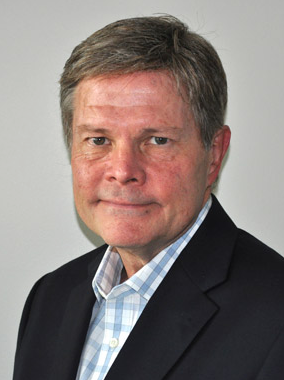
Dwight Johnston
So that the indictment of many who were leading corporate credit unions isn’t overly broad, it should be noted the corporates—and many natural-person CUs—were invested in what they were told by the likes of Moody’s, Standard & Poor’s and Fitch were solid gold securities. There is a brief scene in The Big Short that (unfortunately) illustrates what it took to get a AAA rating: basically, Wall Street asked.
“I am glad they touched on the role of the ratings agencies,” said Johnston. “They played a big role. The ratings agencies gave people that comfort level.”
It may have been a horrific crash that hurt a lot of Americans, but a lot of people got rich in the run-up to the housing bust, including in credit unions. The Big Short concludes with an on-screen epilogue noting that in a dirty business involving countless people, exactly one person—a minor player—has been convicted for related crimes.
“I wish I could say I was surprised no one was prosecuted,” said Johnston. “But when it comes down to the big money groups, there is always this element of ‘how could I have known?’ People were culpable. But the government, I guess, felt it couldn’t make a strong enough case.”
Today, Johnston is chief economist with the California and Nevada Credit Union Leagues, and has his own firm (www.dwightjohnston.com). I asked him if he thinks we’ll ever see another housing implosion like that of a decade ago.
“I don’t think it will happen again in mortgages, but will there be something else to totally screw up? Absolutely. We just don’t know what,” he observed.
But Johnston does have some suspicions over what might become source material for The Big Short II.
“Some of the risk-sharing programs from Fannie and Freddie stink to me,” he said. “They say they are only taking a little risk and the rest goes out the door and the taxpayer is not on the hook. But if they go belly up again, they can have all the documentation in the world and would Washington back them up again? Yes.”
But hey, you don’t have to listen to Johnston. I mean, what could go wrong?
Frank J. Diekmann is Cooperator in Chief at CUToday.info and can be reached at Frank@CUToday.info and followed at @FrankCUToday