

Editor’s Note: Jim Blaine, the retired CEO of State Employees Credit Union in North Carolina, has submitted a comment letter to NCUA on its proposal to close the Temporary Corporate Credit Union Stabilization Fund (TCCUSF). The letter is reproduced below as part of CUToday.info’s ongoing coverage of the issue.
Unfortunately, in considering this proposal, one distrustful thought keeps recurring: "Too clever by half!"
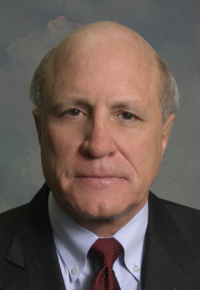
Jim Blaine
The new NCUA Board leadership has raised hopes among credit unions for a new era of transparency and honest dialogue at the Agency - that hope persists.
A) On Closing the TCCUSF
Q#1: Why now? Let's pause and carefully consider that question.
The TCCUSF is already scheduled for a well thought out, orderly closure in 2021 - a short three years from now. In 2021 credit unions are legally entitled to receive a 100% "refund" of all excess reserves... not "partial,” but 100%!
TCCUSF balances currently appear to fully cover all anticipated costs and obligations of the Fund, but the future is difficult to predict. Unexpected and unimagined catastrophes do in fact occur - think "9/11,” think the market collapse of 2009, think ISIS, think North Korea. In proposing a partial disbursement and thereby lowering its reserve base, the TCCUSF increases its risk exposure to unforeseen events unnecessarily.
Why would a prudent fiduciary take on that additional risk, even if minimal, when a 100% certain reckoning of risk is available in 2021 - three short years away? What competent risk manager would give up a "sure thing" without being "compensated" for the additional risk incurred? Equally important, maintaining the existing 2021 closure schedule eliminates any need for NCUA senior staff - whose track record for accurate foresight has been consistently unreliable - to concoct economic risk forecasts and projections to justify increasing the net operating level (NOL) of the NCUSIF.
While the potential aggregate TCCUSF refund of several billion dollars is substantial, the immediate economic impact of a "partial" refund on any individual credit union is not consequential; nor will the partial refund in 2018 significantly alter the overall operational, lending nor service capacity of credit unions - 98%+ of whom are currently highly capitalized, safe and sound.
A close reading of this proposal finds no obvious nor substantive benefit to the TCCUSF structure - nor its beneficiaries - for a hastily conceived, premature closure. It is equally clear that an early closure of the TCCUSF - if ever deemed beneficial - could just as easily occur in December 2017, or June 2018, or March 2019, or September 2020... and with each succeeding period the performance of the legacy assets, the ultimate size of the refund, and the actual level of market risks will become clearer and clearer, with less need for subjective conjecture by the staff.
Would you please enlighten credit unions with a specific answer as to "What's the rush?"
All agree that the NCUA Board has the authority to set the NOL between 1.20% and 1.50% of insured shares, with mandatory assessments occurring <1.20% and mandatory refunds occurring >1.50%.
It is unclear in this proposal, in the absence of the TCCUSF closure, exactly where the NCUA Board believes the current NOL should be set. In an open dialogue with credit unions, it is important that NCUA state its case for determining the NOL of the NCUSIF going forward - in the absence of the TCCUSF. As stated in the proposal, the NOL has not been adjusted since 2007 and a thorough, thoughtful discussion of the NOL is a wise consideration.
That "too clever by half" thought arises here as it appears that the contemporaneous closure of the TCCUSF is intended by staff to purposefully obfuscate any transparent discussion of the resetting of the NOL and is intended perhaps to also mask other substantial structural problems which currently exist with the NCUSIF.
But perhaps that is an unfair "holdover suspicion" from observation of senior staff's "in-transparency" over the last eight years.
Q#2: Would you please state what the appropriate NOL for the NCUSIF should be at 6-30-2017 prior to any closure of the TCCUSF and the methodology used to reach your conclusion?
Alternatively, would you please state whether the existing NCUSIF NOL at 6-30-2017 of 1.22% adequately protects the American taxpayer from potential loss?
C) Setting the NOL To Accommodate a Moderate Recession
You ask for an opinion on setting the NOL based on preventing the 1.20% NOL "floor" from being breached in a moderate recession. You also state that given your current "modeling of the primary drivers,” a moderate recession would cause a projected 13 basis point drop in the NOL equity ratio.
Q#3: Are you proposing to set the new NOL equity ratio at 1.33%? (which is the floor 1.20% + 13 basis points for moderate recession risk = 1.33%).
If so, doesn't that mean that you would need to assess an 11-basis point premium by Sept. 30, 2017 to bring the current equity ratio of 1.22% to the new proposed minimum of 1.33%? If so, each basis point equals an approximate assessment on credit unions of $100 million [see NCUA staff projections Nov. 2016, agenda item 5a] and that would imply that an assessment of $1.1 billion (11 basis points x $100 million) will be imposed upon credit unions as part of this proposal. Is that your intent?
D) Setting the NOL To Accommodate a Severe Recession
In the proposal, the staff asks - almost flippantly ("too clever by half") - whether it would be better to set the NOL equity ratio based on a severe recession. That would imply a new NOL equity ratio of 1.41% and an assessment of 19 basis points (current equity ratio at 6-30-2017 of 1.22% + 19 basis points = 1.41%) or $1.9 billion on credit unions at 9-30-2017.
Q#4: If adopted, does the NCUA Board intend to assess credit unions $1.9 billion at 9-30-2017 or wait until yearend 2017?
5) The importance of the Net Operating Level
Q#5: Why do you need to reset the NOL at all?
The NCUA Board has in the past set the NOL at 1.30%. The NCUSIF has been consistently operating below the board-approved 1.30% level since December 2014 (12/14 - 1.29%, 12/2015 -1.26%, 12/16 - 1.27%, 7/17 - 1.22%). NCUA in many forums has assured the American public that the NCUSIF is safe and sound. That assurance would indicate that a 1.22% equity ratio is reasonable given "the primary drivers" of today's economy–is that correct?.
Q#6: Why not simply set the NOL monthly, quarterly or annually based on the actual performance of the industry and the one year forecasts of the economic experts on your staff?
A rolling one year forecast is a far more reliable model for maintaining the Fund above the 1.20% level without fail, than the gook of gobbledy model described in the proposal and then immediately and rightfully disclaimed by the authors. The naked truth is that the modeling princelings know that they wear no clothes! A more current, less esoteric model - paired with intelligent, monthly monitoring by the Board - will provide better transparency and predictability for planning and budgeting purposes for all concerned.
E) Determining Equity Needed for Other Risk Factors
The proposal states that "insured share growth, insurance losses, and yield on investments" (see page 21) are "the three primary drivers of the Share Insurance Fund". A more honest and transparent analysis of "other risks" would also include the following key drivers which affect the NCUSIF:
1) The relentlessly escalating NCUA operating budget despite the declining number of credit unions.
2) The stripping of NCUSIF earnings from the Fund through the dubious overhead transfer rate (OTR) process.
3) The 10- year ladder investment "strategy" thoughtlessly executed by the NCUSIF's "money managers.”
4) The inexorable fact that the items 1, 2, and 3 have painted the NCUSIF into a financial crisis corner, which will require SIF premiums in each of the next five years (even if the NOL is not raised as suggested in this proposal).
6) It appears that the NCUA has the wrong personnel skill sets and technology to move the agency effectively into the future.
Q#7: When can credit unions and the NCUA Board discuss these crucial problems and create solutions?
Closing the TCCUSF without having these discussions first is a return to the past for the Agency - a recent past which lacked accountability, which lacked integrity and trust, which lacked honest, transparent leadership.
The new NCUA Board leadership has raised hopes among credit unions for a new era of transparency and honest dialogue at the Agency - that hope persists.
Q#8: False hopes?
Jim Blaine is the former CEO of State Employees Credit Union (SECU) in Raleigh, N.C.