

By John Moon
The mobile channel is now mainstream, with some financial institutions reporting more consumer interactions via the mobile channel than any other. However, the majority are wary of investing in promotion of their mobile banking offerings and remain unsure of what to strive for in terms of adoption metrics.

John Moon
Fiserv analysis shows that a mobile adoption rate of 40% or more of the online banking user base is a realistic goal for most financial institutions, yet this level of adoption doesn’t happen by itself.
The right mobile banking features and effective promotion of the service are critical for achieving the highest levels of channel adoption. By better understanding how mobile banking product attributes and marketing programs impact adoption, credit unions can develop actionable strategies to drive adoption and increase the return on investment.
The ability to add and retain mobile bankers is vital to a financial institution’s growth and profitability. Fiserv research has shown that those that bank via mobile are among a financial institution’s most valuable consumers. They use a platform with lower service costs and have a greater propensity to sign up for additional services.
To capitalize on this market opportunity, credit unions can start by prioritizing three areas: product investment, targeted marketing, and staff engagement.
1. Enhancing product features
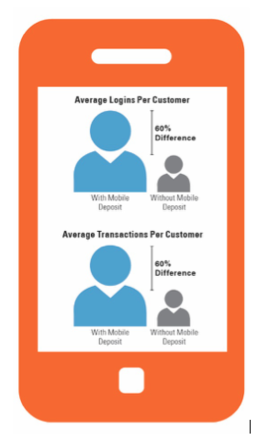
Consumers who perceive that mobile banking aligns with their lifestyle are more likely to use the service. Investing in next-generation mobile banking products is vital to this initiative. For example, Fiserv research has found financial institutions that offer mobile deposit see 60 percent more logins and transactions per month per user than financial institutions without the feature. A tailored tablet banking experience can also boost enrollment and activity.
P2P payment and instant balance features also speak to consumer lifestyle preferences. P2P payments are convenient for paying rent, splitting bills or exchanging money among family and friends. Instant balance simplifies the most common mobile banking activity.
2. Employing marketing strategies
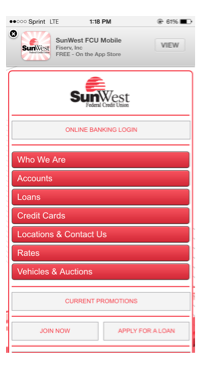
A multi-channel marketing approach is necessary to reach consumers wherever they spend their time, whether in a physical location or online. Smart App Banners can increase adoption for a branded mobile app by improving awareness - when the institution’s URL is typed into the mobile or tablet browser, a banner appears directing users to view the app download page.
Some financial institutions that have employed this technique have seen mobile registrations nearly double in the month following the launch of the banner.
Other effective techniques include cross-promotional banners, interstitial pages and a vanity URL for a landing page with more information on the service.
Additionally, marketing via social channels like Facebook and Twitter is integral to reaching engagement goals, especially among younger consumers. These channels provide an opportunity to rotate marketing message content to focus on different features—bill payment, mobile deposit, security measures, etc.—and offer interactive capabilities such as links, pictures, videos, sweepstakes etc.
3. Turning frontline staff into evangelizers
A successful mobile banking adoption strategy will also leverage the credit union’s frontline staff to encourage enrollment. To prepare staff, both branch and call center staff will need proper training on how the mobile banking service works, how to enroll new users, and how and when to promote it. Having each employee sign up for the service is a guaranteed way to reinforce training. Furthermore, the employee will be able to share personal experiences in discussion, which generates trust between the staff and the accountholder.
Aim High: Credit Unions Can Exceed the Mobile Adoption Benchmark
All efforts from the credit union in the areas of product investment, targeted marketing and employee training serve to bring the accountholders through the four stages of the adoption lifecycle - awareness, discovery, enrollment and usage.
Mobile banking benefits both credit unions and consumers as engagement between the two parties is enhanced. SunWest Credit Union of Arizona recently followed the strategies outlined above and within the first three months of availability, 43% of SunWest online banking users had used its mobile banking service, Mobiliti from Fiserv. The credit union credits early member communications and a Smart App Banner as key tools to promote the service and increase adoption. Today, most of the credit union’s mobile banking users employ the service at least weekly and they are using more services than their online counterparts.
Credit unions stuck in a rut with mobile banking momentum can re-evaluate their product offerings and targeted marketing strategies to optimize the return on investment. Mobile bankers are among a credit unions most valuable and engaged members, and campaigns to boost mobile adoption and usage justify themselves in the end results.
John Moon is Director, Consumer Adoption Marketing, with Fiserv.