

CHICAGO—What are some of the peer group-leading credit unions doing that others are not?
CUToday.info is exploring that issue and others in a series being led by credit union consultant Rory Rowland.
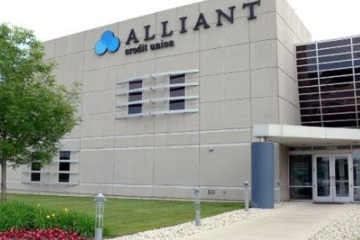
Below, David Mooney, president and CEO of the $8-billion Alliant Credit Union, shares some of his successes and ideas regarding strategic planning.

David Mooney, CEO, Alliant Credit Union
When it comes to Alliant CU’s value proposition, or what makes the credit union different in a crowded market, Mooney says the answer lies in a question: “Why should I do business with Alliant?”
To answer that question, Alliant Credit Union focuses on providing market-leading rates by leveraging its low-cost operating model. This has resulted in a much higher than average share per member and average loan per member than their peer group.
“What value does your credit union offer to your members?,” asked Mooney. “This is an important question that strategic planning settles. If your value proposition is we give better service, you may want to re-evaluate your value proposition.”
One unique practice at Alliant CU is that it does not have a strategic planning session. Rather, Alliant focuses on having a “strategic planning process.” O Mooney, this is a huge distinction.
“You just can't have a discrete one-day event; it has to be an ongoing process where you're constantly thinking about the future and where the financial marketplace is headed, and how you respond. You can’t do that in one day."
Alliant’s board and management team meet twice a year to discuss their strategy for the credit union. The June meeting is focused on broader-based topics, while the December meeting is the culmination of the management team’s work regarding the proposed three-year operating plan. Mooney said it’s very important that the board be actively involved in the process and provide input into which topics will be discussed during either session.
'Intellectual Stimulation'
In planning meetings Alliant tries to include a generous amount of “intellectual stimulation” with expert speakers, small and large group discussions, and various exercises to stimulate strategic thinking. While management takes the lead in framing strategy, the board sees its role as challenging assumptions and conclusions, probing to understand management’s thinking, and monitoring the effectiveness of strategy and execution, according to Mooney.
Among the tools used is a balanced scorecard that helps the board monitor progress on elements of Alliant’s strategy map.
“Be wary of developing plans based on a single view of the future,” advised Mooney. “I don’t know anyone who can consistently and accurately predict future developments and conditions; there are multiple possible paths that the market could take. We try to identify and assess the strategic and financial implications of multiple likely scenarios. We look for strategies that are likely to perform well in a range of scenarios. We tend to have high strategic constancy. We don’t shift from one strategy to the next and we tend to avoid the latest strategy fad. We use a three-year planning cycle, updated annually, which sets strategic priorities and consistent execution plans.”
According to Mooney, one of the best planning sessions the credit union has ever had focused on disruption and innovation.
“A number of factors went into this being a very successful session,” explained Mooney.” First, we selected a very effective facilitator who was well-versed in the subject to lead the discussion, and he helped us select appropriate pre-reading material and identify expert speakers. This helped us stay focused and lead to a robust discussion. We had small group exercises and discussions that allowed everyone to participate. There was a consensus coming out of the meeting on the role of innovation at Alliant and how we should approach it; that wasn’t the case going in. A rigorous strategic planning process can and should change your mind about how and what you will pursue going forward.”
Over the past three years Alliant has really focused on increasing its loan-to-share ratio. Mooney brought in a new lending executive who helped dramatically increase loan originations.
Alliant Credit Union has built a very low-cost model, with 85% of member transactions being completed through electronic channels in 2014. The result is operational expenses at approximately 1.0%, an eye-popping one-third the average of its peers.
But Alliant also realized that it couldn’t sustain the member value proposition on a low costs alone – it also needed to improve balance sheet efficiency. To that end the credit union has pursued a robust lending formula, including a loan trading desk where it buys and sell pools of loans to supplement direct-to-member lending. It have also built a successful mortgage loan business that has helped the credit union to re-shape its balance sheet.
Mooney said none of that would be possible were it not for the credit union’s outstanding board.
“It is a pleasure to work with our board,” said Mooney. “They are professionally accomplished and responsible. They understand the major forces impacting competition, financial performance and risk, and they are strong critical thinkers.”
'Actively Challenge Each Other'
When asked what has made for the most effective planning sessions at Alliant, Mooney answered, “The best sessions are those with a good measure of learning, intellectual stimulation, and board participation where we actively challenge each other’s thinking. Our board is pretty astute, and not reluctant to ask questions, express opinions, or share their professional expertise. They’re also very cognizant of strategic and execution risk.
Alliant Credit Union is one of the strongest and largest credit unions and United States, with a financial performance that exceeds most of its peers. Alliant has increased its loan-to-share ratio from 47% in the 2012 to over 70% at the end of 2014, with loan growth of 23% and 16%, respectively. The average loan balance among Alliant CU members is nearly double that of its peers.
Rory Rowland is president of Rowland Consulting and facilitates strategic planning sessions all over the United States. He can be reached at 816-478-3249 or at RoryRRowland@att.net .