

By Ray Birch
WASHINGTON— Credit unions emerged victorious after President Trump signed the so-called “Big Beautiful Bill,” a sweeping piece of legislation that left credit unions’ tax-exempt status untouched.
But that outcome wasn’t guaranteed. And according to Defense Credit Union Council President and CEO Anthony Hernandez, it was anything but easy.
For nearly two years, DCUC has been in a fight few outside the Beltway fully understood, Hernandez said. With the expiration of the 2017 Trump tax cuts looming and a new budget plan taking shape in Congress, threats to the credit union tax exemption became very real—especially when credit unions were explicitly listed as a potential “offset” in an early document circulated among the House GOP.
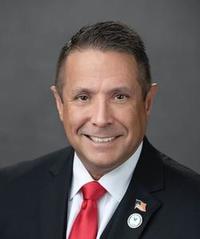
“That’s one thing you never want to see—your industry or your business named on a printed list titled ‘Potential Budget Offsets,’” Hernandez said. “That made things very real. This wasn’t your typical tax scare. Congress needed to find ways to pay for this bill, and that made our tax exemption a legitimate target.”
What followed was a coordinated campaign by DCUC, a highly organized and deeply focused trade association representing the interests of credit unions serving military and veteran communities. While he said larger associations scrambled to put together a credible strategy, Hernandez added that DCUC was already well down the field.
“We saw this coming from a long way out,” he explained. “We started preparing in late 2023 during the NDAA (National Defense Authorization Act) process, when we opposed a reckless attempt to remove the membership requirement in the Federal Credit Union Act. Banks were already setting the narrative, which was our signal this tax fight was coming. We didn’t wait—we mobilized and won that important battle by defeating two successive amendments in the NDAA, then quickly pivoted to defend the tax-exemption.”
That early start, Hernandez said, sealed DCUC’s credibility on Capitol Hill which elevated DCUC’s role in shaping the industry’s defense of the credit union tax exemption.
With the unanimous backing of its board, the council hired its first chief advocacy officer, Jason Stverak—a move Hernandez now calls one of the smartest decisions the organization has made and “one for which the industry should celebrate.”
“Nobody worked harder to guarantee we were positioned for success than Jason,” Hernandez said. “Jason is very respected throughout the industry and on Capitol Hill. Add in John McKechnie, our longtime DC advocate, and our communications specialist, Haleigh Laverty, and we had a team that could not only immediately respond—but lead the industry when it mattered the most.”
Hernandez said DCUC made it a priority to keep its members fully informed, coordinate with other credit union associations and leagues, and above all, share what it knew.
“We didn’t hold anything back,” he emphasized. “If we had actionable intelligence, we shared it—with anyone who wanted to hear it. This was a fight for the entire industry, and our role was to lead from the front and share credit in the end.”
That spirit of collaboration, Hernandez said, helped turn what initially seemed like an “isolated push by a lone voice” into a system-wide campaign that others used in their messaging.
“We shaped industry-wide messages around the need to protect veterans and military families,” he said. “This was a universal message since every credit union has a veteran in its membership. Serving and protecting veterans is a powerful message that deeply resonates on both sides of the aisle.”
Pivotal Moments
According to Hernandez, a turning point that alarmed the rest of the industry came in early January, when credit unions were officially named in a GOP budget document as a potential tax revenue source.
Another pivotal moment, according to Hernandez, was a Ways and Means luncheon in March when committee members focused exclusively on the credit union tax exemption and how Congress could theoretically repeal it in the reconciliation bill.
“That’s when the seriousness of the issue finally clicked for a lot of people,” he said. “That’s when the magnitude of the threat became clear, and we began to see larger industry associations and more leagues engage.”
By then, Hernandez said, DCUC had already spent months walking the halls of Congress, countering banker narratives, protecting the CDFI Fund, and fielding uncomfortable CU press around issues like overdraft practices, credit union/bank mergers, and controversies surrounding large institutions.
“We were willing to take on the tough conversations as early as last Summer and into the Fall campaign season,” Hernandez said. “Not everyone in the movement wanted to engage on those issues—including things like bad PR, overdraft fees, acquisitions—but we knew those headlines were fueling the bank lobby’s attacks.”

Jason Stverak
That willingness to confront problems head-on, Hernandez added, gave lawmakers confidence that credit unions weren’t hiding from scrutiny or afraid to confront banker narratives.
Leadership Through Action
Looking back, Hernandez said the campaign’s success wasn’t about press releases or flashy events. It was about action.
“Leadership is never given—it’s always taken,” he said. “We didn’t wait for permission or applause. We recognized the threat, formulated a winning plan, and quickly mobilized. DCUC also included many other national trade associations and business partners in our collaborative efforts. That’s what I’m most proud of—that DCUC showed it could lead and drive results for the entire industry.
“Sometimes big things come in small packages,” Hernandez added. “Add all those packages together and the results are spectacular. Winning this fight is one of those seminal moments in our industry’s history.”
What’s Next
With the tax battle behind them, DCUC is already focused on what’s ahead. Hernandez said the group is staying active on several fronts: ensuring the National Defense Authorization Act doesn’t contain harmful language for credit unions, supporting extensions to the Central Liquidity Facility, fighting back against the Credit Card Competition Act, and advocating for expanded veteran business lending authority.
The group is also turning its attention to technology challenges, including the fast-approaching threat to cybersecurity in a post-quantum computing era, AI risk management, and revolutionary changes in the payments landscape. One particular concern: The rise of stablecoins.
“We’re worried the credit union industry isn’t ready for that,” Hernandez said. “Stablecoins are coming fast, and the financial system has to be prepared.”
But for now, Hernandez said the industry should take a moment to appreciate what it achieved—and how.
“I’m so thankful to our members, our industry partners, and everyone who stood up to help,” he said. “We preserved the tax exemption. That’s a big deal. But even more importantly, we showed what happens when the movement comes together with urgency and purpose. That’s how we win.”
DCUC outlined the key points from its tax fight campaign:
- Wrote over 30 letters to Congressional leaders, multiple committees, and selected members of Congress over the last two years
- Mobilized a series of targeted grassroots campaigns as the bill was crafted in various committees in both the Senate and House of Representatives—started last summer and continued throughout the year
- Sent daily press releases, produced and released an effective video messaging campaign, ran several targeted digital ad campaigns, recorded videos, and appeared on multiple podcasts and local television
- Published dozens of op-eds to counter banker narratives on bank acquisitions and credit union mergers, stadium naming rights, revealing banks’ use of Sub-Chapter S Corporate tax benefits, and responding to many other attacks during the fight to preserve the industry’s tax-exempt status
- Each op-ed was distributed to all Senate and House offices on Capitol Hill immediately after banker narratives were circulated, followed by a steady message stream
- Continuously met with multiple senators and representatives, maintained positive relationships and credibility on both sides of the aisle, and alerted senior Administration officials to fortify support for the industry
- Organized and led an industry-wide campaign which included many national trade associations, leagues, and system partners—shared crucial information, sent joint letters, and encouraged others to take leading roles in industry efforts
- Established a National Advocacy Fund and immediately put funds to good use—increasing the pace and quality of information, taking multiple levels of action, and extending the Council’s reach throughout Congress and the Administration
- Gained Congressional recognition as a result. “This recognition will be critical as DCUC champions other legislation in support of the industry,” Hernandez said.