


WASHINGTON—One credit card analyst is suggesting the U.S. card market is a “Ponzi scheme” that will begin showing signs of a collapse in 2017.
The only reason people aren’t paying more attention, according to the analyst, is that low credit card charge-offs, standing at about 3% nationally, are masking some big problems.
WalletHub CEO Odysseas Papadimitriou said that issuers are continuing to grant easy credit to consumers who have about reached the tipping point at which they can no longer manage their mounting card debt. The result will be issuers eventually facing large losses.
WalletHub pointed out that credit card debt has skyrocketed in recent years, rising by $40 billion in 2013, $59 billion in 2014 and $71 billion in 2015, finishing 2016 with another $80 billion on consumers’ tab, according to the company’s December projections.
“That would represent a quarter of a trillion dollars in new credit card debt racked up in just four years. Yet the charge-off rate has remained largely unchanged, hovering near historical lows,” noted Papadimitriou.
Matter Of Time
At 2.86% through three quarters of 2016, the charge-off rate is just one-tenth of a percentage point higher than in Q3 2015 and well below the 4.93% average from 2000 through 2007.
“However, it’s just a matter of time until the other shoe drops,” said Papadimitriou. “There will be a point where people can no longer afford minimum monthly payments on the prodigious amounts we owe, and it’s shaping up to come in 2017.”
That will begin to send charge-off rates higher this year, and the increased cost of debt as the result of Fed rate hikes will only add to the problems. Every time the fed raises rates 25 BPs it costs consumers about $1.4 billion in additional credit card charges, Papadimitriou said.
“These things will start to work against consumers and against the banks,” said Papadimitriou.
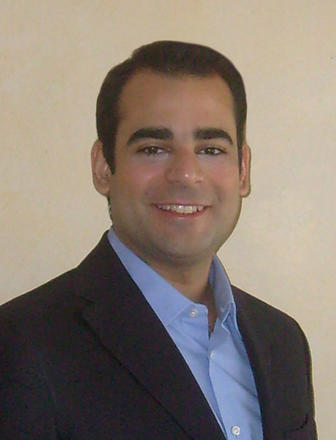
Odysseas Papadimitriou
Papadimitriou likened much of the current U.S. credit card practices to a “Ponzi scheme.”
“As long as banks are giving people money to pay their other creditors, people are able to pay their bills,” said Papadimitriou. “Once the Ponzi scheme stops—the banks stop giving away money and now consumers have a problem, at least the ones on the edge. They start not being able to meet their obligations and that sends charge-offs higher.”
And then, banks tighten credit even more, said Papadimitriou.
“You get into a cycle,” explained Papadimitriou. “As banks tighten credit people can’t afford their lifestyles and the charge-off rate increases. And banks then tighten credit even more. It’s not a question of whether this Ponzi scheme will collapse, it’s how much time is left until it breaks.”
Trouble Signs
Papadimitriou does not think the “Ponzi scheme” will come toppling down this year, but growing trouble signs will arise in 2017, he said.
“We will cross $1 trillion in credit card debt this year, a new record high. Charge-offs will begin ramping up more this year,” said Papadimitriou, who explained that the trend for falling charge-offs ended at the close of 2015. “In 2016 the trend reversed.”
Papadimitriou sees charge-offs possibly reaching a tipping point in 2018, the year in which charge-offs will return to their historical average (from 2000-2008) of over 4.5%. He believes charge-offs will eventually approach 4% this year, well above where they stand today.
“When we hit the historical charge-off average in 2018, it is important to remember that rate is 60% higher than it is now,” said Papadimitriou.
Papadimitriou said the mounting charge-offs will be a significant shock on the balance sheets of credit card lenders.
“Some plan for it. Capital One, I believe, never lost any money on its credit card portfolio through the Great Recession, while Bank of America lost its shirt,” said Papadimitriou. “Issuers need to be projecting losses based on historical data, not what they are seeing now. I think bankers have convinced themselves, just like they did before the Great Recession, that they are living in a new reality.”
Manage Finances
The key message to consumers is to manage their finances responsibly and have emergency funds available in savings.
“Because they cannot expect the 0% balance transfer and introductory offers, and easy approvals, to continue indefinitely,” Papadimitriou.