

By Ray Birch
TACOMA, Wash.—It may be time for financial counselors at credit unions to shift gears, tabling discussions about longer-term wellness goals with members to instead focus on new and looming economic challenges.
That’s advice from Stacy Augustine, president and CEO of CU Strategic Planning, who added it might also be wise for CUs to train frontline staff to pitch in and help with financial counseling efforts as inflation soars and the threat of a recession rises.
Augustine spoke with CUToday.info as part of a series of articles focused on how rapidly changing economic factors, especially fast-rising prices, are changing what many members now need from their credit unions.
Augustine told CUToday.info if families are beginning to have a difficult time affording food and other essentials as a result of skyrocketing prices, including gas topping $6 a gallon in many markets, it’s time to adjust the financial education agenda.
“You have to deal with financial emergency first, you have to put food on the table,” said Augustine. “If you can’t afford to fill your tank to get to work…you really can’t think about some of the long-term financial strategies that a lot of financial counselors at credit unions work on with their members. I know it's really great to talk about how you are going to send your kids to college and how you're going to be able to afford retirement, but if you can't afford SpaghettiOs today you're not thinking about college tomorrow.”
Augustine pointed out that for the 64% of Americans living paycheck to paycheck, there is no path to financial wellness without first addressing household financial stability.
A Growing Need
“Most credit unions only have a few financial counselors, which doesn’t begin to meet the needs of the 200-million Americans struggling to make ends meet,” she said.
For many Americans, the number of financial challenges is often overwhelming, according to Augustine.
“How do you get people into affordable housing when the median family house cost is so high,” she asked. “I think there are some short-term things that credit unions can do.”
Much of what is landing on the desks of credit union financial counselors can be related to Maslow's Hierarchy of Needs, suggested Augustine. That theory, named for its creator Abraham Maslow, hich asserts people are motivated by five basic categories of needs.
“When you're in college and you took Psychology 101 you learned about Maslow's Hierarchy of Needs, which tells you that you have to deal with emergencies before you can deal with higher-level things,” said Augustine.
And for many members, there are emergencies.
Expanding the Focus
Augustine said that sometimes credit unions can get caught up in focusing on lower-income members when they think about financial counseling, adding if times become very difficult—which is already the case for many Americans and some economists predict could happen for many more—the effect will be on more than just those who are considered the underserved.
“What we are really talking about now are everyday people--everyday credit union members who are teachers and police officers and anyone who makes 80% of the median family income,” she said. “Those are some of the 200-million Americans who are struggling to make ends meet. They have jobs—sometimes they have two or three jobs to make ends meet. They're working hard, but they're not getting ahead. And then you start getting into inflation. Right now the cost of goods and food…that is taking up a lot of income and you got to make it up somehow.”
Could be Overwhelming
If consumers are battling both inflation and a recession, and job cutbacks begin, the economic fallout could be too much for current financial counselors at credit unions to manage themselves, warned Augustine.
“Credit unions sometimes will invest in one or two financial counselors to be on the staff, and that's good that they have them. But when people are under financial duress and are barely making ends meet, many members will not know to even ask for help,” said Augustine. “One of the best things a credit union can do now is make sure they leverage their existing staff. People work at a credit union because they care about people and they care about their members. A lot of times it's the frontline people who can see financial problems starting in members’ lives. The tellers see that every Friday this member has a bunch of cancelled checks to payday lenders because he is taking out repeated loans every week.”
Asking the Right Questions
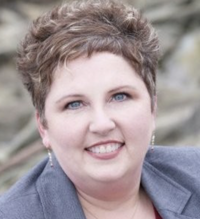
Stacy Augustine
Augustine said it is important credit unions have now trained more of their frontline staff on how to spot signs of financial trouble, educate the team about some steps they take to remedy a problem—such as refinancing a higher-rate loan—and then make sure employees are looking for the red flags.
“If we could introduce some financial education training to the frontline staff so they at least know to ask the right questions and to know what help is available…,” said Augustine. “Maybe the step is just to spot trouble and let the member know financial counseling is available at the credit union.
“There's just too much opportunity to get yourself in trouble right now,” continued Augustine. “The frontline team can do a lot to keep members from digging a deeper hole and let them know there is a ladder available to get them out…When it comes to financial counseling, it's great to have a financial counselor on staff to help people develop IRAs and retirement plans. But if we're heading into a recession, with inflation really high, and we have 200 million Americans struggling, maybe the best thing you can do is make sure your staff can identify members who need help and refer them to the right people in the credit union.”
Being a HERO
Augustine noted CU Strategic Planning offers the HERO online community development certified financial counseling program to credit unions.
“HERO stands for Helping Everyone Reach Opportunities. It trains credit union staff to do three things: identify financial distress, counsel appropriately and transfer to peers for loan solutions, loan workouts, and more in-depth counseling from the financial counseling department,” she explained.