

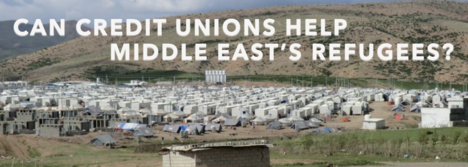
KURDISTAN, Northern Iraq–The World Council of Credit Unions is seeking to embark on a plan to charter credit unions in one of the most conflicted regions of the world as part of an effort to improve the lives of people living in refugee camps here.
World Council President/CEO Brian Branch has returned for a tour of a region where he met with not just government officials but also many of the refugees themselves, who shared accounts of the very difficult challenges they face. The initial plan is to introduce in the refugee camps what would be known as village savings and loans associations (VSLAs) that would be, Branch said, an “initial step for refugees to develop capital to self-fuel their businesses.”
The World Council said it envisions the VSLAs would be groups in which members pool a contribution each month and take turns each month using the pool for their productive activity. They would work only with members of the group and would not take savings deposits from the wider public.
A List of Challenges
The challenges are many, not the least of which is there is no legislative framework or history of credit unions in Iraq or Kurdistan. The establishment of a credit union would require a license from the Central Bank of Baghdad.
It is estimated there are between 2-2.5-million refugees in Kurdistan, which has sought autonomy from Iraq and is ruled by the Kurdistan Regional Government. Petroleum revenues have brought some relief to the region, but an ongoing war with ISIS and other tensions continue to create difficulties. Branch said he and the delegation travelled to Kurdistan and Northern Iraq at the request of former military personnel.
As CUToday.info reported earlier, Branch traveled through Northern Iraq and Kurdistan with members of Global Counterpoint, LLC to explore a credit union approach for serving displaced persons and refugees, according to WOCCU. The overarching objective is to find way to “build assets, to re-engage in a productive economy by moving from relief de- pendency to self-sufficiency and to build a more secure future through graduation or repatriation.”
Empowering Women
Moreover, WOCCU said another goal is to find a way using credit unions to empower the young women in the region and camps who have escaped from ISIS or from ISIS-controlled areas so they might restore their dignity and engage in economically productive activities.
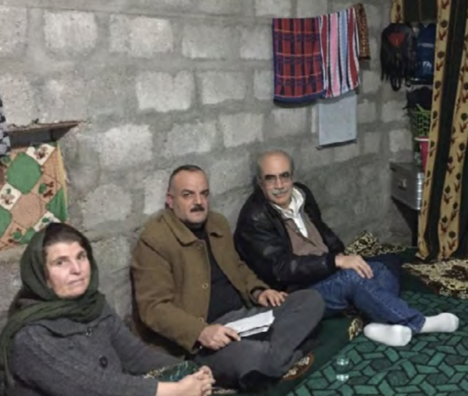
WOCCU CEO Brian Branch meets with refugees in Kurdistan.
The World Council has a long history of working with displaced people and refugees around the world. One of the changes it said it has witnessed is refugees now have much longer tenures in camps, averaging 17 years, and that many of those in Kurdistan camps have been there for five years already. “Many have now signed a renewal of their tent space for another four years,” WOCCU said.
If there is any upside to be found it is that the camps have grown in size, which means the necessary scale needed to create and sustain a financial co-op is there. Most are also large enough to have formed their own local economics, especially for basic commodities. Another plus, said WOCCU, digital and payment systems have been developed that allow for local identity, and for payment and financial transactions to grow with the individual and extend after the refugee returns or settles in a new home.
Refugee Stories
But the new financial co-ops will also be looking to take root among a population that has spent the past decade leading often despairing lives. For instance, the WOCCU team shared this account: “We met with several families whose fathers and sons were executed by ISIS and whose wives, sisters and daughters were kidnapped and abused as sexual slaves. One recently-returned woman who escaped from slavery by a family in Baghdad had been told by that family that if she left she would be killed. She fears to leave the camp.
“Their sense of powerlessness, shame and abandonment was overwhelming. Many had been beaten and disfigured; they looked old and worn beyond their years,” the WOCCU report continued. “Girls that return are often disturbed from seeing their mothers and grandmothers killed and from suffering beatings and rape in captivity. We were told that many who were rescued or ransomed just sat in their tents in depression and isolation. In the camps there are few jobs or educational opportunities for the girls. Many are not active and see no opportunity for the future.”
Changing a Mindset
Another goal of the village savings and loans associations concept is to migrate refugees away from an aid-dependent mentality. The World Council, under the auspices of its Worldwide Foundation, said it would provide training and oversight for the VLSAs. The training would include many of the basics, including implementation principles, methodology, policies, charter, governance roles and financial records.
“In the camps, the prevalence of grants and free services makes the provision of credit services risky,” the WOCCU analysis said. “It needs to be clear that these are loans to be repaid. Recipients need to commit to repayment and the VSLA needs to enforce collection. The VSLA must be branded differently from other relief programs, educating members why loans must be repaid.”
A Lack of Trust
There is another big and often entrenched obstacle: a lack of trust that has been created by the conflict. Many people in the region lost the savings they had previously deposited in banks, and there are additional trust issues between regional ethnic and religious groups (which WOCCU said could be used to create common bonds.
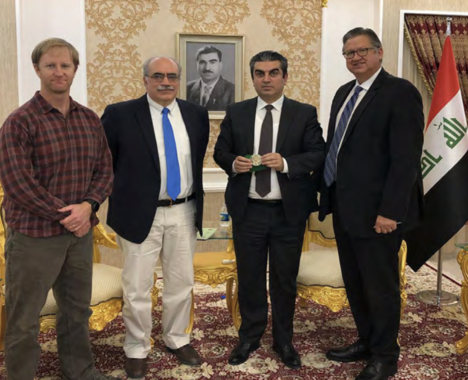
WOCCU CEO Brian Branch meets with officials in Kurdistan.
“In the absence of trust, a repayment ethos needs to be built through increasing access and incentives,” WOCCU said. “Initial loans are (to be) small and successful repayment qualifies the borrower for a slightly larger loan. Loan terms are (to be) kept short. Those who pay back their loans (will) receive a certificate that documents their credit history and entitles them to increasing preferential access to credit. Cosigners or guarantors are required; those who have employment or assets may serve as guarantors for others.”
Another reason for keeping the loan terms short is that the refugees are technically considered temporary residents and are expected to return to their homes. Resettlements and relocations would create loan repayment and liquidity issues for a financial co-op should loan terms be too long.
What About CUs?
What about creating credit unions themselves?
“If credit unions are introduced, camp credit unions will always have limited scale,” according to the WOCCU assessment. “A more sustainable, long-term approach is to introduce credit unions in the host communities which will provide service to the host community and include operations in the camps. This may avoid frictions between camps and the host community, and help build stronger community and economic linkages. This will require registration and licenses from the Central Bank in Baghdad, and will be a longer term goal.”