

ANAHEIM, Calif.–There are six key consumer trends credit unions should be watching now if they expect to thrive in the “expectation economy.”
Maxwell Luthy, director of trends and insights with TrendWatching.com, which was founded in 2002 and which has more than 260,000 subscribers, offered a half-dozen overarching trends credit unions should be watching. The company monitors approximately 140 different trends using volunteers all around the world.
A trend, said Luthy, is not a fad. Instead, it’s a new manifestation among people in behavior, attitude or expectation of a fundamental human need, want or desire.

Maxwell Luthy speaking at CUNA Marketing and BD conference in Anaheim, Calif.
“If you over-focus on technology you forget human needs and wants,” cautioned Luthy. “Those basic human wants and need include a desire for love, convenience, value, and security, among others.”
While the question is often asked about what the consumer will want tomorrow, Luthy said the consumer basically has no idea. Instead, “We look for innovations around the world that are going to heighten expectations and which change what consumers want.” Similarly, trends develop out of innovations that resolve points of tension, he added.
“Uber is a good example of something that changes expectations the first time you use it. People become more impatient and less willing to wait for a taxi (or even Uber).”
Luthy urged credit unions to look beyond what their competitors, especially other credit unions, are doing. He called it the “expectation transfer,” when consumers see an innovation in one space and expect it in another.
“You’re competing with Singapore Airlines, because they are raising your members’ expectations in terms of service,” said Luthy, referring to what he called the “Expectation Economy.”
Tracking trends may be interesting, observed Luthy, but it’s value-less if the credit union does not act on them.
Luthy then offered six threads he said credit unions should be watching, all of which are built around expectations.
1. Contextual. Beneath this trend, everything is seamless. The consumer expects no roadblocks– digital, physical, metaphysical–in front of their demands. “Consumers are becoming really impatient. Many brands think this means omnichannel, being all the place all the time. The problems: it’s expensive and complex for a brand to pull off, and it’s a problem for the consumer and it can be oversaturating and irritating,” according to Luthy. What’s more important than omnichannel is contextual omnipresence. It’s being in the right place at the right time.”
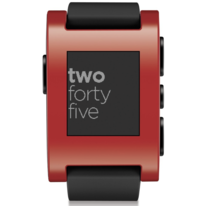
As an example of contextual omnipresence, Luthy cited the Pebble watch, which will recognize which store a consumer has walked into and identify the credit card that will get the most points for a purchase in that store.
Another example: In Singapore, one Mini Cooper dealer partnered with a tow truck company to show up with a Mini and give the person a test drive to where they were going after their car had broken down.
Another example: Virgin Hotels and Gap, which have partnered to let people try on clothes while in a hotel. The guest keeps what they want to buy, and the remaining items are returned by the concierge.
“How can you use context and new channels to be there when your members need you?” asked Luthy, reminding that the credit union doesn’t need to be there all the time.
2. Informal Information. This trend refers to the flood of alerts, messages and push notifications that has made the smartphone THE medium via which consumers see the world. The language of mobile is fast, informal and effective.

The poster child of informal info, said Luthy, is the emoji. In Manhattan, one hotel has an emoji room service menu.
“Can you communicate more effectively with members by breaking some rules?” asked Luthy, sharing how one credit union rep had come up to him and shared that things are so rigid in their shop that in their newsletter they are not even allowed to use contractions. “Perhaps some of the things you are doing are no longer relevant,” said Luthy.
3. Beneficial Intelligence. Luthy said that while most consumers don’t care about artificial Intelligence (AI), they are embracing intelligent services that use machine learning and natural language, often referred to as “beneficial Intelligence.” Sixty-seven percent of consumers are willing to share data in exchange for benefits, he said.

An example: Airbnb has machine learning that helps hosts set the ideal price for their property, such as location, time of year, reviews received and more.
“Can you make intelligent decisions with clear benefits on behalf of your members? Are you helping them to save time and making sure they get the best price?,” Luthy asked.
4. Mentor to Protégé. “Self-improvement is easy” in a digital environment, said Luthy. “Anyway the consumer wants to improve themselves is an area where you can step in and help.” But online learning platforms have one problem, said Luthy, pointing to high drop-off rates. Thirty-three percent of people who buy a wearable exercise device, for instance, stop using them.
“Some are embracing new ways to digitally connect with mentors, the professionals or peers who have the knowledge, skills and experience they seek,” said Luthy. “A mentor will hold you more accountable than an app.”

As an example, Luthy noted what Delta has done this with an in-flight mentoring program. A passenger can submit your profile to Delta and be seated next to someone who might be a mentor.
Another example: KLM Airlines will match layover passengers with locals. “They have volunteers in the Netherlands who will hang out with a traveler and KLM will pick up the tab for drinks.”
“In your credit unions I’m sure, you have members who have experiences and insights that other members want to hear about, and they don’t expect to be paid for sharing,” said Luthy. “Who are your members’ mentors and how and where could you foster connections?”
5. Sympathetic Pricing. Increasingly, consumers expect companies to share their ethical values and ideals, said Luthy.
“One interesting trend we’ve seen is to use pricing to show you care about their values. Typically, pricing a pain point. In the quest to prove they care, brands are using dynamic pricing to show they share your values,” he said.

As an example he cited Easy Taxi in South America which has offered discounts after heavy rainfalls limited public transport.
Another example: A soccer team e-tailer that discounts merchandise when the team is losing.
“Can you turn pricing or fees for members from a pain point into a point of compassion? Perhaps you are already doing so, but are you capitalizing on it?” asked Luthy.
6. Insider Trading. This trend is about how consumers increasingly care about a company’s internal culture, as well, according to Luthy, who urged credit unions to show consumers their values align with members’. “Make meaningful, positive changes to your internal policies and then communicate to consumers.”

As an example, he pointed to Everlane, which used Black Friday to raise funds for factory workers, instead of providing shoes on sale. Another example: Delta has opened an employee-exclusive spa.
“Which aspects of your credit union’s culture would you be happy to share with the community?” asked Luthy.