

By Ray Birch
NORTH LIBERTY, Iowa—Could the second-largest CU/bank buy—which reaches into two states and includes two banks—lead more credit unions to consider a similar move? And will the latest blockbuster agreement bring more banker attention to these deals?
Jeff Disterhoft, CEO of GreenState CU, believes both those scenarios are possible.

As CUToday.info reported, the $7.5-billion GreenState Credit Union here has agreed to simultaneously buy two separate banks in two states outside of Iowa. GreenState said it intends to purchase the $345-million Premier Bank in Omaha, Neb., and the $731-million Oxford Bank & Trust based in Oak Brook, Ill. Prices paid for the banks were not disclosed.
The combined assets of both banks make the deal the second-largest CU/bank acquisition to date, with Jacksonville, Fla.-based VyStar CU agreeing in April to buy the $1.5-billion Heritage Southeast Bank in Jonesboro, Ga. That deal has drawn significant criticism from a number of banking industry groups.
While the deals will certainly get more credit unions thinking about purchasing banks, including taking a look at bigger banks out of state, Disterhoft told CUToday.info that any credit union considering such a move must first have its numbers in line.
“To some extent there's a little bit of math involved in this process,” said Disterhoft. “A credit union first of all has to have the size to make a purchase of this nature. Second, it has to have the operational bandwidth. Third, it must have adequate capital. This does kind of narrow the field down a little bit.”
GreenState Credit Union reported $48.7 million in net income for the first quarter of 2021, with capital of 9.9%.
But Disterhoft stressed he does not believe GreenState’s move will lead to a significant uptick in purchases of banks by credit unions nationwide.
“Again, I just don't know that many are either positioned or have the interest,” he said. “But the deals could serve as a wake-up call for a few larger credit unions that this could be a growth strategy for them.”
Unique Factors
Disterhoft noted factors unique to Iowa also played a role in driving the first-of-its-kind deal. In particular, interpretation of laws in the Hawkeye State that put a specific prohibition in place.
“The Iowa Division of Banking has interpreted our state code in way that precludes a bank chartered in the state of Iowa from selling to a credit union,” explained Disterhoft. “That really forced our hand to look at alternatives for bank acquisitions. These two banks seemed to us to be the most logical ones—in two contiguous states. These buys are in line with our non-organic growth objectives.”
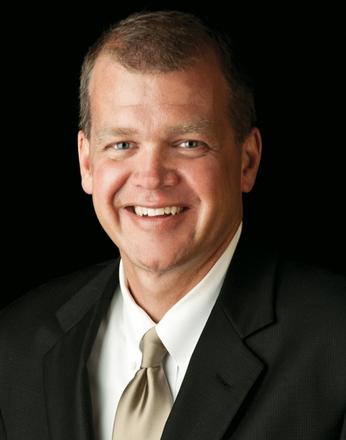
Jeff Disterhoft
Disterhoft added that while he disagrees with the interpretation, it’s clear the CU must operate within the rules and therefore develop alternative plans.
As CUToday.info has also previously reported, the potential challenges that lie ahead for GreenState may be stronger in Iowa, where the Iowa Bankers Association recently lobbied for legislation that would make things even more difficult for CUs to expand via bank acquisitions. The legislation, which did not pass in the latest session of the Iowa legislature, would have made it difficult for all credit unions in this state to buy a bank within its borders, and for any bank inside Iowa to sell to an Iowa CU.
As CUToday.info has also extensively reported, most recently here, the announcements by VyStar and GreenState have only spurred the banking trade groups to step up their criticisms of credit union acquisitions of banks, telling Congress, state and even local governments the deals are costing the tax dollars and hurting communities.
Anything But Commonplace
But Michael Bell, the pioneer of credit union purchases of banks who is a partner and co-chair of the Financial Institutions Practice Group at Honigman, LLP in Kalamazoo, Mich., said that even with the GreenState deal, credit union purchases of banks are anything but commonplace.
Bell—who has been involved in more than 40 whole-bank agreements, plus additional bank branch purchases—noted that of the hundreds of banks sold each year, with credit unions claiming a small piece of the business. Nonetheless, Bell expects the GreenState deal will likely raise the eyebrows if not ire of Iowa’s bankers, as well as bankers across the nation.
Making these kinds of buys, and simply getting larger, as GreenState begins to creep up on $10 billion in assets, just makes the credit union a banker target, Disterhoft acknowledged.
“To some extent, we have been a target of bankers for some period of time. My guess is we will continue to be at target for the foreseeable future,” said Disterhoft. “But I resigned myself to the fact that that those who do not believe in the credit union ideals or mission never will, regardless of any sort of rebuttal we could craft…We've grown in large part because we've taken really good care of consumers, and that's the way we will continue to succeed.”
‘Dictated by Circumstances’
As for purchasing a pair of banks simultaneously, Disterhoft said GreenState never set out with a goal to make that happen.

Michael Bell
“The decision to buy two banks at the same time was somewhat dictated by the circumstances around us,” he said. “There were opportunities in surrounding states that help us with our inorganic growth targets, and with that mind we began pursuing both of these at slightly different timeframes last year. However, when it came time to make an announcement, making one single unified announcement seemed to make the most sense for us. That’s just the way circumstances worked out.”
The two banks also represent new business lines for the credit union, offering skills GreenState has been seeking to build, such as expertise in commercial banking. Disterhoft said the purchases also represent a means of reducing the credit union’s risk from economic downturns, while extending its footprint into new geographic markets.
Both banks are financially sound. Premier Bank has made the list of the Top 100 Healthiest Banks in America for the past six years, ranking 51st among the 5,267 banks analyzed in 2019. Premier Bank made over $4 million in 2020 and $2-million in 2019. Oxford Bank made $12.3 million in 2020 and $7.2 million in 2019.
A Double Challenge
Disterhoft agreed working two deals at once, incorporating two different banks into GreenState and its culture, and handling two IT conversions are all likely to be challenging.
He said there is no one operational area that is more challenging than the others, adding GreenState has focused on building a strong staff and leadership team capable of managing through such deals.
Disterhoft emphasized, as well, that GreenState’s acquisition of seven branches of First American Bank in Des Moines, Iowa, in 2020 proved its culture is one that can be quickly assimilated by a new organization’s staff, including a bank’s staff.
“I actually think it's a wonderful opportunity for the employees for both banks,” said Disterhoft. “And I don’t think it takes a lot of time for them to become solid credit union staff, and really part of our culture. Already, the employees who came over from First American, many of them will tell you today they feel like they’ve been with GreenState a long time. I feel the same way.”
Entertaining Possibilities
The CEO said the big buys, and any banker attention they might bring, changes nothing about the credit union’s future growth plans.
“We will continue to entertain opportunities as they present themselves,” he said. “It's not so much that we have sought out potential partners, we're just reacting to those that have come our way. We evaluate each deal on its own merits, and we will continue to evaluate opportunities as they come up.”