

WASHINGTON—Senate Banking Committee Ranking Member Elizabeth Warren (D-MA) is pressing NCUA Chairman Kyle Hauptman to turn over the legal analysis behind the agency’s position that one board member can constitute a quorum, warning the agency’s deregulation project could weaken the credit union system, American Banker first reported.
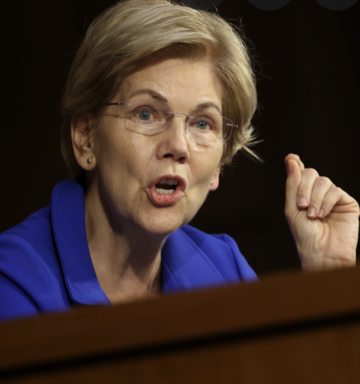
Elizabeth Warren
In a Monday letter, Warren said NCUA’s effort to repeal or scale back 31 rules raises “serious questions” because Hauptman has been acting as the agency’s sole board member since President Trump removed Todd Harper and Tanya Otsuka in 2025. As CUToday.info previously reported, NCUA has said it has precedent to operate with one board member and cited former Chairman Dennis Dollar’s solo actions in 2001-2002.
Warren, in her letter (CUToday.info obtained a copy of the letter Tuesday), said the deregulatory moves could "threaten the stability" of the broader credit union system, particularly because a large credit union failure could strain the National Credit Union Share Insurance Fund.
The legal question remains separate from the ousted board members’ removal fight. As CUToday.info reported here, the Supreme Court’s Monday decision in Trump v. Slaughter weakened Harper and Otsuka’s reinstatement arguments.
Meanwhile, John Crews, nominated to replace Hauptman, testified before the Senate Banking Committee last week and is expected to face a full committee vote next month. Chairman Tim Scott (R-SC) said the hearing was about getting qualified leaders in place, while Warren said credit unions need a stable regulator during a period of AI, crypto and board-independence questions, according to Senate Banking Committee statements.
Warren Asks For Formal Briefing
In her letter, Warren said that "given my concerns," she is requesting a formal briefing on the NCUA's Deregulation Project and answers to a series of questions by July 13:
- How did the NCUA determine which rules and/or guidance were obsolete, duplicative, intended as guidance, and/or burdensome? Is the NCUA planning to propose changes to, or the removal of, any additional regulations? If so, which?
- Of the proposals announced as part of the Deregulation Project, which were recommended by career supervisory staff, and which were initiated by political leadership? For those initiated by political leadership, please provide the rationale offered to NCUA staff for each proposal.
- Why did the NCUA conclude a separate Deregulation Project was needed, given the agency's participation in the Economic Growth and Regulatory Paperwork Reduction Act (EGRPRA) process—which requires federal banking regulators to review regulations that are outdated, unnecessary or unduly burdensome—and the NCUA's own three-year rolling review of existing regulations?
- For each proposal that eliminates or changes an existing rule or guidance document, provide the analysis the NCUA conducted to determine whether the proposed changes would adversely affect the safety and soundness of the credit union system. If no analysis was conducted, why not?
- For each proposal that eliminates or changes an existing rule or guidance document, provide the analysis the NCUA conducted to assess whether the proposed changes would increase credit, liquidity, operational or concentration risk in the credit union system. If no analysis was conducted, why not?
- What effect does the NCUA expect the Deregulation Project to have on the Share Insurance Fund, and has the agency conducted a cumulative analysis of the impact of all pending deregulatory proposals, rather than evaluating each proposal in isolation?
- Does the NCUA plan to issue additional guidance to examiners if and when these changes are finalized to reduce the subjective risk determinations examiners may need to make without these rules in place? If not, why not?
- Provide the legal analysis conducted by the NCUA to determine whether a sole board member constitutes a quorum and has the authority to promulgate material policy changes, including proposing regulatory changes and eliminations as part of the Deregulation Project.
- Will the NCUA commit to providing Congress with annual reports on the effects of these deregulatory actions on credit union risk profiles, examination findings and Share Insurance Fund exposure? If not, why not?
DC Insiders Respond
Washington credit union advocate John McKechnie commented on Warren's letter.
"Senator Warren voicing displeasure at any regulatory relief in the financial sector is no surprise," stated McKechnie. "I suspect she wouldn't have liked the proposals that came out of NCUA whether they emanated from a one-person board, a three-person board, or a 23-person board. I'm not trying to be disrespectful, but her philosophy is very well known."
Brandy Bruyere, partner at Honigman, LLP, believes NCUA is aware of possible legal challenges from operating as a single-member board, given the "somewhat technical nature" of much of its deregulatory agenda that has rolled out over the past year.
"While there are proposals impacting 31 regulations on the table and that agency work is not to be discounted, many of these changes are more streamlining outdated rules as opposed to overhauling critical requirements," Bruyere said. "Challenging NCUA action by asserting one board member is not a quorum would take resources as litigation is costly, so, it may not be coincidence that the deregulatory project to date has not taken on anything particularly controversial like broad changes to field of membership or business lending rules which the banking industry has sued the agency over in the past."
CUToday.info has reached out to NCUA for comment.