

By Ray Birch
ALEXANDRIA, Va.—NCUA is reporting its online diversity assessment initiative is promoting diversity and inclusion among the credit unions that participate in the annual program.

For the last three years, NCUA has offered the voluntary online tool that assess how well a credit union is doing with diversity and inclusion and also offers insights and best practices to help CUs make inroads here.
The 2018 assessment (https://cudiversity.ncua.gov/) has been open since Nov. 1 and closes Dec. 31, said Monica Davy, director of NCUA’s Office of Minority and Women Inclusion.
“But we will still accept a credit union’s submission all year round,” she said, explaining the results from those that participate by end-of-year cutoff are aggregated and then included in the agency’s annual report to Congress. Individual CU responses are not shared in the report.
“Diversity and inclusion is not just about getting diverse talent inside the credit union and on the board,” said Davy. “You have to have a culture of diversity and inclusion, or you don’t get the true value of diversity. Research shows that diverse organizations outperform homogeneous ones. And diversity just makes sense—credit unions serve very diverse communities that are just becoming more diverse.”
Origins in Dodd-Frank
Davey said the self-assessment was spun out of a Dodd-Frank mandate that requires NCUA and other federal financial regulatory agencies to assess diversity and inclusion policy and practices within its regulated entities.
“So the federal financial regulatory agencies got together and developed joint standards for assessing diversity and inclusion practiced among their regulated entities,” explained Davy. “We took those joint standards and made them into a voluntary self-assessment.”
The joint standards are:
- Leadership commitment to diversity and inclusion
- Employment practices related to diversity and inclusion
- Supplier diversity policies and practices
- Transparency of diversity and inclusion practices
- Assessing and monitoring diversity and inclusion practices
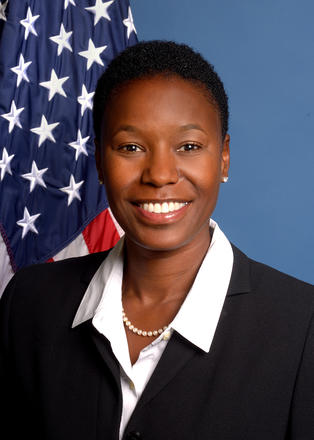
Monica Davy
“Within the assessment, under each of those five categories, is a list of best practices that allow a credit union to say yes, this is something our organization does, or no, this is not something that we do,” Davy said. “The real goal is to place these best practices in front of credit unions so they can start moving even further forward with diversity and inclusion. We know credit unions are all in different places when it comes to diversity and inclusion. But, again, this gives them greater exposure to best practices and generates conversation about diversity and inclusion within the credit union.”
‘Critical Conversations’
Those conversations are critical, explained Davey, who believes those talks within the credit union are what sparked improvement in diversity and inclusion programs among those CUs that have taken the voluntary assessment two years in a row.
“The first year we held the assessment we had 35 credit unions participate,” said Davy, adding the agency’s target audience is credit unions with 100 or more employees. “The next year we had 64 credit unions respond. We hope we can double that number this year.”
Davey emphasized NCUA is “mindful” with the limited number of CUs participating in the last two years, it has received only a small “snapshot” of diversity and inclusion programs at CUs nationwide. But what the agency has learned is taking the assessment can improve diversity and inclusion efforts within the credit union.
“We have had 15 credit unions respond two years in a row,” said Davy. “In all those 15 they have all increased in their affirmative responses to four of the five standards, with the exception of supplier diversity. Our feeling is the assessment is simply sparking greater conversation about diversity and inclusion at these credit unions, which is leading to improvement.”
Starting at the Top
Looking at responses from 2017 for all participants, Davy said 46% said they have organizational leadership dedicated to diversity and inclusion.
“So 54% said they do not,” she noted.
Fifty-four percent said they have proactive implementation of employment practices that expand outreach for diversity and inclusion. Sixteen percent said they promote transparency of diversity and inclusion practices, and 24% said they monitor and assess their diversity policies and practices.
“The place we saw the least activity was in consideration of supplier diversity,” explained Davy. “So when they go out and obtain business with vendors, only 7% of say they give consideration to supplier diversity. Because of that low response in that area, we put together a supplier diversity guide for credit unions to help them start a supplier diversity program.”
Davey said developing support tools, sharing best practices and providing guidance for CUs around diversity and inclusion is what the self-assessment helps NCUA do for credit unions.
“We can share this guidance so credit unions don’t have to reinvent the wheel when it comes to shaping their diversity and inclusion efforts,” said Davy.
Updated Assessment
This year NCUA has updated the self-assessment to include the opportunity to add the names of CU staff who are responsible for diversity and inclusion.
“We also changed the question format slightly, so you are not answering yes or no to questions. Now you just check yes if you are doing something,” she said. “The most significant change is adding a section at the end of the assessment where you can enter your diversity data—total number of women on staff, total number of men … if you want to share that.”