

LAS VEGAS–Representatives of several of the country’s largest auto dealers shared an update with credit unions here on what the market looks like from their perspectives, including how buyers are adapting to higher prices and rates, how technology is affecting buying and operations, and noting that while electric vehicles are getting huge attention, they still don't really appeal to most people visiting their showroom, especially in some parts of the U.S.
The comments were shared during the always popular auto dealer panel that is part of Origence’s Lending Tech Live event.
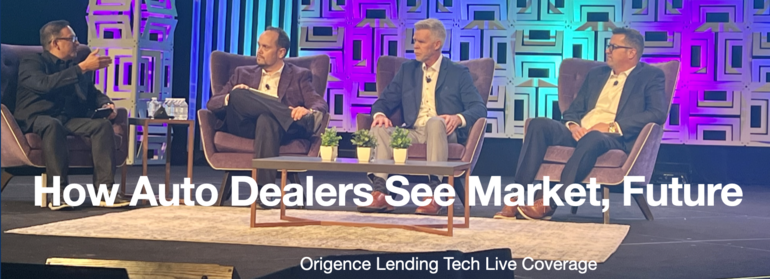
Panelists for the session included:
- Preston Stewart, national variable operations director with Napleton Auto Group, which is headquartered in Oakbrook, Ill.
- Chad Leavitt, chief accounting officer with Findlay Group in Las Vegas, a privately owned group of about 35 stores representing more than 20 brands
- Richard O’Connor, VP-finance with Sonic Automotive Group, which is headquartered in Charlotte, N.C. and which is publicly traded with more than 170 dealers all over the United States
The session was moderated by Josh Amaton, VP-dealer client experience with Origence.
Here is a look at what was discussed:
Amaton: How are you adapting to changes in the market and meeting customer demand on affordability?
O’Connor: Today's challenges are a little bit different. Obviously, there are rising interest rates and inflation, but for us it's that the used car market is so volatile now. During COVID we had a 10 to 15 day car supply; now we might have a 30-35 day car supply. But if you buy too many cars and then the market tanks, you’ve really got to watch it.
We’ve got a used car brand called Echo Park that’s about 35 dealerships. The last couple of years the sweet spot has been (vehicles priced) at 20-22 grand and now it's 27-28, so we're missing a segment of that business.
Leavitt: We saw a big dip, especially in late-model Teslas last year around November and December. There are just some new pieces to it that are hard to manage but, obviously, as we get into this environment where there's a little bit more cars we're having to adjust our customers’ expectations a little bit.
We still have more customers than cars, so it's a good position to be in as car dealers, but there are these pieces that are just curveballs that we're having to think on our feet and be prepared for. It’s still a good situation to be in. I think the biggest piece is just being willing to adapt quickly.
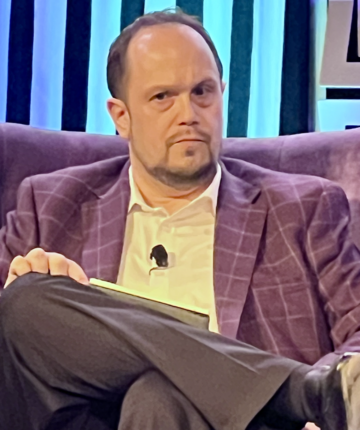
Preston Stewart
Stewart: It is about being quick to react. The Tesla was a pretty popular preowned car. And then Mr. Elon Musk reduced the price (on new cars). We have continued to put our hands around the necks of these deals. The rates have got to come down to get some relief.
Amaton: I worry about affordability. What range are you seeing in payments?
Leavitt: We're seeing customers coming off a three-year lease and then seeing a $300 or $400 increase in payment. You’re seeing some people switch to a purchase who used to lease. Moving to a used car hasn’t been all that advantageous over the last 24 months. We ask them, has your grocery bill gone up? Yes, Electric bill? Yes. We’re all feeling it. It’s not us, the dealer, making all this more money. People are having to adjust and it’s not easy.
Stewart: It’s hard to get the consumer to understand it’s not us.
O’Connor: There are a couple of different profit centers. We have Echo Park. There’s service. F&I. One of the things that we're doing is trying to go and buy used cars. We've got a separate department now in some of our stores for buying these cars. We’re trying to buy the less-expensive cars, we call them C cars, that are $10,000 to $15,000, so that we can get that segment of the market we're missing right now.
Amaton: June 9 is fast approaching. For lenders and dealers, that’s when the FTC’s Safeguards Rule goes into effect. What steps have you taken to ensure compliance?
Leavitt: Last year we started getting ready. We’re happy to have a little bit of relief and have put the final touches on it. We had a lot of things in place already. Obviously, in a group of our size, we already have a lot of layers of clients and you're constantly looking at your network and those types of things.
We really fast-tracked things like multi-factor authentication and making sure we're doing all the PIN testing at a higher level than we had in the past. We recently did a tabletop exercise where we put the executives in a room and said, ‘OK we've got hacked. What happens now? Who talks to the media? What are we doing from a communications standpoint?’ We have to turn cell phones off because if it’s voice over IP phones, they could be hacked and (the fraudsters) can hear us.
I think a lot of us in this industry have complied.
Amaton: How have you prepared?
O’Connor: We have a new VP of info security. He and his team have really worked to ensure we meet the 12 or so tenets of this new rule. We have created an online training video for our 10,000 teammates so they understand how serious this is.
Stewart: For me the real elephant in the room is what’s next. There will be a new law from the FTC soon that is just going to add more challenges. It will be more paperwork. It’s meant to add more transparency. The issue is the pricing online, including F&I. It’s going to be a quick race to zero.
Amaton: Have you had to invest in new staff?
Stewart: We have new staff. We have an entire compliance department. A technology officer. How much money we have had to spend as a group also is a challenge. It is a lot of work.
Amaton: What role do you feel technology can play in lending compliance and transparency?
Stewart: The new program on the Origence side that is around AI auditing of transactions (is good). The compliance is a lot of work, and the fact your system can be able to do that while I'm asleep at night is a fantastic concept.
AI is going to be a massive part of our lives. With compliance, embrace it, learn it. You will probably be able to use it to help you enhance your business.
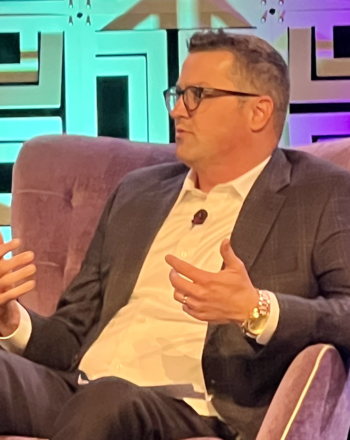
Chad Leavitt
Amaton: Any thoughts on what you are using tech for in lending compliance?
Leavitt: We are trying to get our stores to do as much digital contracting as possible. Sometimes it requires helping a finance director to realize it’s very important and getting them to change their ways. We have an epidemic across the industry with a slowdown in titles. We were really worried about the title issue last fall and it’s here. We are having weekly conversations about speeding up the transaction process and getting things cleaned up. It’s about getting everyone on board to do things as fast as possible. We can now do re-signs digitally, and it’s awesome how fast it is speeding things up.
O’Connor: Some of our OEMs have said if you send us a deal on paper it goes to bottom of the stack.
Stewart: A common theme here is e-contracting. The challenge is still validation of signatures, but I think we’ll get through those.
Amaton: What about fraud? Is most of it inhouse, or is it folks who want to complete things remotely.
O’Connor: It's on both ends, but I will say the fraudsters have gotten very creative and we can't just rely on, say, a red flags check. We have to check all the documents, go check signatures.
Think about it. If you have an (EV) store and you sell a fraudster a $100,000 car, you’re out 100 grand. If you're making five grand a car, that's a lot of cars you've got to sell to make up for that loss. So, it’s been top of mind for several years now and it seems like with COVID came all these people that got more creative (especially with synthetic fraud).
Stewart: With real synthetic fraud they have the pay stubs, they know every bit of history in the back of that guy's credit bureau. We recently caught a person and they had this book that was literally a line-by-line on how to defraud the dealership. It was insanely detailed and I was kind of impressed, but it was also scary at the same time, because again, they’re getting smarter, they're getting more efficient. They will blend the transaction by starting everything online and then come in at 8 o'clock at night on a Saturday.
There is only one way to stop it and that is to have multiple layers (of prevention). We use multiple different technologies.
Leavitt: You really have to train your sales teams and sales managers to look at everything with a fine tooth comb. I hate to say it, but honestly, it’s part of the cost of doing business. Some are going to happen. We do what we can to protect ourselves. It’s really about making everyone aware it’s everyone’s responsibility to help fix this.
Amaton: What are we seeing in the online marketplace?
Stewart: We are trying to lead (buyers) back to our site now. That’s the key. There are so many different digital vendors out there. I think the key focus for us is to make sure the customer has the ability to follow as far as they want to go online. We’re not seeing all that many customers who want a car delivered to their homes.
Leavitt: We were all worried about (the future) of our showrooms, but at the end of the day customers still come in to these multi-million-dollar showrooms with the super-fancy glossy cars and the fancy coffee bars to have a technologist sit there and set up their phones with all the cool stuff.
What they don't want to do is spend six hours with us on a Saturday with their kids. So, for us, it’s about respecting the path they want. I think the statistic is they’ve spent something like 3.5 hours (researching online) before they show up.
We have many stores where you can have it delivered to your home and never talk to us and it's almost zero transactions in our 50,000 car sales.
Again, they want to be part of that experience. That's why they're buying the car from a new car franchise. It's exciting. It's a big purchase. It’s the whole thing. They just don't want to live with us all day, so we're doing a lot to get us prepared for that.
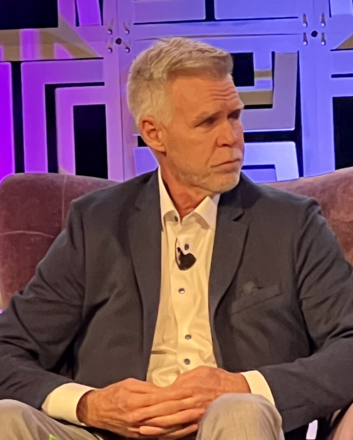
Richard O'Connor
I'm not scared the American dealership is going to go away or disappear and not to make this about electric (cars), but you know at the end of the day with electric cars there's a lot more they need to know and understand. They need the interaction with humans. This is not like buying an Amazon package; it's a very expensive piece of technology that also drives.
Amaton: I know you're focused on a lot of the friction in that whole purchasing process, right?
O’Connor: We refer to them as pain points. In our Echo Park brand, you are going to deal with one person. Our prices are fixed. We tell them once you select a car you are going to be out of our dealership in an hour.
Amaton: Is negotiating starting to come back?
Leavitt: On the new car side, the manufacturers are starting to get involved. They are having to do rebates or put a 3.9 (APR) out there. The environment is changing. Now, the customer is feeling I have a little more play in this conversation, but I do feel like it’s being assisted a little more by the manufacturers. I will be first to say it was not good for us to have no inventory and prices through the roof. It’s not a good look for the dealer when you only get 30% of what you want and you have a list of people from here to six months from now.
Amaton: Is the migration to EV on your radar? What percentage of your business is EV?
O’Connor: It’s big in California for us, but overall it’s 5%-ish. Candidly, in the deep south there is not a lot of people who want electric vehicles. In the near future it’s not really on our radar.
Stewart: It’s not just the dealers you have to convert, it’s your customers. People aren’t running the door saying I want that EV. A lot of people are still scared. What does a seven-year old battery look like? With Tesla, we’re about to find out.
Leavitt: What has been complicated has been the Inflation Reduction Act and where the car and battery were manufactured. We had all this momentum going and then people became so freaking confused.
Right now, if you lease you get the $7,500 (tax credit), but if you buy it, you don’t. That part is driving a lot of this conversation. When it becomes harder to understand, it makes it very hard to manage that inventory. It’s very complicated. I think customers want them, they’re cool, but they really like their gas car. It’s also super regional. If you are in a rural area or a commuter town, they make no sense. I don’t think ICE engines are a thing of the past by any means.