

By Ray Birch
WASHINGTON–Veterans seeking assistance with managing their Veterans Affairs monetary benefits have the option of using a credit union—but it’s not an easy option to find. The Defense Credit Union Council (DCUC) is trying to get that changed.
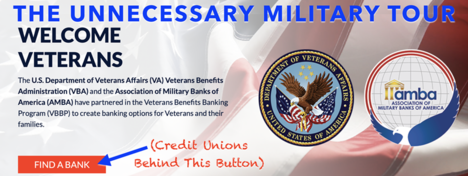
Instead, banks are given a prominent presence on a website managed by the Department of Veterans Affairs, and DCUC President and CEO Anthony Hernandez has been speaking with the department and Congress, emphasizing credit unions can—and must—play a much larger role in the Veterans Benefits Banking Program (VBBP).
Currently, the Department of Veterans Affairs has a partnership with the Association of Military Banks of America (AMBA) to provide the VBBP benefits. The program helps veterans and their beneficiaries better manage their finances by working with participating FIs that offer services catering to the special needs of former active military members.
Exclusive Deal
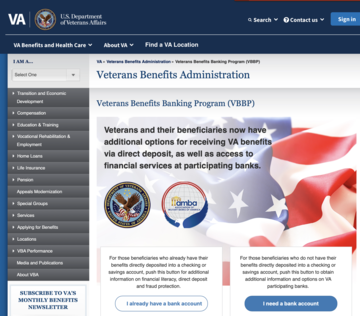
“The Veteran Benefits Administration has signed an exclusive agreement with the Association of Military Banks of America to represent all financial institutions in addition to owning and operating the official VBBP website,” said Hernandez, who noted credit unions are listed on the site as participating in the VBBP, but not listed prominently. “Banks don’t speak for credit unions. And the fact that the VA knowingly went to the AMBA and made them their primary point of contact for financial services raises some eyebrows, especially with the amount of money involved.”
The VA delivers more than $120 billion annually in benefits and services for veterans and their families, ranging from disability compensation, pension and fiduciary, education, home loan guaranty, vocational rehabilitation and employment, life insurance, and transition and economic development. There are approximately 250,000 veterans and beneficiaries who receive their VA benefits through a prepaid debit card or paper check who may not have a bank account, the VA states on its website.
Much-Needed Services
Hernandez says the program provides much-needed services to veterans, but could be improved if credit unions—known for looking out for their members’ best interests—are given the same billing as banks on the website.
“We strongly agree that a safe, reliable and inexpensive way must be provided to our nation’s veterans to receive and manage their VA monetary benefits,” said Hernandez. “This makes sense as there is a high level of fraud, identity theft, denial of access to veterans’ accounts, oppressive fees, and extended call center waiting times that plague the VA’s current Direct Express card. Making things worse, there is no alternative for over 250,000 unbanked veterans to secure their benefits. Therefore, we must find a better way to prevent the loss of funds as the Veterans Benefits Association disburses nearly $124 billion in yearly compensation.”
The Hidden CU Option
Hernandez suggested that should credit unions become a more active presence in the program and become more prominently displayed on the VBBP website, veterans will understand they have more options.
“The site shows the VA logo alongside the AMBA logo on the main page, but there is no mention of credit unions,” Hernandez pointed out.
The homepage says “Find the right bank for you,” and has a large red “Find A Bank” button. When users click on that button they advance to a page that says, “Participating Banks and Credit Unions.”

Anthony Hernandez
“To get to the list of credit unions you first have to scroll through a long list of the participating banks,” Hernandez said.
What would be better solution for veterans, according to Hernandez, would be search tool on the site that uses zip codes to identify the closest participating banks and credit unions.
“That would be a much better solution,” he said. “But no one at the VA is listening.”
Congressional Letter
Just before the pandemic forced the country into lockdown, the Defense Council was working with members of the House Veterans Affairs Committee who asked DCUC to draft a letter for Congress to send to VA Under Secretary for Benefits Paul Lawrence. In that letter, the VA was asked to explain the “origins, deliberations, and final decision analysis in deciding to pursue an exclusive agreement with a bank trade association and how that fits within your rules and regulations.”
Hernandez stressed that limiting financial options to large banking institutions does not serve the needs of veterans well and that there are many more banking choices throughout the country.
“They had initiated support for a congressional inquiry on this matter,” Hernandez explained. “But that was on hold due to the pandemic. Now is the time to re-engage.”