

MADISON, Wis.–Now just a little more than a month into the job as the ninth president and CEO of TruStage, Terrance Williams is sharing what he has experienced and heard from credit unions, what he has found to be the company’s real strength, and has offered his early insights into what credit unions should be seeing from the company moving forward.
In addition, he spoke with CUToday.info about the current impasse between the company and a labor union, his thoughts on DEI, and more.
TruStage, the former CUNA Mutual whose history is intricately intertwined with that of credit unions, today offers a wide variety of insurance, investments and technology solutions to credit unions and their members. With more than 4,200 employees across three countries, the company reported $5.2 billion in total revenue and $343 million in net income in 20220.
As CUToday.info reported, prior to joining TruStage, Williams was president, Protection Products and Services, for Allstate, where he oversaw non-property-liability businesses that ranged from start-up ventures to mature businesses and which represented approximately $4 billion in revenue.
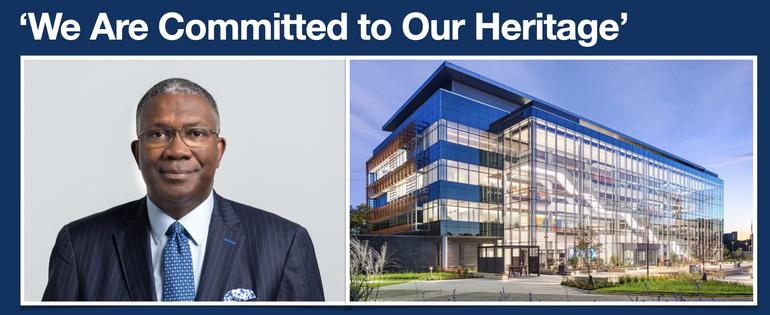
Two Decades at Nationwide
Before joining Allstate in 2020, Williams spent more than 20 years at Nationwide, where he most recently served as president of its Emerging Business Group, including a team of 1,300-plus employees. He also led innovation and digital strategy, served as the enterprise chief marketing officer, and established the company’s $100 million venture capital fund, his bio notes. Williams has been recognized by many, including Forbes as one of “The World’s Most Influential CMOs” in 2017 and 2018 and Savoy Magazine as one of the most influential black corporate directors in 2021.
Below, Williams, who during his career has also been very active in philanthropic efforts and in numerous mentorship programs, responded to questions from CUToday.info below.
Q: How do you go about getting your arms around an organization the size of TruStage and understanding the company’s culture?
Williams: I actually believe you only really understand a company when you begin to spend time with the people that make the company go.
I had the good fortune of joining the company back in May of this year and over the last several months I've had the opportunity to really engage with employees, to connect with people, to understand how they think about the organization, to understand what they're passionate about, and how they feel about their mission of the company.
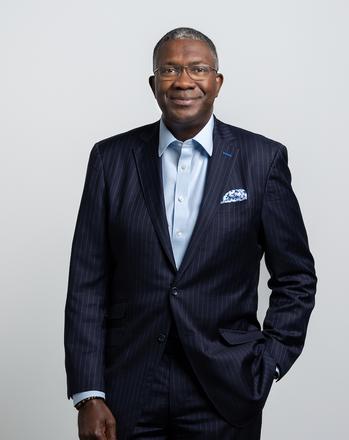
Terrance Williams
(I’ve) also been doing deep dives into all the businesses to really understand the nuances of the market, our return expectations, how we think about distributing the products--are there new solutions that we should be thinking about?
So, I spent the last several months doing all of those things and I think that really positioned to me to kind of take the mantle.
CUToday.info: There is an old observation that you only have one opportunity to see an organization with fresh eyes, and that’s when you begin. What did you see and what struck you?
Williams: Something that struck me that I find to be incredibly positive is an opportunity for us to think about different lenses.
The first one is connected to the employees and it is literally just this passion that exists around our mission. I've worked for some large organizations, and one of the challenges has always been, how do you really connect the dots from a layering standpoint around what the company says is the mission with how a frontline employee may feel about that mission and about that company? Oftentimes, that's a disconnect in large organizations in particular. What I found at TruStage is that our employees believe in this notion around how we make sure that everyone has access to a brighter financial future. How do we make sure that they can plan for the future…and shape and solidify their financial pathway and have peace of mind? To me, that's half the battle--if your employees genuinely believe in what you're trying to do, the mission you're trying to serve. I've seen that loud and clear at TruStage. That's the positive.
I think that is something that in some instances we may take for granted, but coming in from the outside and using your term about 'fresh eyes,' I see it loud and clear.
On the other side of the coin, one of the things I believe is an opportunity for us is, in May we aligned all of our sub-brands and retired them and went to one brand, TruStage. Now, every part of our organization is now referred to with the same brand. That was phase one.
Phase two is how do we begin to think differently as a company and not think as seven or eight or nine different entities, but as one organization? The term I've been using internally is that we have always focused on execution vertically, because of the expertise associated with a given product or business, but (we need to) begin to kind of think about things horizontally--thinking about things through the lens of the end-member. The end-member doesn't see the artificial walls or official structures and barriers that we create; they simply need peace of mind. They need protection. They're getting a loan and they want to be protected in the event something happens. They may also need an auto insurance product.
So, eliminating those walls, those barriers and thinking as one TruStage is an opportunity for us.
CUToday.info: The challenge you just outlined--the seven, eight, nine business units--is also one that faces many credit unions. It’s often known as being in silos. So, how do you overcome that?
Williams: It’s not an easy feat, but it starts with establishing an expectation. I think on week four I started talking about vertical execution and horizontal thinking and then I started explaining what that means and what it represents, and giving examples of what it means to people and really trying to instill that into thinking as an organization.
After you go beyond that it really comes down to ensuring that we have an alignment around how we're going to operate, alignment around our goals and common goals and objectives, and really rewarding people who (see) those things through this lens, as opposed to people who only focus on one individual area or part of the company.
It's definitely not a short putt, but it definitely is something that I think you build toward over time.
CUToday.info: It would seem there are few insurance providers that are as intertwined with an industry as TruStage is with credit unions. What do you know of that history, how have you familiarized yourself with it, and how do you leverage it?
Williams: I would say that we are committed to our heritage. We were founded for this purpose of serving credit union members and we still do today.
I happen to have worked for another organization with a very similar approach and a very similar way of thinking and a commitment to a given market.
So, how do we capitalize and use that? We use that to our strength and we also ensure that we are a force for good in this category, which means we continue to do all the things that we've been doing around how we strengthen the system. How do we ensure that our (TruStage Ventures) portfolio continues to support credit needs? How do we make sure that we're aiding and assisting credit unions in developing holistic strategies around how they're going to evolve their customer digital journey engagement approach?
We will continue to lean into strengthening the system. I say all the time that a strong credit union system equals a strong TruStage. We remain just incredibly committed to this space with the goal of finding ways to strengthen the system through some of the things that we believe we are able to do from an expert standpoint.
CUToday.info: Were you a credit union member prior to coming to TruStage?
Williams: I do have experiences being a credit union member, but I wouldn’t say it was full-throated. I didn't grow up in the credit union system.
But I did spend a large part of my career at Nationwide Insurance. Nationwide was founded back in the 20s by the Ohio Farm Bureau to be the insurer for the agricultural sector, and to this day Nationwide is a fortune 70 company that still maintains a commitment to the ag sector. Half of the board members are from the agricultural sector. They are the number-one writer of farm and ag insurance in the country. They support farm bureaus all over the country.
So, I look at the parallels with TruStage and how we think about the credit union system and our support of the leagues, our engagement with various credit unions, this cooperative spirit that exists across our system, and that is something I have a tremendous amount of experience in. I’m very familiar with some of the traits and attributes that really make the system what it is.
CUToday.info: You have this extensive experience with other insurance companies. What do you see when you look at the TruStage portfolio? Are there any gaps in areas where you have experience that you’d like to see filled?
Williams: We have an incredibly broad portfolio of solutions, so the short answer is no as it relates to the addition of new products.
What I see as the opportunity is how do we stitch it together to make it more seamless so that it gives kind of the feel of broader formal protection as opposed to the individual entities and the individual solutions that we offer today.
We are constantly on the lookout to understand, is there a need in the marketplace that's not being met? Is there an opportunity for us to kind of bridge a gap, whether it's building it, whether it's partnering, whether it's buying? We are always on the lookout to ensure that we are adding to our arsenal to make sure we can take care of all of the needs of the credit union system as a whole.
CUToday.info: Do you sense there are any misunderstandings around what you offer or what you can do for a credit union or member?
Williams: Yes. It goes back to my earlier point around too many individuals, too many credit unions that aren't really able to kind of capitalize on the full breadth of who we are and what we do.
I had a conversation with some of our internal people on this subject this morning, on how do we find a way to ensure that we're continuing to strengthen in the marketplace what we're known for. We're obviously a B to B to C organization, so we don't need any brand that is going to show up at a Super Bowl. But we do need a brand where the constituents that matter to us--the end-members and credit unions--really understand who we are and the differences that we can make on someone's life journey.
I still think there's opportunity for us to do more of that to stitch these things together in a manner that really conveys our ability to cater to someone's needs in every stage of their life.
My oldest son is 22 years old and he is at a stage in life right now where he has some very specific needs from a financial services standpoint. Maybe he needs auto insurance for his car, maybe he's going to get a loan and lease protection for that loan in case he defaults at some point. He's going to need life insurance at some point and to think about his future. And hopefully, my wife and I get some grandchildren.
For every stage in life we have a solution for someone to help better prepare them, to help ensure that they can move towards a brighter financial future. But it's a matter of us being able to create accessible solutions for everyone and to stitch things together so that it's an easy approach for that person. We do not want to make them work for it.
CUToday.info: We spoke with two TruStage employees and asked them what they would ask you if they could. This is not meant to be a representative sample. They first wanted to know, given the history of the companies you’ve been with, how you see TruStage as being different as a mutual and not growing for growth’s sake?
Williams: One of the questions I get asked pretty often is, ‘Hey what made you select TruStage?’ One of my answers to that is the mutual structure. Having worked for a mutual company for 20-plus years and having worked for a publicly traded company--and there's nothing wrong with either model--but working within a mutual company gives you the ability to do things differently. It gives you the ability to ensure that you are focused on profits to honor the promise—not profit for profit sake. It gives you the ability to focus on things longer term. You don't have to prepare things or think about an initiative through the lens of how the analysts are going to react to it next quarter. You can map things out for the long term and the best interest of the end-member to ensure that you're doing things the right way to take care of them for the long haul.
I was attracted to come and join TruStage because, having worked for a mutual before, I knew that there was an opportunity to really zero-in on the member in a unique way or in a different way than what some companies can do.
All we sell is a promise. We also have to ensure that we're preparing ourselves to honor that promise during the time of need. We can make long term decisions centered around a member to really ensure that we're able to do that overall.
CUToday.info: The second TruStage employee said they would ask you about the company’s plans to serve the Hispanic market. What are those plans?
Williams: When you think about the demographics within the United States today and you think about how that's evolving and changing so rapidly, for the future we have to ensure that we have the appropriate infrastructure to be able to serve the needs of many, many, many people.
That means we need to ensure we find ways to be able to speak to people in the language that they're most comfortable with. It means we need to ensure that we have a presence from a community standpoint of events and items that will literally show our commitment to the community. It means that we need to highlight our DEI efforts that clearly speak to the value of diversity across our country and within our company, and how we have a desire to meet people where they are to cater to their needs.
The short answer to what you're asking me is that we have a desire to take care of everyone. As I look at the demographics and the how things are so rapidly, companies who fail to recognize what you just asked me, in my view, are not going to be around for the long haul.
Someone else asked me this question recently: 10 years from now what do you want people to think about your tenure at TruStage. I have given that some thought, and the one-word answer I came up with is ‘relevance.’ I want to ensure that TruStage in the marketplace has relevance with members and how we honor. It’s relevance that we bring to the marketplace as it relates to our community efforts and how we're supporting groups. I want that relevance to continue and even enhance beyond today.
I feel the same way around the efforts that we have under way with the Hispanic community.
CUToday.info: You have joined the company in the middle of a labor dispute. Have you met with the union? Where does that issue stand now?
Williams: One of the things I feel good about is when I look at the history of the relationship between (Office & Professional Employees International Union Local 39), TruStage has a long, productive positive relationship of 80-plus years. One of my goals as the CEO is to ensure we get back to that productive working relationship with our union.
I’m not specifically involved in that negotiations at the table, but I am meeting regularly with our team who's handling the negotiations. I'm very involved in helping us to outline our strategy we're using to the move this forward, because our goal is to resolve this our goal is to resolve (and integrate) everyone back together so that we can move forward as one TruStage.
I feel very good about where we are as far as the current offer that's on the table. The current offer is on the table for us represents a 28% increase overall for our union-repped employees. That includes increases for wages, increases for bonuses. That 28% number is grounded in the market research that tells us that that is a competitive offer, the should be the right approach for our employees overall.
(Editor’s Note: The 28% proposed increase in salaries for the approximately 400 employees represented by the union is over three years. In addition, the company said in a statement to CUToday.info that of the 10 Unfair Labor Practice (ULP) charges against TruStage by the union, to date nine have either been dismissed, received a merit dismissal or have been withdrawn.)
One of my goals as the leader of the company is to ensure that we can attract, retain, develop (people) and we can only do that if we're offering a market-competitive package for them. Overall, we feel good about the offer that's on the table. We're going to remain at the negotiating table until we can resolve this situation, because my goal as CEO is for us to move forward together as one TruStage.
CUToday.info: TruStage has been a leader in credit unions on the issue of DEI. How do you view that issue and what type of contact have you had regarding those initiatives within the company?
Williams: I am very engaged in our efforts as it relates to DEI. It’s yet another reason, actually, of what attracted me to the company. (Some) of the items that really led me on this path to where I'm sitting where I am now is I was first approached quite some time ago about a leadership role (with TruStage). I knew of the company but I wasn't as familiar with the organization.
I started doing my research and I found a number of things to be true. I found the company first, was a mutual structure. I've already mentioned why that was important to me. Then, the company’s mission about financial inclusion and access and making sure that everyone has access to tools for a brighter financial future--all those things are things that I've always done my entire career.
I've spent the past 30-plus years in the financial services industry, all with the goal of doing exactly that: of ensuring we can cater to those who may not always have the opportunity or the access, so they can prepare for the future.
And then the last piece I'm passionate about is community and DEI, so I also was attracted by the fact that TruStage clearly has a perspective around really supporting communities and around driving DEI efforts to ensure that we look like the marketplace, that we are reflective of various backgrounds and ways of thinking. That was attractive to me. I'm very familiar with our strategy in that space and very supportive of us continuing to execute against that and being (a company) that can help credit unions…to develop their DEI strategies, help them to understand the opportunity that exists by way of market research, to share real data around the importance of this within their communities and within their marketplaces.
CUToday.info: For the CEO of any large company it’s like a game of telephone the way feedback works its way up. What sort of meetings have you had with credit union CEOs? What kind of conversations have you had or would you like to have?
Williams: Literally over the past five months I have been almost living out of a suitcase, and the reason I've been living out of a suitcase is because I'm a big believer in relationships. I believe relationships are what make businesses go.
You’ve got to have some other pieces, as well, but relationships really matter, and for me the most effective way to build and establish a relationship is to get into the marketplace and to meet with people.
Literally, I got home last night because I was in Tennessee with a group of about 10 or 12 credit union CEOs doing a roundtable kind of exercise. I have done that type of meeting over the past five months when I'm at league meetings, at roundtables, visiting individual credit union CEOs. I've had a ton of engagement with credit union leaders over the past five or six months, all with the goal of establishing relationships with them, because again, the credit union system designers are our most important partner in everything that we do.
One of the things I do regularly is I what I call a coffee chat (with) a group of 12 or 15 employees who are not executives, but just employees within the organization, where we sit around a virtual table or a table to talk about what's going on in their world. There's no form, there's no specific meeting agenda other than maybe sharing a few words for five or seven minutes about what's top of mind, and then just hearing from them about questions, thoughts, comments, suggestions or things I should know or I should be aware of.
One of the questions I ask is, ‘If you were sitting in my chair, what would you change tomorrow that would add value to the system, the value of what we're trying to do, and add value to the collective mission?’ I really enjoy those.
CUToday.info: Is there anything else credit unions should be looking for?
Williams: Look for us to maintain or enhance a number of things, (including) the importance of the relationship with credit unions and commitments to communities.
Our commitment is to making sure we continue to foster positive relationships and be a force for good in the system, meaning how do we use our collective efforts to better the credit union movement overall? Of all those things that we have been known for, that we've been good at, that we've been focused on are going to continue…we're going to find ways to enhance those things and to ensure that we're driving that relevance.