By Ray Birch
ANN ARBOR, Mich.—Credit union service has undergone a “precipitous decline,” according to one of the authors of a highly-respected national service study, who points to how big banks just keep getting better at digital delivery while “credit unions are headed in the wrong direction.”
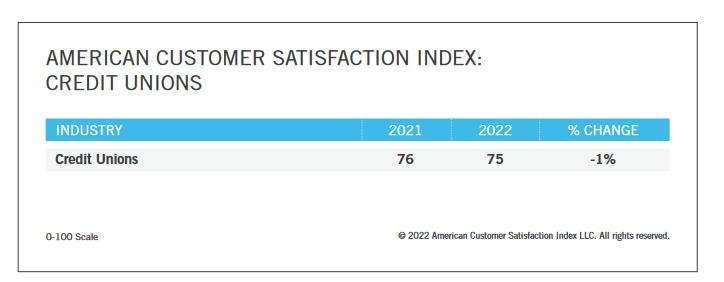
As CUToday.info was first to report, for the fourth consecutive year credit unions’ score in the American Customer Satisfaction Index (ACSI) has fallen below banks, now standing at 75 on a 1-100 scale. The study reveals banks now surpass credit unions in nearly every service category as rated by American consumers.

In the ACSI 100-point scale, credit unions trail banks by three percentage points. Credit union scores in the report have fallen for the last five years, dropping down into a tie with banks in 2018, and then dipping below banks for the first time in 2019 (see chart below). Credit unions’ score has now fallen 12 percentage points from a high of 87 in 2011 ACSI study.
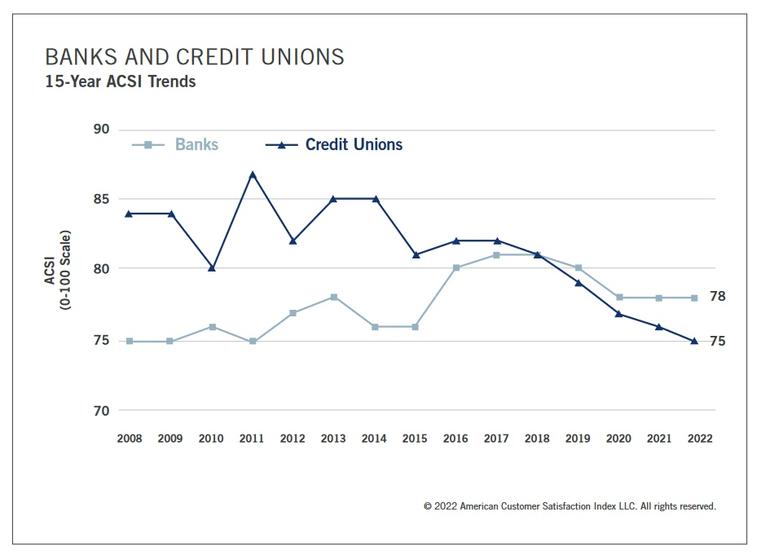
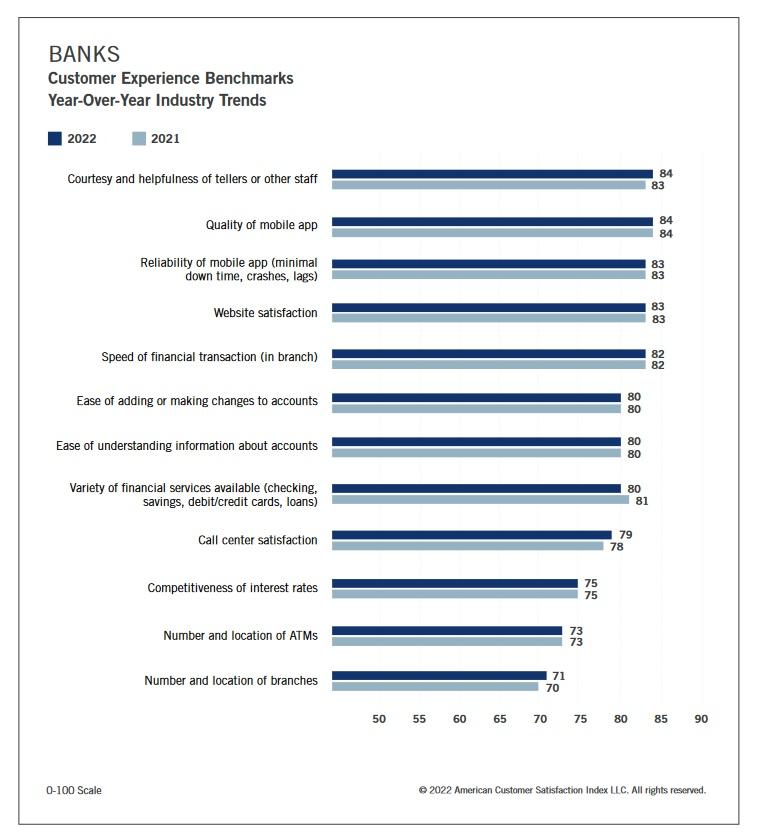
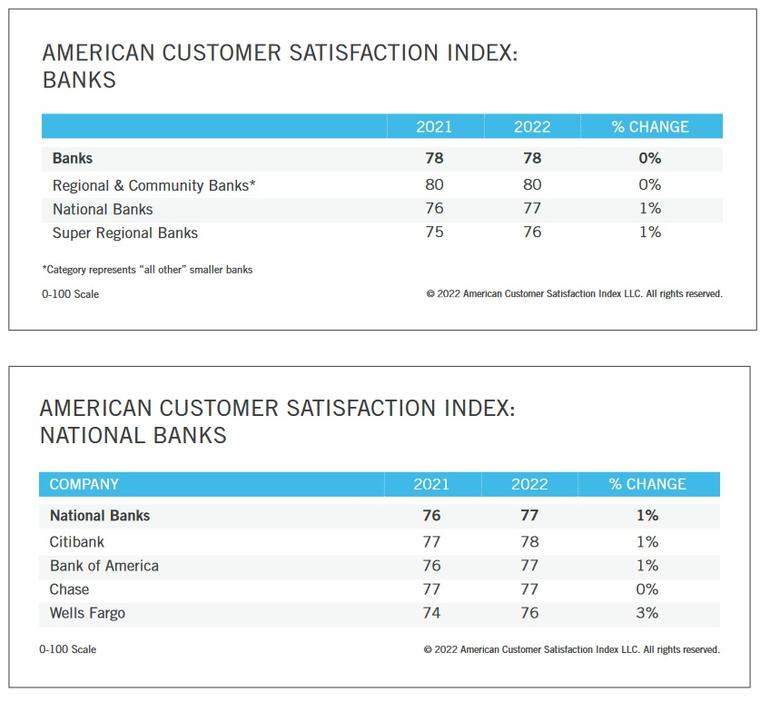
The data also reveal that banks’ service has improved from the low rankings the industry experienced during the Great Recession, when a lot of attention was placed on fees from that industry’s biggest players. Banks’ overall score (78) has remained unchanged over the last three ACSI reports.
ACSI’s Finance Study 2021-2022 provides customer satisfaction benchmarks for banks, credit unions, financial advisors, and online investment. CUToday.info has had extensive coverage of the ACSI findings, along with credit union responses, recommendations and more in recent years.
‘Pretty Undeniable’
“It's pretty undeniable, from the perspective of where credit unions were versus banks several years ago and where they are overall today,” said Forrest Morgeson, assistant professor of marketing at Michigan State University and director of research emeritus with the ACSI. “They used to have high rankings, and not just relative to banks. But since then we have seen a really precipitous decline.”
Before credit unions fell below banks in the ACSI study, signs were apparent within credit union data that service issues were brewing, noted Morgeson.
“When you go back and look at some of the earlier years,” said Morgeson about ACSI data, “their scores were just much higher than banks’ scores. It’s not that banks have just closed the gap, the important point is credit unions are headed in the wrong direction.”
Banks began to make strides around 2016, noted Morgeson.
Big Banks Doing a ‘Pretty Good Job’

Forrest Morgeson
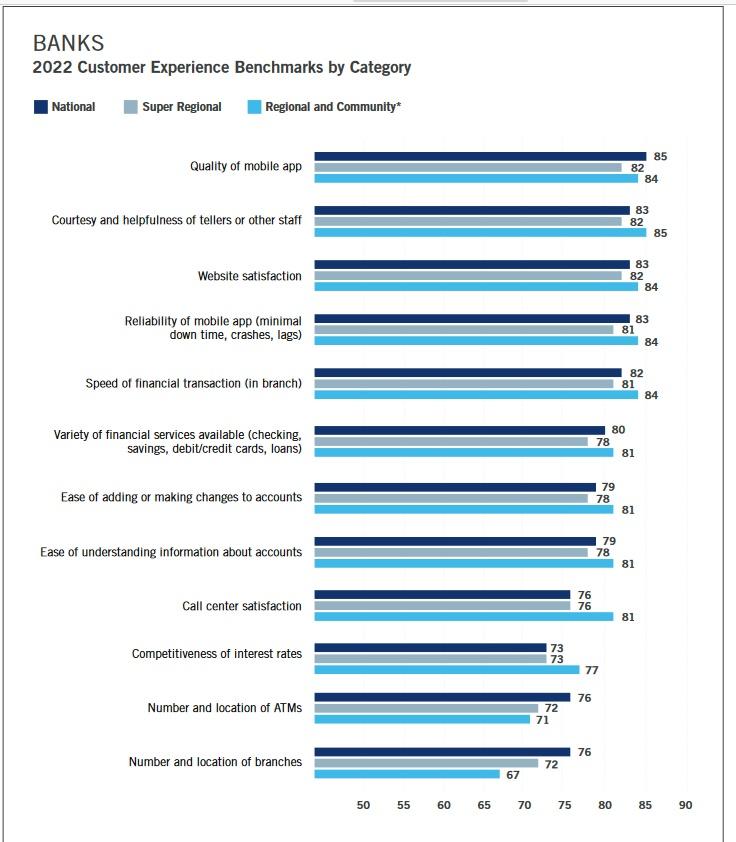
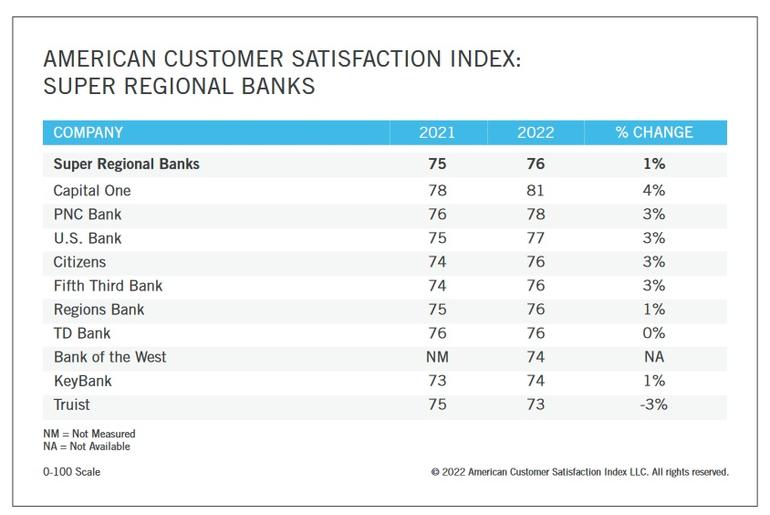
In the latest study, national banks climbed 1% to a score of 77, followed by super regional banks, up one percentage point to 76. Citibank has taken sole possession of first place among national banks after inching up one percentage point to 78. Bank of America rose one percentage point to 77 to meet Chase (unchanged) in second, according to the researchers. Wells Fargo took last place for the sixth consecutive year despite advancing three percentage points to 76.
“The big national banks are doing a pretty good job of integrating new technologies into their services,” said Morgeson. “There's a big push within that industry for an omnichannel—not just multichannel—user experience. Their user experience is more seamless between channels than credit unions.”
Morgeson added ACSI data reveal satisfaction scores from banks below the size of super regional have pulled down the overall bank industry score, adding the very big banks tend to be the ones doing the best job of serving consumers.
He acknowledged size—and the deep pockets for investments—are playing a role in the ACSI results.
‘Only Take You So Far’
As CUToday.info has extensively reported, analysts have stated the slide in credit union service is due to the definition of service changing in consumers’ minds, shifting from a friendly face to a speedy transaction, and the ability of the FI to meet all of their digital needs. Those experts, too, have said credit unions have too many points of friction within their member-facing services—and even in their own back-end processes—which are leading to the lower satisfaction scores.
“I think that's a pretty strong explanation for what's going on,” said Morgeson. “When credit unions received stronger scores in our study, in tracking the data you can see they got more positive results by being more local than banks—being in the community and more closely connected with consumers. Anymore, however, that will only take you so far.”
More credit unions need to improve their digital delivery and recognize that to keep pace with the larger financial services providers the organization must make greater investments in e-services and eliminate more manual processes that cause friction points for members, experts have stated.
“The reality is these (large banks) are making multi-million dollar investments into their digital platforms,” said Morgeson. “The big national banks simply have more resources available to put into state-of-the-art, seamless, omnichannel digital services for customers.”
What Close Review Reveals
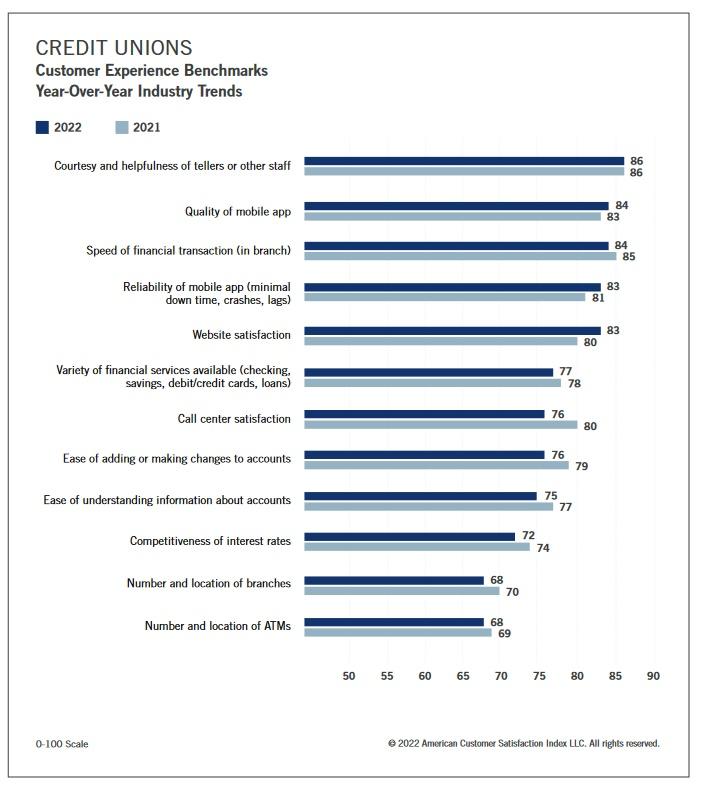
Morgeson said in closely reviewing the latest ACSI data it’s even more clear why credit unions continue to fall below banks in the ACSI rankings, pointing out cooperatives trail banks in virtually every service category—enough to drop them three percentage points below banks.
“There is often parity in categories, but usually credit unions’ score will fall below banks’ score,” he said.
He pointed out credit union scores for numbers of locations and ATMs are markedly below banks, noting these areas will likely always tilt in favor of the larger banks due to their big budgets. But one area credit unions can afford to address, Morgeson said, is making their information easier to understand and consumer-facing processes simpler.
As analysts have stated in previous CUToday.info reports, credit union processes have too many friction points.
“There's some things where credit unions are doing pretty well,” Morgeson said. “They have comparable website satisfaction and mobile satisfaction scores. Call center satisfaction is about the same. But there are some pretty big gaps, though, when you drill down into those particular customer experiences—and that's enough to help tell the story. Ease of understanding information and making changes to or adding accounts is pretty low for credit unions and is significantly higher for national banks.”
‘Pay Attention’
Morgeson urged credit unions to pay attention to the ACSI findings.
“You want to be cautious of over-interpreting results, as sometimes a bad result could be a one-year glitch,” said Morgeson. “But when your scores fall for five years, it's a reality. For half a decade now credit union scores have fallen in our study. Credit unions need to understand they are at risk for losing members. Years ago consumers were leaving banks to go to credit unions for more personal service, now it looks like the opposite is happening.”
CUToday.info had earlier insights on the ACSI findings here A Deeper Look at a Troubling Trend.