

LAKE FOREST, Ill.—With record-high levels of checking deposits just waiting to move as rates rise, what can credit unions do to keep these core accounts from going out the door?
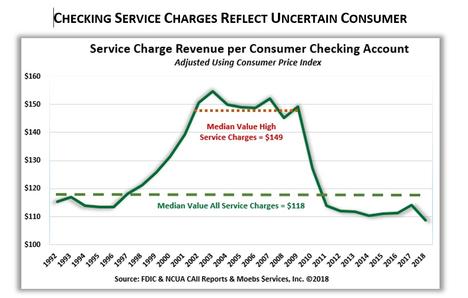
According to a new report, they can lower their checking fees.
A new checking study from Moebs $ervices that analyzed consumer checking account behavior during different economic times has concluded that lowering fees now is a good move to retain checking deposits.
“When times are good economically, the consumer pays 26.7%, or $31 more, in service charges for their checking account,” said Michael Moebs, economist and CEO at Moebs $ervices, noting that despite the economic improvement, many consumers remain uncertain about the economy.
“When times are not prosperous the consumer pays less in service charges,” continued Moebs, referring to data from Moebs $ervices Service Charge studies over the past 25 years.
An Explanation
The reason, said Moebs, is that in good economic times the consumer keeps substantially less money in their checking account, has a job, earns good wages, and their financial behavior causes an increase in service charge transactions.

Michael Moebs
“However, switch the economy around and the consumer pays less in fees because they are storing money in checking, as they are uncertain about the future. This excess deposit balances reduces service charges,” noted Moebs.
Service charges include account maintenance fees, minimal balance fees, overdrafts, ATM charges, and other regular service fees related to the checking account, Moebs explained.
Other Findings
The Moebs Service Charge Study found that for the past eight years, from 2011 through the first half of 2018, the median yearly service charge is $112 per consumer checking account.
“During this short time period service charges hit a low of $109 in 2018 and a high of $114 in 2014 and 2017,” said Moebs. “The consumer is trying to keep service charges down and using balances to avoid fees.”
Moebs pointed out that in 2013 Bank of America started promoting the use of balances in their consumer checking to pay for other services, such as auto loans, to keep loan rates and fees to finance a vehicle loan low.
“The Bank of America approach has been adopted by 3,000 banks, thrifts and credit unions who have copied this relationship strategy,” said Moebs.
Lessons Learned
The Moebs Service Charge Study shows the consumer in the current decade, especially Millennials, is learning the value of the money stored in checking—using balances to avoid fees.
“This is a significant advantage for the consumer,” said Moebs, who stressed that consumers keeping fees low by using excess checking balances to pay for services will not continue.
“The consumer will begin using the extra money in checking to engage more in non-financial retail goods and services,” he said.
What can a bank, thrift or credit union do to keep consumers from moving their checking accounts?
“Lower the price of fees for service charges to make the consumer very reluctant to leave,” said Moebs. “Most consumers are not averse to low fees. This will also increase with consumers using services, such as overdrafts, more often.”