

By Ray Birch
ST. PETERSBURG, Fla.—Digital wallets may never gain widespread acceptance unless the different “pays” begin playing together, says one analyst, who cautions if that does not happen, contactless plastic could leapfrog digital wallets.
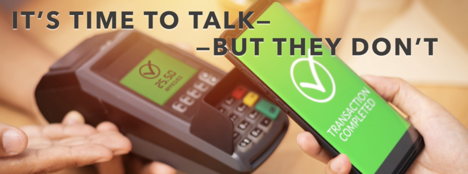
“Until there's a good, strong ubiquitous digital wallet that works for everybody, mobile wallets are just not going to take off,” said PSCU Chief Growth Officer Brian Scott.
For example, he pointed out Apple Pay only works on Apple phones, Samsung Pay only works on Samsung phones, etc.
“Everybody has their own pay and they all work in their own environment, which is great for them now. But none of them are ubiquitous,” Scott said. “Until Apple Pay works on a Samsung phone and Samsung Pay works on an iPhone, we are still going to have these consumer acceptance issues.”
Ubiquity, too, would encourage more merchants to install contactless at the point of sale. While merchants have been making inroads with adoption this year, installing many more NFC capable terminals and turning that capability on, the lack of tap-and-go at retail locations has been a big reason digital wallets have yet to reach the use levels predicted when they were introduced several years ago with great fanfare.
Examples Abroad
Scott said all that needs to be done to understand why digital wallets have been slow to take hold in the U.S. is to know where to look.
“Look at what happened in other countries. Look at M-Pesa or Orange Cash—those technologies have taken off in other countries due to ubiquity,” Scott said. “Look at China with WeChat Pay and Ali Pay. China went from 0% of merchant adoption of digital wallets in 2012 to almost over 90% today, and it’s because everyone could use the pays across devices and at all merchants. The digital wallet transactions in China grew almost overnight. Every single person could accept these two payment technologies—even the rickshaw drivers who did not have phones. They took off so quickly because there was one standard, and it was QR code.”
The U.S. digital payments space remains still very fragmented, Scott lamented.
“Until something is locked down, some commonality, and we achieve ubiquity, the most ubiquitous digital payment here is the contactless card,” he said. “If there's going to be a contactless technology that certainly works for consumers, it's going to be the contactless card.”

Brian Scott
The Wave is Here
As CUToday.info has extensively reported, the contactless plastic wave has arrived in 2019, with many of the big issuers reissuing standard chip cards to tap-and-go plastic. And merchants are enabling more terminals for contactless, having been incentivized to do so to speed up slow checkout lines due to consumers dipping their chip cards.
As CUToday.info has also reported, one new study suggests contactless plastic will be a good lead-out to greater consumer acceptance of digital wallets—getting consumers accustomed to tapping their plastic and then shifting to tapping their phones—may be flawed.
Research released by the Auriemma Consulting Group indicates the ease of tapping a card and the familiarity of plastic could keep mobile phone owners from using a mobile wallet.
What New Research Found
The firm’s latest Mobile Pay Tracker surveyed just over 2,000 consumers in January and February who were eligible to use Apple Pay, Google Pay, or Samsung Pay. While these consumers are enthusiastic about the experience of contactless connectivity at the point of sale, it’s unclear whether that sentiment will translate into greater use of mobile wallets, the study found. Some 18% of the surveyed consumers said contactless cards were “better” than mobile wallets, while nearly two-thirds said the two methods were “about the same.”
Scott said what is occurring with digital payments in the U.S. is just another example of how this country is completely unlike the rest of the world.
“This is simply a great example of how everything is just harder to do here,” he said.
No Time to Wait
Still, he emphasized the importance of credit unions paying attention to the emergence of contactless plastic.
“You can't abandon the contactless card technology for mobile. You’ve got to do both,” insisted Scott. “It's truly a folly for someone to think I'll wait until mobile catches on. Do that and you'll be left in the dark. Look at the big players—Citi, Chase, Wells Fargo—they're not waiting to move to contactless as well as mobile and neither should credit unions. I still hear some credit unions say, ‘I’m going to wait for mobile instead of spending extra money on contactless.’ This is just another in a long line of reasons why you shouldn’t hold on contactless.”