

By Ray Birch
COLUMBUS, Ohio—Paul Mercer is glad he has a big brother, not so much because he helped bail him out of tough situations when he was younger, but more so because he helped set a course for his future.
That bigger brother, Mike, in turn says his brother deserves to be to be recognized for the diplomatic skills and other talents he has brought to credit unions.
The Mercers are well known for their long careers in credit unions: Paul for his work in Ohio and Mike for his efforts in Georgia (and both for their efforts in credit unions internationally).
Paul has been running the Ohio CU League for more than 26 years, while Mike has retired from his leadership post at the Georgia Credit Union League, now the League of Southeastern Credit Unions.
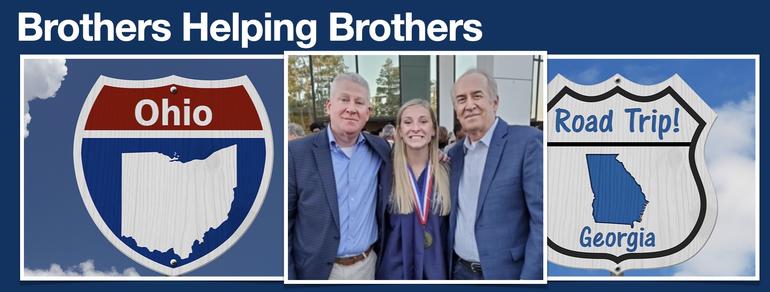
The Mercers are being featured here as part of a series in CUToday.info highlighting family connections.
Constant Badgering
Paul told CUToday.info it was the constant badgering of his older brother, and Mike’s belief in credit unions, that “lured” him into the movement.
“I was coming out of college, taking a job at a bank,” recalled Paul. “Mike had worked for U.S. Central Credit Union and then moved down to Georgia, where he went on to lead the Georgia league. That was the bulk of his career, down in Georgia. Well, Mike was moving through that and I was in college at the University of Connecticut. There was a student credit union at UConn. Mike was sort of encouraging me while I was in school, saying, ‘You ought to get involved in that. You ought to volunteer at the student credit union’.”
Initially, the younger brother ignored the advice.
“When I graduated from college I accepted a position with a bank in Waterbury, Conn.,” said Paul. “Mike was still telling me to take a look at this credit union thing. He said to follow up on big brother’s advice, just take a look at credit unions, which l knew very little about.”
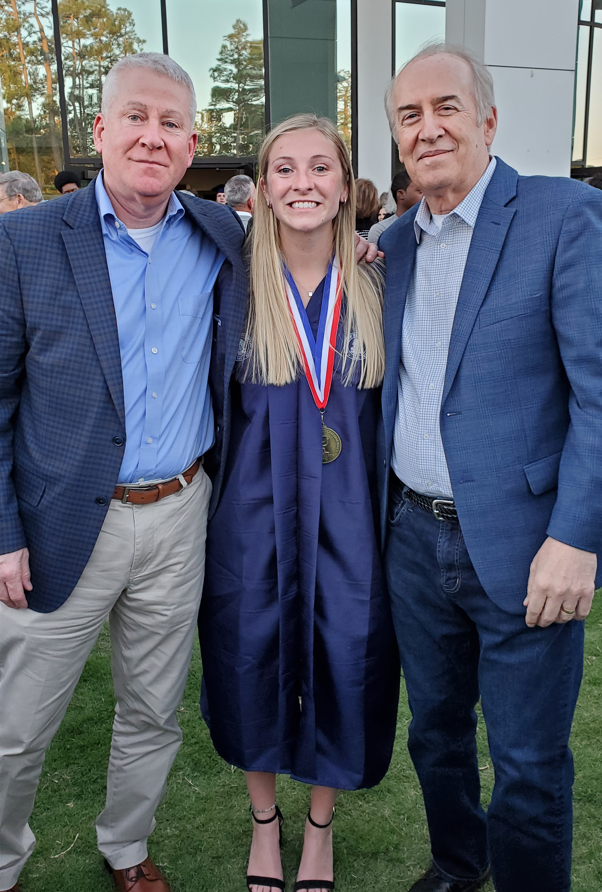
Paul Mercer (L) with his daughter Kari and big brother Mike
A ’Lightbulb’ Goes Off
Paul agreed to travel to Albany, N.Y. and visit with two close friends of the family who were already working in the credit union movement.
“One was Chuck Whitney, and Chuck was about to become the league president for the New York State League. Mike Braun, one of Mike’s close friends, was running New York’s corporate credit union as a division of the league at the time,” Paul said. “I spent a lot of time with Chuck, Mike and other people. And, then, a lightbulb went off over my head that big brother Mike was right, that credit unions are a place where you could work toward a special mission, have a special purpose, focus on helping people.”
Paul took a job with the Empire Corporate FCU after spending time in Albany.
“I was a loan/investment specialist,” he said. “That might have been the title at that time, but I admit I didn't know anything about loans or investments. But Mike and Chuck took a flyer on me and that was in the summer of 1984, and I've been in credit unions ever since.”
The Beginning of a Career
It was the beginning of a career in CUs that would take him to three different states.
“I have loved every single minute of it. It's pretty amazing, pretty interesting…,” he said.
Paul described his brother as having “stubborn determination,” which again he attributed to leading him down the road to credit unions.
“Anybody who knows Mike knows that. He wanted me to head in a good, healthy direction, and that prodding has led me to a wonderful career that has also been great for my family,” said Paul. “It has also been a blast over the years working very closely with Mike, for many years running the league in Georgia. Then. when I headed the league here in Ohio, I got the opportunity to work together with Mike on efforts to modernize the league system.”
Paul explained what drew Mike, himself, and others into the industry is its mission to help others.
A ‘Compelling Combination’
“I think that is how a lot of people get drawn into credit unions, and I am certain that is why so many of us stay in the movement,” he explained. “Credit unions offer a compelling combination of allowing you to work from the heart, to truly do some good for people and families and communities…And then matching that with the idea that if you want to be tested, you can be tested intellectually as much as possible as you can over the years: Trying to make organizations grow. Trying to help credit unions grow. Extending their reach. Trying to modernize the credit union movement. Applying the magic of the cooperative business model to the real world.”
Paul said he believes that clearly explains why people get attracted to the credit union movement.
“It’s that opportunity to put your mind to work towards something that's got a lot of soul to it,” he concluded.
Reflecting on a Brother’s Work
Paul reflected on his brother’s work, and then his eventual retirement.
“After helping to structure a very successful strategic merger of the Georgia League into what is now the League of Southeast Credit Unions—regionally covering Alabama, Georgia and Florida, he worked with Patrick La Pine and others to execute that vision and business model, and then he eventually retired,” Paul said. “While he retired from the league, he has not left the world of cooperatives, and is still very active in thought leadership and consulting roles.
Although retired, Mike Mercer continues to be active in the broader cooperative movement globally, regularly producing the “COOPR8 Letter,” which focuses on cooperative issues.
International Accomplishments
Paul Mercer and the Georgia CU League also did significant work creating a partnership with credit unions in Poland after communism fell, creating one of the most vibrant CU communities in Europe. Mike Mercer was recognized with a Herb Wegner Award, the highest honor in U.S. credit unions, in 2015 for that work and other accomplishments.
“So, he's still enjoying what became a life-long career, and I am many years into mine,” Paul continued. “I've been at the Ohio League for more than 26 years now, and have absolutely loved the credit union movement in this state. I would say we have both had tremendously satisfying, rich and diverse careers.”
An Older Brother’s Perspective
The older Mercer said he “fell” into credit union work “like most people do.”
“By fortunate accident,” Mike recalled. “I was studying to become an investment banker at the University of Wisconsin. Getting trained for the most extractive of roles in the for-profit sector. But I needed money to afford living in married student housing. So, I took a part-time job in 1977 at a place that I knew nothing about. It turned out to be CUNA, then located at the old Filene House in Madison.”
Mike said he was hired because Jim Jukes, Jay Becklin, Ralph Swoboda and—most importantly—Dick Ayers.
“They were working on a new project called U.S. Central CU,” Mike said, referring to the now defunct corporate, which was conserved during the financial crisis. “They thought I knew something about investing money. Soon, they asked me to go find a few more people from the business school. One of them was Mike Braun. By the time I graduated, my conversion to the cooperative dogma was complete. I chose to stay where I could apply my trade and feel like I was doing something good for people.”
‘Systemic Innovations’
Over the years Mike said his brother worked on many “systemic innovations.”
“The corporate CU system, collaborative check processing, nationwide shared branching, CU development in Poland—and later in the U.K.—collaborative small business support, collaborative indirect lending to name a few. They didn't all work as well or for as long as I had hoped. “But they all contributed to progress for cooperative finance. Now, I am trying to find ways for credit unions to get more involved with co-ops from other sectors in the economy. It has been a wonderful life experience.”
Diplomatic Skills
Turning to Paul, Mike said his younger brother has superb diplomacy skills.
“And he has used them on numerous occasions,” Mike said. “For example, he chaired a CUNA committee that was asked to think creatively about the future of the credit union charter. By all accounts, the results were a masterful conception of a potential future chartering environment for housing cooperative finance. It was so creative that it rests securely in a salt mine under lock and key. During the deliberations leading up to the system decisions to embrace membership choice—credit unions used to have to join the leagues and CUNA together—Paul was instrumental in drafting a document ultimately signed by five LPs outlining an approach to balancing the membership interests of all CUs.”
Mike said the work received critical acclaim but was ultimately passed over for the “more simple approach of just disjoining CUNA membership from league membership.”
Galvanizing Support
“More recently, the folks working on the CUNA-NAFCU merger will tell you that Paul was instrumental behind the scenes in securing league support for the consolidation plan and resultant governance structure,” Mike said.
Still, Mike was careful to add Paul “is no angel. Few Mercers are. But he, more professionally than me, has become one of the thought leaders for the CUNA-league system.”
Have a family connection in credit unions or a unique story to tell? Share it with CUToday.info by emailing Frank J. Diekmann at Frank@CUToday.info.