

AUSTIN, Texas–Credit union leaders unprepared to “drop their tools” in response to how the nature of work is changing run the risk of perishing, along with their organizations, according to one expert.
And they need look no further than to what happened to one small fire crew in 1949 as a dire example.
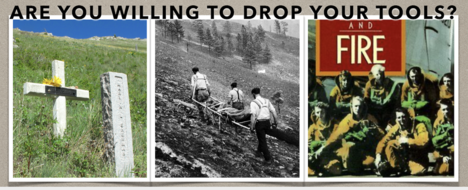
Speaking to the opening session of a two-day online event hosted by the Filene Research Institute called “The Art + Science of Organization,” Dr. Sekou Bermiss, associate professor of management at the University of Texas at Austin, said the coronavirus pandemic has put a premium on the ability to forget some of what worked entering the lockdown and to rethink approaches to both personal and organizational management.
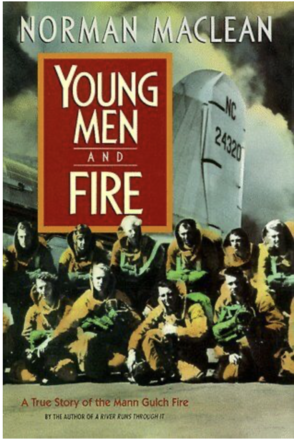
During a session titled “Drop Your Tools: Shifting Battle Tactics in the War for Talent,” Bermiss drew upon the work of researcher Karl E. Weick, whose work includes the “The Collapse of Sensemaking in Organizations: The Mann Gulch Disaster,” to illustrate his points. Weick examined how some members of a fire crew survived in 1949, while others ignored orders and perished. Weick’s work led to a later book titled “Young Men And Fire” by Norman McClean.
“One of the things that’s important to note is with everything happening today, how the nature of work has changed,” Bermiss said. “I think it’s vital to adjust our perspectives and the way we approach some of these topics.”
Unforeseen Obstacles
In 1949, a small crew of smokejumpers was dispatched to fight a fire in Mann Gulch near Missoula, Mont. As Bermiss related, from the very onset a lot of unforeseen obstacles arose.
Due to smoke from the fire, the smokejumpers were unable to get as low as they would have liked, so they had to jump from a higher altitude. The parachute with their communications equipment malfunctioned, leaving them unable to communicate. After landing safely, the crew proceeded toward the fire, when the crew captain, named Dodge, who was at the front of the group, noticed something “alarming.” The fire has jumped the gulch, and was now just 200 yards away and getting closer to the crew, which was standing in grass that is about two- and-a-half feet tall.
The ‘Interesting Part’
The crew captain turned and began running uphill toward his crew.
“What happens next is the interesting part,” said Bermiss. “To the astonishment of his men, he stops running and does two things. He tells his men to drop all their tools, and then he sets a fire at his feet and he asks the men to come lay down with him in the midst of this fire. As you can imagine, this seems to be the opposite of what you should do. They want to run and, tragically, that’s what most of them did. They did not heed the directions from their foremen and started running, many of them with all their tools. Sadly, 13 of the crew perished, most of them as they were trying to trudge through the grass with all their tools. The fire overtook them.”
Why did this happen? Why did trained firefighters disobey an order in the face of danger?
Sekou Bermiss during Filene webinar.
Citing Weick’s research, Bermiss cited the “collapse of sensemaking.”
“This was so opposite of what they had normally been trained to do they were unable to obey the order, and it was to their detriment,” explained Bermiss. “What I want to talk about is metaphorically, organizations are dealing with their own novel challenges. They are having existential discussions in many cases. How do you prevent this collapse of sensemaking? The learnings from that event are actually fairly applicable to today.”
Why Tools Aren’t Dropped
An organization, said Bermiss, again citing Weick, consists of a series of interlocking routines and habituated actions and patterns that bring the same people together around the same activities in the same times and places.
When an existential crisis hits, people and organizations are hesitant to drop any of those existing tools.
“I want to implore you to think through how to do this,” Bermiss told the Filene webinar.
The reasons people/organizations don’t drop their tools, according to Weick, include:
- Listening (or lack thereof)
- Justification to change
- Trust
- Control
- Not skilled at dropping tools
- Fear of failure
- Social dynamics
- Identity
“When Weick interviewed the survivors, one of the things that jumped out to him was that they could not hear what Dodge was saying, as they were so focused on what was happening and they were distracted,” said Bermiss.
Explaining what is meant by justification, he noted Dodge had been at the front of the group and was alone in recognizing the danger.
“His understanding of what was happening was different from everyone else’s. He had more time to understand what they were facing,” said Bermiss. “The strategy he used was called an escape fire. In 1949, this was somewhat novel. You set the fire to help the larger fire avoid you. At the time, his men were looking for some justification. They wanted to understand what was happening. That’s another reason people don’t drop their tools. If you’re asking us to take some extreme action, we need to know why.”
Other bullet points addressed by Bermiss:
- Control. “Holding onto our tools gives us a sense of control. One of the crew members who perished was found still with his chainsaw in his hand. We hold onto our tools even when it’s not rational, and it hinders our ability to persevere through the situation.”
- Identity. “We are what we do. The tools we utilize, the policies we uphold, the people we interact with, they start to identify who we are.”
How to Create Hope
“In your organizations, you may be asking people to move, to change, to drop their tools, and they seem to be resisting. Understanding why is helpful,” said Bermiss.
But there is hope for building what Weick called “organizational resilience,” which, according to Bermiss, is built through:
- Improvisation. Wieck defines improvisation as “creativity and innovation under pressure.” Bermiss added, “When one organizational order collapses, a substitute is usually needed quickly.” The coronavirus pandemic and working from home is one example said Bermiss. What does this look like? According to Bermiss, in an improvisational organization new ideas are continually proposed, discussed and vetted. The best new ideas come from unlikely places, including junior or new people.
“Many new ideas will fail, and that is OK,” said Bermiss. “A good way to know if improvisation is happening in an organization is talking to people and finding out how often new ideas are being brought up, vetted and considered, or are they being written off.”
- Virtual Role Systems. This is the construction of reality inside a person’s head. “Every individual works to think collectively, and to understand how the whole organization operates effectively.” What it looks like, according to Bermiss, is job crafting/job task realignment activities; and development of transactive processes.
- Attitude of Wisdom. Weick defined Attitude of Wisdom as “ignorance and wisdom growing together.” Wisdom embodies experience, but also invites doubt, reassembly, and shaping to fit new challenges,” said Bermiss, noting Weick once observed, “Wisdom is the opposite of déjà vu.
The understanding of precisely what is novel during the coronavirus pandemic is critical, and it doesn’t mean everything is novel, stressed Bermiss. Instead, it means some aspects of organization/processes are in need of change.
Experimentation and testing of theories within an organization is really important, according to Bermiss.
“This is a drum I have beaten for a while and will continue to beat. If you are a manager of a group, and before COVID you met at certain times and met certain ways because it’s effective, you’re assuming it’s still effective, even as the situation has changed. But I want you to be open to the idea it may not be as effective. And you won’t know if you don’t experiment.”
- Respectful Interaction. “This is the opposite of the others and thinking more micro,” said Bermiss. “It’s about thinking about how people actually make sense. Bermiss noted Weick observed, “It’s more important to have a partner than an organization.”
“When facing new and uncertain pressures, we need partners to help us socially and understand our environment,” said Bermiss.
What does this look like? According to Bermiss, it’s about continuous peer-initiated interactions; strengthening of emotional ties, and less-mitigating speech (i.e. would, might) and less use of qualifiers.
“The sign (of respectful interaction) is people stop using these mitigated qualifiers, they feel comfortable enough to say it, and other people feel comfortable enough to disagree and have respectful interaction.”