

HENDERSON, Nev.–Many people launch projects with high hopes of making a world of difference. Sue Mitchell has done so—literally.
In just a decade after putting what began as a conversation into formal practice, the resulting organization has members on six continents around the world. And it continues to grow.
Mitchell, the first and only chair of the Global Women’s Leadership Network, since its formation in 2009, has stepped down from the chairman’s role and has been succeeded by Teresa Freeborn, CEO of Xceed Financial Credit Union in California.
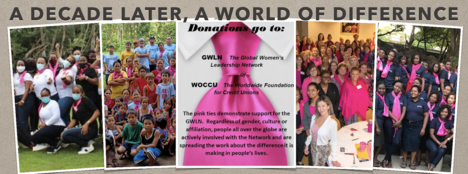
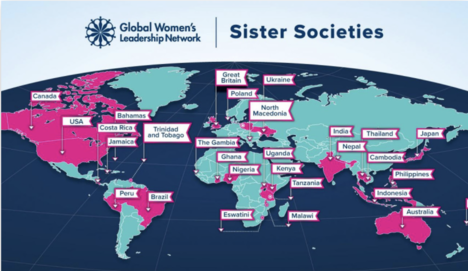
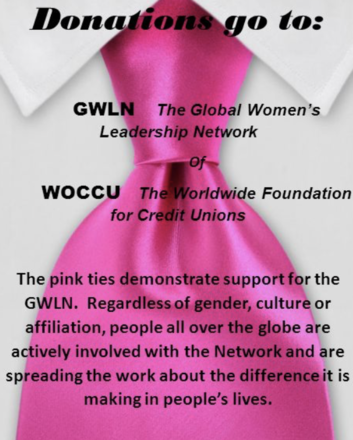
Today, more than 4,500 women (and men through the “He for She” movement and the pink ties fundraisers often seen at many CU events) are involved in the GWLN, which includes more than 130 sister societies in 85 countries, with plans calling for sister societies to be established in all 50 states in the U.S. by this year. During 2020 the organization raised more than $475,000 to continue programming and build scale, according to Mitchell.
According to GWLN, its mission is to provide women with opportunities to make a measurable difference in the lives of each other, their credit unions and their communities. Mitchell believes it has done so. The group has awarded 84 scholarships to women worldwide with empowerment grants that started business development centers in Asia, entrepreneurial enterprises in North Macedonia, feeding families in Kenya, and in the U.S., financial counseling for pregnant high school girls wanting to graduate and apply for college.
During a virtual event held in conjunction with CUNA’s GAC earlier this year at which Mitchell said she was “passing the baton,” Brian Branch, CEO of the World Council of Credit Unions (WOCCU) and who was instrumental in the creation of the GWLN, said of Mitchell, “We thank Sue for her dedication and support over the last 12 years. I have witnessed her impact from villages to continents around the world. Thousands of women and men are connecting through GWLN to make a difference. Together, we demonstrate the cooperative principles that World Council founders believed in over 50 years ago – people helping people.”
The Story Before the Story
While the Global Women’s Leadership Network is approximately a decade old, the groundwork preceding its creation goes back further in what Mitchell calls the “story before the story.”
She recalled working to put together a “he for she” movement with her company’s CU clients in the late 1990s and early 2000s where the subject of discussion was specific to women.
“I was very engaged, if you will, in the whole idea of networking to push people forward,” Mitchell said.
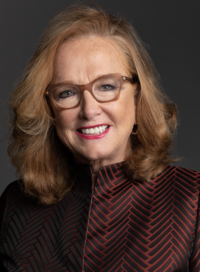
Sue Mitchell
Around the same time Mitchell began doing some volunteer work with the World Council of Credit Unions, including leading some strategic planning sessions with CU delegations from Poland, China and other countries. Simultaneously, she also had several client CEOs serving on the WOCCU board. All of that led Mitchell to attend a WOCCU event in Canada where she said discussions turned more serious about having a “movement” related to women in credit unions on a more formal basis.
WOCCU’s Branch, who was instrumental in the push for what would eventually become the GWLN, had spoken with credit unions in numerous countries and gotten similar feedback.
Mitchell recalled she first worked with Branch during a strategic planning session with the World Council board during a meeting in Alberta, where the idea of a “network” for women was discussed further.
“I said, ‘Hey, that is something I believe in and trust in,’” said Mitchell.
By 2006 more discussions about what such a network might look like were under way, and in 2009 the Global Women’s Leadership Network was launched during WOCCU’s annual summer conference in Barcelona.
‘Let’s Create a Mission’
“At that time there was no formal organization. It was more like let’s get together and network,” said Mitchell. “I talked to Brian and said, ‘Let’s create a mission.’ And so we started working on what I call the structure of it in a way that made it legitimate. One of the key things I did was a facilitate a brainstorming session at GAC in 2010. We invited people to come talk to us.”
One of those people was Judy McCartney, who had earlier retired as CEO of Orange County’s Credit Union and who told Mitchell that if she were going to volunteer her time, she wanted to see metrics tracked.
“Now we have a vision and a mission and we are starting to put together the idea we need to keep track of where we are, the number of members, the amount of dollars raised and so on,” said Mitchell.
Among those Mitchell said she approached in the early days for financial help was Stan Hollen, then CEO of CO-OP Financial Services, whom she said “helped to get this thing off the ground” by putting dollars behind GWLN’s annual golf tournament and fundraiser.
“During that period it was all about an annual conference. But the GAC became a time when I knew we could engage credit unions,” said Mitchell.
Peeling Back the Onion
Around the same time, Mitchell said the GWLN partnered with Filene on research around women in leadership roles. It turned out other countries had more data on women in CU leadership than did the United States.
“We started peeling back the onion over the years because no one considered this, and this is the biggest thing from my perspective,” said Mitchell. “When I first started talking about (women in leadership) the response I received from CEOs and male leaders was there is not an issue in credit unions. And from the perspective from the number of credit unions and the size of credit unions, we had a significant number of credit union CEOs, but at credit unions of $250 million or less in assets. So, that perception that we had women in CEO positions was there.
‘That’s True, Except…’
“It was very difficult. When you looked at it from the standpoint of the numbers, a couple of years ago it appeared the representation (of women in management) at credit unions was better than banks,” Mitchell continued. “I called attention to the fact that, well, that’s true, except that they don’t have retirement funds, they’re not paid equally. And very often they came up through the ranks, so their ability to truly build a future is difficult. The answer is we had limited data in those days, so what we decided was to keep our own data, know how many women we touch, etc.”
Much of this was taking place at the same time the World Council board was also largely male, and Mitchell recalled McCartney telling WOCCU her credit union would not sponsor another event unless there was greater gender balance. Two women were eventually added to the board. Today, four of WOCCU’s board members are female.
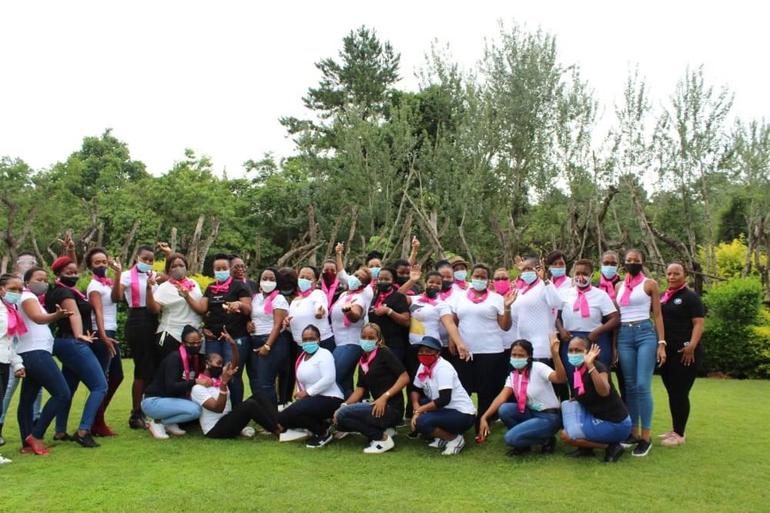
A GWLN Sister Society in Kenya.
Differences/Non-Differences
Given that it’s been more than a decade since the GWLN was formed, it’s natural to think it’s objective may have changed. But Mitchell said that is not the case.
“They are very much the same. It’s the idea of us working together to advance women in their own positions, their own careers and within communities,” she said. “The overall mission/vision has stayed consistent since day one. The difference has been in 2011 I started talking to Brian about the fact we can’t do this annually. I said we’ve got to bring this down to a local level. And I said, ‘Let’s have Sister Societies,’ and everyone said you can’t call them Sister Societies, that’s too female. And I said but this is a female Global Women’s Leadership Network. I said, ‘We’ll do sister societies, but we’ll also do ‘he for she.’ And so sister societies were localized to bring the mission locally.”
The objectives of those Sister Societies, while broadly the same can differ according to the country and culture, said Mitchell.
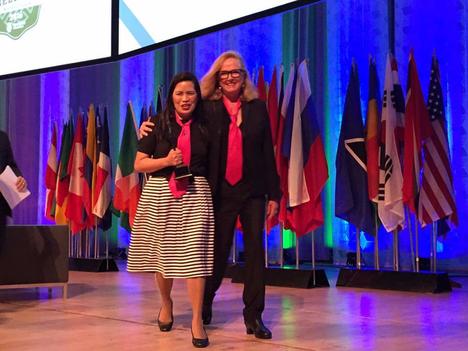
Sue Mitchell with Leni San Roque.
“To advance a women in the United States it may mean taking on the idea of a glass ceiling, pushing a woman into the C suite. It may be all about pay, things of that sort, based on our culture and where we are. In a place like Brazil, when I went there to launch their sister societies it was all about recognition and being brought to the table and having a respect level that was appropriate to gender balance.”
Mitchell said she was told by Manfred Dasenbrock, the CEO of Brazil’s Sicredi (credit union) movement that GWLN has already affected 15,000 women in that country.
Getting to the Core
Much like credit union league chapters, the Sister Societies are dependent on a few people who tend to be the catalysts and the organizers. How do the Societies find those people and keep them committed?
“I really believe it starts with the core,” said Mitchell. “In the early days I went to every one and launched every Sister Society. When someone told me they were interested we found some other people in that area to help us. There was such a connection to the mother ship. I would attend, I would speak, I would get everyone going.”
The first Sister Society launched in the Bay Area, the second to the south in Los Angeles, before spreading to the East Coast and then the entire country.
“We used a personal network to find those people and then all of us were very committed to attending,” said Mitchell.
But that doesn’t mean that once launched it was an easy lift from that point forward.
Pushing the Rock
“It’s like pushing a rock up the mountain. We had two steps forward and one step back,” Mitchell shared. “Over time, there was lots of frustration, lots of pushing forward and not everybody understanding what the mission is. You go to places like Africa where there is such a disparity in women’s rights. You go to places like Asia where they just appointed their first female CEO (Leni San Roque, CEO of the Association of Asia Confederation of Credit Unions). I went three times to Asia to get that one started, but Leni has started five Sister Societies now. You start to touch somebody in a new place who wants to make their mark. We provide them the support. We get a lot of documentation. We have a Sister Society kit, we have all of the materials to help them start, and obviously, with virtual (meetings), that helps. But in keeping the enthusiasm you truly have to stay passionate about your mission and be specific to what’s taking place at that time in your world.”
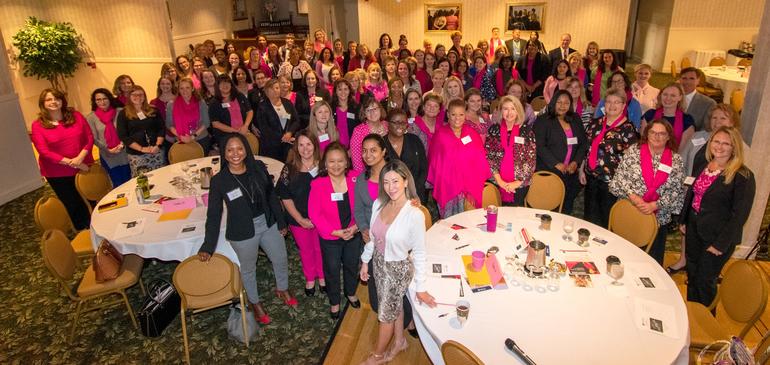
A U.S. Sister Society meeting.
The Takeaways
Maintaining that passion for the Sister Society members means ensuring there are ongoing takeaways and value, as is true of any organization (or CU membership itself). Mitchell said participation in a Sister Society offers a variety of different takeaways beyond just career advancement.
“It’s important to put forward the story of the he for she movement,” said Mitchell of one of those takeaways. “We talk today about our DEI initiatives and we talk about allies. Sometimes, people don’t understand that. This can be a very personal issue. If I’m LGBTQ, I’d like to have my own safe forum, so it may be I only want to be with my own community. I definitely agree they should do that.
“But when it’s just people with a commonality talking about the issue you’re not creating change and you’re not educating. So we brought the he for she into the membership. They are there to understand the direction, what’s the purpose of this? You know how I feel about diversity of thought, to me that overrides everything. So, when you go to a meeting the purpose of that individual Sister Society meeting is set by the local group.”
Mitchell said the GWLN meets annually for a strategic planning session at which it IDs issues for the coming year.
Finding Commonality
“Based upon those issues we say, ‘Let’s do some commonality in what we’re doing.’ We’ve been able now, because we have 135-140 Sister Societies, to take topics and have people virtually sit in other sessions and then I can bring that back,” Mitchell explained. “Our objective is we start with an agenda, introduce people to each other, male or female. We have some type of CEO panel so we are exposed to a C suite. We try to make that female or male. And we have a topic. And we always talk about the greater good and our connections around the world so that we know that it’s not just us locally dealing with these issues, but that we’re dealing with them around the world. We look macro, nationally and locally. People can then get a passion for what’s taking place.
“What we hope they come away with is always advancing yourself in leadership, whether it’s by making connections, or whether it’s by hearing somebody speak,” said Mitchell, noting many of the Sister Societies or the GWLN itself will bring in speakers from outside credit unions who are women in leadership positions. “That’s been my contention. In order for us to have real strategic influence and make real change you have to people with influence. Scale drives that.”
Outside the U.S., Mitchell said GWLN has seen strong membership growth in Brazil, Asia, and Africa. In the latter, Mitchell credited men on that continent for getting behind the GWLN movement, and the organization recently presented its Athena Award, its highest honor, to George Ototo of KUSCCO in Kenya, and George Ombado of ACCOSCA, the African Confederation.
Competing Agendas
Running any organization is a challenge, but managing an international group that draws upon different cultures, work experiences, resources and more requires even greater effort and attention. That challenge is compounded with the Global Women’s Leadership Network because many of its Sister Societies remain relatively new.
The best strategy for managing the organization is keeping everyone “focused on the true mission,” according to Mitchell.
“There are so many competing political agendas, personally or professionally, that people get swayed or off-center of their mission,” acknowledged Mitchell. “If your mission is about advancing women, you take that to whatever level or country and come back to what do you need in that place…I’ve created friends and some people have also gotten very frustrated with me over the years--they don’t feel I’m feminist enough or I’m this enough, all those kinds of things. But the bottom line is love drives what I believe is the sum of this. And that is credit unions’ purpose is to help change lives and the GWLN’s mission is to help change women’s lives.”
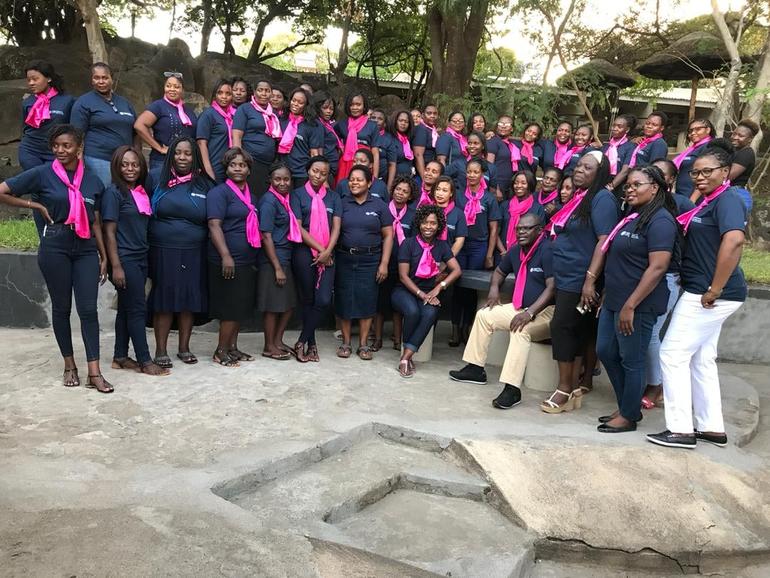
A GWLN Sister Society meeting in Malawi.
Rethinking Mentors
A popular topic across the entire credit union community is mentorship of young leaders who are looking to advance and be next to carry the cooperative torch. In the case of the GWLN, Mitchell believes in a different approach to mentoring. She noted WOCCU’s Branch has always expressed concerns around the concept of mentoring, that one person is “smarter or better or more knowledgeable than another, and the implied part of mentoring is, ‘I’m going to mentor you, I’m going to teach you.’
“The answer is we have tried to make this not as much a mentoring program as an exchange program, where we exchange what I know with what you know and it enriches both of us,” Mitchell shared. “There are a lot of people who will raise their hands to be mentors. From my perspective it’s about the accountability of the person, the mentee, to truly want to listen and be part of it. It’s very similar to the ally concept. To be inclusive you have to bring everyone in to understand the core. Not to distract from it but to understand it. And that takes tough leadership to do that.”
Left Undone
While Mitchell has overseen extraordinary growth from an organization that existed as only a thought to one with membership across six continents in just a decade, there are always those items on the to-do list that remain undone.
For Mitchell, who will remain active with GWLN, she said she would have liked to have built even greater scale to drive even greater opportunity, especially to highlight the type of work credit unions have done.
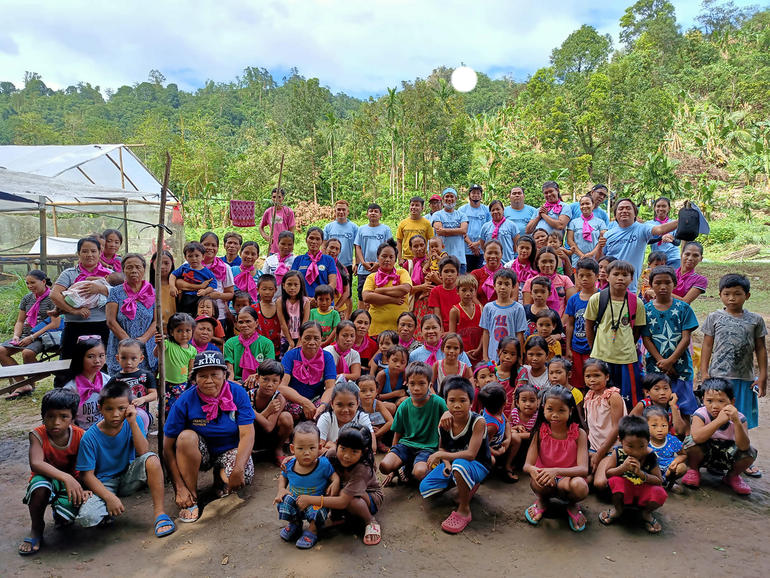
A GWLN Sister Society meeting in the Philippines.
“I’d like to see the Gates Foundation recognize what we’re doing. I’d like to see International CU Women’s day tied to GWLN,” said Mitchell. “From my perspective it’s about the strategic alliances and the ability to get funding, because I believe credit unions are the depositories for truly making change at the grassroots level, and women will drive that, that women will ensure, as they are in Haiti, that people get water, that people get the vaccines.”
Mitchell said the GWLN made it to a final funding round with US AID in 2020 and that it will continue to “push for the worldwide stage.” She also noted Leni San Roque of the Association of Asia Confederation of Credit Unions made an appearance on stage at a World Bank event and was able to talk about GWLN.
“I’d like to see credit unions recognized for what they are doing for women,” she said.
Advice for Successor
Mitchell said she doesn’t have advice for her successor, and instead believes Teresa Freeborn “has the strength to take that vision of what we’ve done to this higher, next level. I think the visibility and what we’ve created with such a strong network, such a premier program, will allow her to push to have the real funding come in.”
What Now?

While Mitchell is stepping away from the chairman’s role with GWLN, she will remain quite active in credit unions. Mitchell Stankovic has pioneered the “Underground” movement in credit unions, hosting in-person events and virtual meetings at which numerous topics are debated and discussed.
Mitchell said she also remains committed to creating awareness on the importance of diversity of thought and hopes to bring that effort to a broader scale.
“I want diversity of thought in all aspects of the credit union community,” said Mitchell.
She is a member of the governing board of the new Credit Union Diversity, Equity and Inclusion (DEI) Collective, as well as the board of WOCCU’s Worldwide Foundation, and said she believes her most important work moving forward is with her own clients as they make strategic decisions around positioning themselves for the future of membership.
“And I believe the future of membership has to be diverse,” said Mitchell.
The Future for Credit Unions
For there to be a future for membership, diversity and for the Global Women’s Leadership Network itself, of course, it requires that there be a future for credit unions. Mitchell sees some reasons for concern.
“Yes, I do see challenges,” she said. “We have the have and have-nots, the large and the small, and unfortunately the in-between isn’t as in-between anymore,” observed Mitchell. “Credit unions are in some ways all working the same market, just with different asset sizes, and I worry about that. I worry we are not going to be relevant.
“Surveys are showing us that in applying the digital model credit unions are going to have a hard time keeping up without the personal relationship. We have to bridge the personal relationships, and I believe you do that by making the credit union what it was first designed to be, a common bond with some field of membership tie-back,” Mitchell continued. “That could be a community, but we really have to relate it back to our consumers. So I worry about the size of credit unions and the grassroots. Size is great, but you have to localize it, right? The future of credit union movement is dependent upon us really relating to a future market, and I don’t mean just our demographic data or just our individual DEI. I mean really relating to consumers and what’s taking place in their lives.”
For more information, go here.