

WASHINGTON–Credit unions share two things in common with every other employer in the country: They are very much looking to attract and retain the very best people who genuinely care—and they are going about it in the completely wrong way.

A big reason for the latter: credit unions continue to subscribe to “nine lies about work. Instead, credit unions must rethink numerous, long-held misconceptions and to engage in “free thinking" if they want to hire and keep the most ideal job candidates, according to one person.
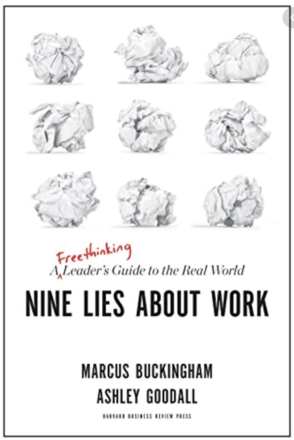
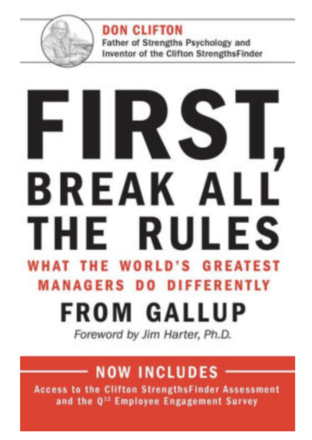
Marcus Buckingham, a researcher and author of several books, including “First, Break All the Rules” as well as, fittingly, “Nine Lies About Work,” pushed credit union leaders at CUNA’s GAC to reexamine their every approach when it comes to recruiting and retaining talent.
The first step: engage in a “free-thinking research approach,” urged Buckingham.
“To understand something you have to put aside dogma and theory and study it in the way it really exists in the world,” said Buckingham, noting while it may seem obvious, few take this step: “You go and talk to people where they are.”
Where many employers, marriages, schools and other organizations fail, according to Buckingham, is in how they all approach the understanding of excellence.
“Often, to understand excellence, we study failure and then invert it. To understand health, we study disease. To understand our workplace, we interview the employees who leave. That doesn’t get us there. Fixing something doesn’t get us to excellence,” said Buckingham. “If you study really good relationships you can find things you can develop. Excellence has its own pattern. I’m not saying don’t study failure, don’t fix failure. But you won’t learn this from that. Study success. It’s different.”
The Non-Performing Performance Review

Marcus Buckingham addressing attendees at GAC.
A great workplace example of conventional wisdom that is failed thinking, according to Buckingham, is performance reviews.
“It turns out human beings are horrible raters of other human beings,” observed Buckingham. “The pattern of ratings doesn’t change from person to person; the rater is really just rating themselves.”
As for 360 reviews, Buckingham, who is no fan, added, “The rationale is one piece of bad data combined with six other pieces of bad data magically turns into one piece of good data.”
Another misconception: people want feedback and find it valuable. Not so at all, said Buckingham.
“In the last four or five years there has been one social network that has completely exploded with huge user growth, and it’s not Facebook or Instagram, it’s Snapchat. It’s the one social media channel where there is no feedback,” said Buckingham. “It now has 250 million users. Millennials flocked to it because there is no feedback at all and yet we use Millennials as examples of why we need lots of feedback.
“If you want to attract talent, don’t be giving feedback,” added Buckingham, drawing laughs when he said, “It turns out people don’t want to hear, ‘Sit down, let me give you some feedback.’”
Destroying Human Capital
According to Buckingham, most companies against which credit unions are competing for talent destroy their own human capital thanks to “things we know for sure,” which Buckingham said some call myths or misconceptions, but which he and his fellow researchers choose to call “lies.”
To that end, Buckingham said the nine lies preventing credit unions from getting the best talent in the door and then developing it include:
People Care Which Company They Work For
“No they don’t. If true, then people in the best companies to work for should all feel something similar to that of other companies with successful cultures. But we don’t find it. People care about which company they join, but once they are there they care about something else entirely.”
The Best Plan Wins
According to Buckingham, the most detailed plans are actually the worst plans. The plan presented to the board in December starts hitting employees in March. “The problem is the more details there are, the more time it takes, and by the time you are ready to implement it, the time has passed. Now you are only prepared to deal with the recent past. If you want to engage in solutions, go engage with the real world and the real world is moving fast.”
The Best Companies Cascade Goals
“How many times have you gone to sleep thinking about ‘alignment?’” asked Buckingham, drawing laughs from his audience. “You have goals and then you give people below you mini-goals and people below that have mini-mini goals. Have you ever been aligned? It doesn’t feel great, does it. You would think if people were really going to stay aligned the goals you set in January are irrelevant by the third week of February. So, in order to stay aligned people would always have to be popping in to realign their goals. The best companies cascade something else.”
The Best People Are Well-Rounded
Of all his points, Buckingham spent most of his time on this point.
“Very early on with the best of intentions we focus on those whom we want to be well-rounded. That leads to the GPA and then the performance reviews with five minutes on what you did best and 55 minutes on ‘errors of opportunity,’” Buckingham stated. “So everywhere you look there is this belief that well-rounded is better, but if you take a freethinking approach, you find that’s not true. Think of Warren Buffett and Richard Branson; two wealthy white men. Richard Branson is an amazing leader because he is a pretty good version of Richard Branson. Warren Buffett is an amazing example of Warren Buffetness.”
People Need Feedback
“The data here are pretty clear. We hate to be ignored and loneliness is a killer, but what we want from other people isn’t other people to tell us what we did right or wrong and what we can do better.”
People Can Reliably Rate Other People.
“Almost every one of us is paid, promoted or fired based on this lie,” said Buckingham.
People Have Potential.
“No, they don’t, silly,” said Buckingham. “You have to have a growth mindset; that’s true, everyone can grow. The idea, though, is that there is this thing called potential and you have a bucket full of it. Then we give that person a name, a Hi-Po. You get more opportunities and forgiveness. Then there are the Lo-Po’s. There is no reliable way for us to measure potential and ascertain that you have lots of it and you don’t. It’s rubbish. And yet we build our entire approach to human development around this untruth. It starts as something noble, anyone can grow, and turns into something that casts aside a whole number of workers.”
Leadership is a Thing
“No, it isn’t. We tell people in order to be a better leader you need to acquire this thing called leadership and here are the 17 qualities, and normally that’s a circle or a triangle but always in primary colors. It’s based on the notion that all leaders have the same qualities. The one thing we know about leaders is they are so darned different.”
Another Way to Reapproach Talent
Buckingham urged CU leaders to become talent scouts, noting the really good people already have jobs.
“Go find them. If you look to the best organizations they are completely proactive about going to get talent,” he said.
Once people are aboard, a credit union should respect individual differences, according to Buckingham, rather than training it out of them.
“Go lighter on the method and heavier on the outcome,” said Buckingham. “Talk about the result, the outcome. It’s a whole different feeling.”