


DENVER—It’s time small credit unions create survival plans—one that addresses how they will continue to grow, and another that details steps to take—including merger—when performance begins to slide.
That is some of the advice handed down from a panel of small credit union leaders who spoke at the joint World Council of CU’s World CU Conference and CUNA’s America’s Credit Union Conference here. The group shared thoughts on a wide range of issues, but consensus among the leaders is that a lot of hard decisions are ahead for small shops.
Some of the more difficult discussions in the panel meeting, moderated by former NCUA chairman and board member Michael Fryzel, addressed how small credit unions should know when it’s the right time to throw in the towel and merge.
Jon Hernandez, who is CEO of three California CUs—the $64-million CalCom FCU and the $28-million Mattel FCU, both in Los Angeles, and the $68-million Nikkei CU in Gardena, said a survival pan is critical. Hernandez explained that the plan does not wait to kick in when the CU hits 7% capital, but at an earlier point when the business shows signs of weakness and performance begins to slip.
Solid Capital Should Not Stop Planning
Hernandez said the plan could begin even when the credit union’s capital is at 9% or 10%.
“The plan has steps to follow when profitability levels fall to certain points, including the best time to begin seeking a merger partner,” said Hernandez, who explained he had to use the plan at an earlier point in his career with a small CU that merged out.
But Shelley McDade, CEO of Sunshine Coast CU in Gibsons, B.C., said all the planning in the world will do little good unless the board and management are prepared to make tough choices and follow through.
“So you have a plan, but do you have the passion to make the changes,” she asked. “After you look at the numbers and trends, have a talk with yourselves as to what you are prepared to do. I know some small credit unions that have gone from zero to hero and turned things around. I also know some CUs that just went to zero because they weren’t willing to make the changes that were needed.”
McDade acknowledged that the changes that are the most difficult involve cutting jobs and shuttering branches.
Less painful decisions that are equally necessary, she added, are making sure the CU is reinvesting into the community. “That is our differentiator. The big banks have their great product lines but they don’t have the connection with the community we do,” said McDade, who stressed that small CUs must also remain “relevant and current” with their members.
Back To Basics
Hernandez described success for small credit unions as getting back to fundamentals. He said that small shops sometimes get away from closely monitoring the performance of each product—how much a product returns and how much it costs the CU, as well as what percentage of the membership is either benefitting from the service or paying for it.
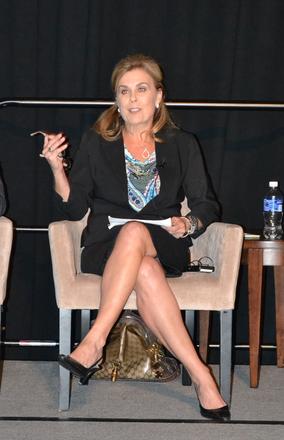
Lily Newfarmer, TCCU
“The toughest thing for all boards and management can be to stop doing something,” said Hernandez. “If a product is using too much of our resources for what it is returning we should stop offering it and invest in other areas.”
Lily Newfarmer, CEO of the $76-million Tarrant County’s CU in Fort Worth, Texas, urged small credit unions to “get rid of the dead stuff, like audio response. Use the savings to pay for new technology.”
What keeps a CU growing is hiring and retaining talented staff, something small credit unions wrestle with as larger, higher-paying FIs cherry pick. Newfarmer said her CU simply made the business decision to pay key staff wages that are equivalent to CUs two asset classes higher.
“I encourage you to pay your talented people; that is what we have to do,” said Newfarmer. “We may be a small credit union, but with our product offerings we are complex. You have to have strong leaders.”
Hernandez said his credit unions address the challenge of keeping skilled people in an environment in which there is little room to advance due to the small number of positions by creating a career track that eventually leads out of the credit union. But it does keep talented employees in the fold for a number of years.
The program promises to train talented staff to give them the skills they need to eventually run their own credit union.
“Already two of our former employees are running their own credit unions and others have moved onto higher-level positons at larger credit unions,” Hernandez explained.
With cyberattacks increasing, the demand is on all credit unions to beef up IT staff with skilled people, something small CUs are not always able to afford.
Outsourced IT
McDade said her CU recognized this problem a while back and has outsourced the IT function.
“We realized this cybersecurity problem will only continue to grow and would require more people, and more talented people—as well as more hardware and software,” she said. “So we moved our entire network out to a third party. We came to the conclusion that at our size we could not attract and retain the talent we would need to stay on top of this issue.”
Finally, the panel discussed whose job it is to keep small credit unions afloat, noting small CUs contribute a great deal to the movement in the service they provide to their members and community, and to the industry’s political clout.
Newfarmer said the job falls into many hands.
“The onus has to be on the small CU, but we can’t do it alone,” she said. “It takes a village. That means the regulators have to lend a hand as well as the larger credit unions with collaboration.”