

By Ray Birch
WASHINGTON—If the federal government capped credit card interest rates at 10%, the result wouldn’t be cheaper credit for everyone—it would be fewer credit cards, fewer borrowers approved, and millions of Americans suddenly locked out of unsecured credit altogether.
“It’s like if the government tried to set car insurance rates,” said Odysseas Papadimitriou, CEO of WalletHub. “Millions of people would be without coverage.”
That analogy captures the core fear rippling through financial institutions as President Donald Trump’s proposal for a nationwide 10% cap on credit card APRs gains political oxygen in Washington. While the idea polls well with consumers frustrated by rising balances and double-digit rates, Papadimitriou said the economics of unsecured lending make such a cap fundamentally unworkable.
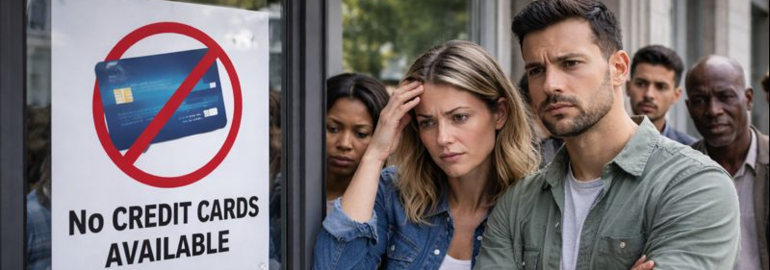
In the short term, borrowers already carrying balances would benefit. Beyond that, he said, the system would quickly retrench.
“People who currently have credit card debt will get some short-term relief, but the move will inevitably block millions of people whose credit history does not merit a 10% APR from accessing credit at all,” Papadimitriou said.
The likely fallout: reduced credit limits, account closures, shorter promotional periods, and higher annual fees for those who remain.
Risk-Based Pricing
At the heart of the issue is risk-based pricing. Papadimitriou pointed to his experience working at Capital One, which built its business by breaking away from the one-rate-fits-all model that once dominated credit cards. Charging everyone the same rate, he said, inevitably means some borrowers overpay while others never get approved at all.
Credit cards are unsecured loans. There’s no car to repossess, no house to foreclose on. When borrowers don’t pay, lenders absorb the loss. Under a 10% cap, Papadimitriou said, the math stops working quickly. If even a modest share of borrowers default, a lender charging 10% to everyone loses money—and the fastest way to stop the bleeding is to stop lending.
That reality helps explain why financial institutions warn that a cap would hit precisely the consumers policymakers say they want to help. Borrowers with pristine credit might still qualify, but Americans who miss payments occasionally—or who rely on credit cards as a financial bridge—would face tighter credit or none at all, Papadimitriou explained.
Ironically, the WalletHub CEO said, the idea often sounds most appealing to people least affected by it.
“This usually comes from people with excellent credit,” he said. “They always pay on time. Ten percent seems extremely reasonable to them.”
The problem, he said, is that most Americans do not fall into that category.
The proposal is gaining traction at a moment when Washington’s broader posture toward credit cards appears to be shifting. Trump’s call for a 10% cap follows months of intensifying political scrutiny of credit card rates, fees, and market power. Last week, Trump also publicly endorsed the bipartisan Credit Card Competition Act, sponsored by Sens. Roger Marshall (R-KS) and Dick Durbin (D-IL), which would mandate additional routing options for credit card transactions.

Odysseas Papadimitriou
As CUToday.info reported, the CCCA was re-introduced in the Senate on Tuesday.
Populist Pressure
Together, the moves signal a rare convergence of populist pressure from the right and long-standing regulatory ambitions on the left. Credit card debt now tops $1 trillion, and surveys consistently show it is the form of debt Americans find most stressful—making it an inviting political target, analysts have stated.
Papadimitriou said that doesn’t mean government action is inherently misguided. He pointed to the Credit CARD Act of 2009 as an example of reforms that improved transparency and fairness without breaking the economics of lending.
“It doesn’t mean we are against taking action and making the marketplace better,” he said. “It just needs to be the right type of action.”
A blunt interest-rate cap, he warned, is not. As Washington debates both the 10% proposal and renewed efforts to regulate the credit card ecosystem, Papadimitriou said policymakers face a familiar but uncomfortable truth: making credit cheaper on paper can make it disappear in practice.