

WASHINGTON—As mass federal layoffs loom amid the prolonged government shutdown, financial experts warn the potential cuts could weaken regulatory oversight and heighten systemic risk—possibly setting the stage for another banking crisis.
With key watchdogs already strained by retirements, buyouts, and reduced staffing, analysts say the loss of seasoned examiners due to the Trump Administration’s reduction-in-force plans could leave blind spots across the financial system, allowing struggling institutions to slip through the cracks.
“Slashing capacity at key regulators will only leave more room for risk,” cautioned TurmaFinTech CEO Adam Turmakhan, adding that without a swift reversal, the U.S. could “sleepwalk” into another regional banking crisis.
With layoffs at key regulators a growing possibility as the shutdown drags on, Turmakhan warned that “dangerous blind spots” could soon creep into the U.S. banking sector. Without sufficient oversight, regional and community banks could inadvertently overextend their risk capacity, potentially ushering in the next banking crisis, he said.

Adam Turmakhan
Turmakhan noted the Trump Administration has already loosened regulatory guardrails around U.S. banks, slashing capital requirements and softening disclosure rules for troubled loans. Federal layoffs, he said, would only further limit the foresight and assistance watchdogs can offer institutions, putting them at greater risk of collapse.
Domino Effect
The founder of TurmaFinTech, which offers a customer data platform for community banks, warned that a single bank failure can quickly spark a “domino effect”—as seen in 2023 with the collapse of Silicon Valley Bank, Signature Bank, and then First Republic Bank.
“Federal layoffs at critical watchdogs could bring about another crisis of a similar, if not greater, magnitude, and a U-turn is needed,” he said. “Trump’s promised layoffs could be catastrophic for the U.S. banking sector. Slashing capacity at key regulators will only leave more room for risk across the banking landscape, putting regional and community banks, which are more vulnerable to market volatility, at risk of collapse…We learned in 2023 that bank runs are contagious—the domino effect is hard to stop at the best of times, let alone when regulators’ capacity has been significantly diminished.”

Brandy Bruyere
Loss Of Expertise
Brandy Bruyere, partner at Honigman, LLP, emphasized the importance of strong regulator staffing.
“We’ve seen examples of even with staffing in place, financial institution regulators can only find so much during the examination process – the Silicon Valley Bank and Signature Bank failures a couple of years ago come to mind,” she said. “Certainly, with fewer resources, examiners will be trying to do more with less, especially with some balance sheet pressures anticipated from things like rising costs for consumers, student loan borrowers facing reinstatement of payment requirements, and similar challenges.”
Bruyere pointed out that financial institution regulators have already lost people with significant tenure and knowledge over the past several months due to buyouts and similar steps under the Trump Administration.
“That adds to this because it’s easier to work with a leaner staff when you still have a deep bench of people with subject matter expertise built over long careers, maybe even decades, doing their job,” she said. “Instead, some people might be asked to take on new tasks, or be spread out over a larger portfolio, which would seem to stretch risk management resources.”
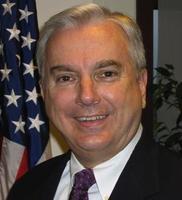
Dennis Dollar
Bruyere said it remains to be seen whether regulators’ resources will contribute to failures.
“It seems that if a financial institution is already struggling, an exam will not change that necessarily, and sometimes the line between well-capitalized and in trouble comes at a bank or credit union quickly,” she noted. “That said, if these situations are caught earlier, losses can be prevented by finding merger partners prior to full-blown conservatorship and similar situations.”
Massive Layoffs A ‘Negotiation Tactic’
Former NCUA Chairman Dennis Dollar emphasized that many of the regulatory changes from the Trump Administration to date have removed overreaching requirements put in place during the Biden Administration.
“So, I don’t see those changes driving more failures unless there is a major economic downturn such as a recession,” said the principal of Dollar Associates, based in Birmingham, Ala.
Dollar contended that massive federal layoffs seem to be more a negotiation tactic during the current government shutdown than an actual likelihood.
“Government shutdowns, although they seem like they are never going to end when you are in the middle of them, always get worked out because the United States must have a federal government,” he said. “Could it be more efficient? Absolutely. But a government shutdown and massive layoffs going on for months and months has never happened, and I cannot see it happening this time.”
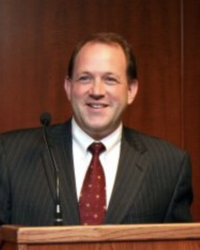
Geoff Bacino
The Bigger Issue
Former NCUA Board Member Geoff Bacino said the bigger issue for credit unions is the downsizing NCUA has been going through.
“The agency will continue to examine credit unions during the shutdown as their fees are borne by the credit unions that they insure, but there is an experience gap created by the retirements,” said the Bacino & Associates partner. “Initially, this will lead to longer time between exams and the concept of fewer regulations will mean a more lenient approach. How this plays out will have an impact on credit unions.”
CUToday.info previously reached out to NCUA asking if the agency is shielded from complying with the RIF due to its independent funding. The agency did not respond.